
Light weight monitoring method for wireless sensor network topology
A wireless sensor and network topology technology, applied in network topology, wireless communication, data exchange network, etc., can solve problems such as large amount of data, occupying network bandwidth, and inability to accurately reflect network topology.
- Summary
- Abstract
- Description
- Claims
- Application Information
AI Technical Summary
Problems solved by technology
Method used
Image

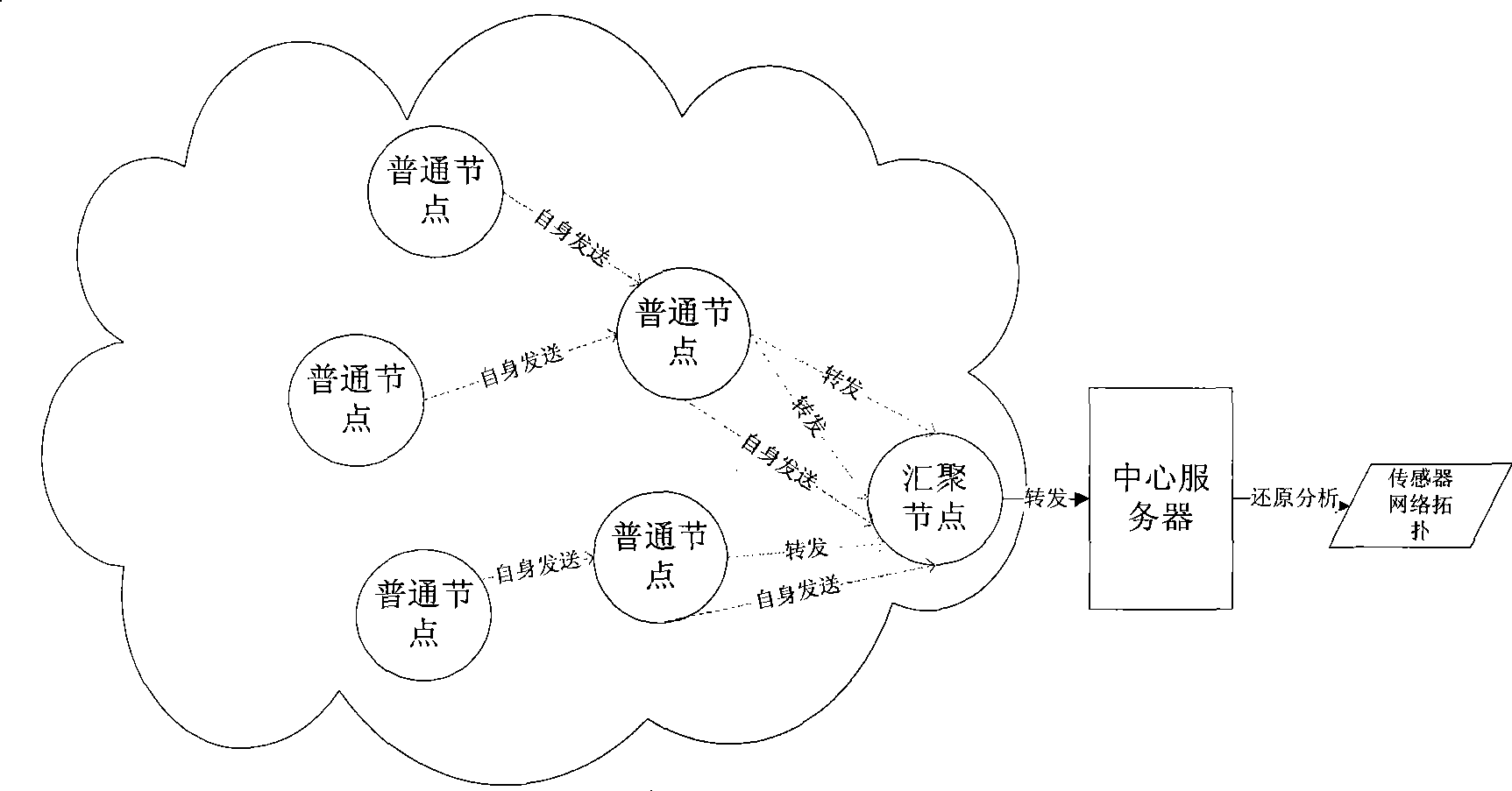
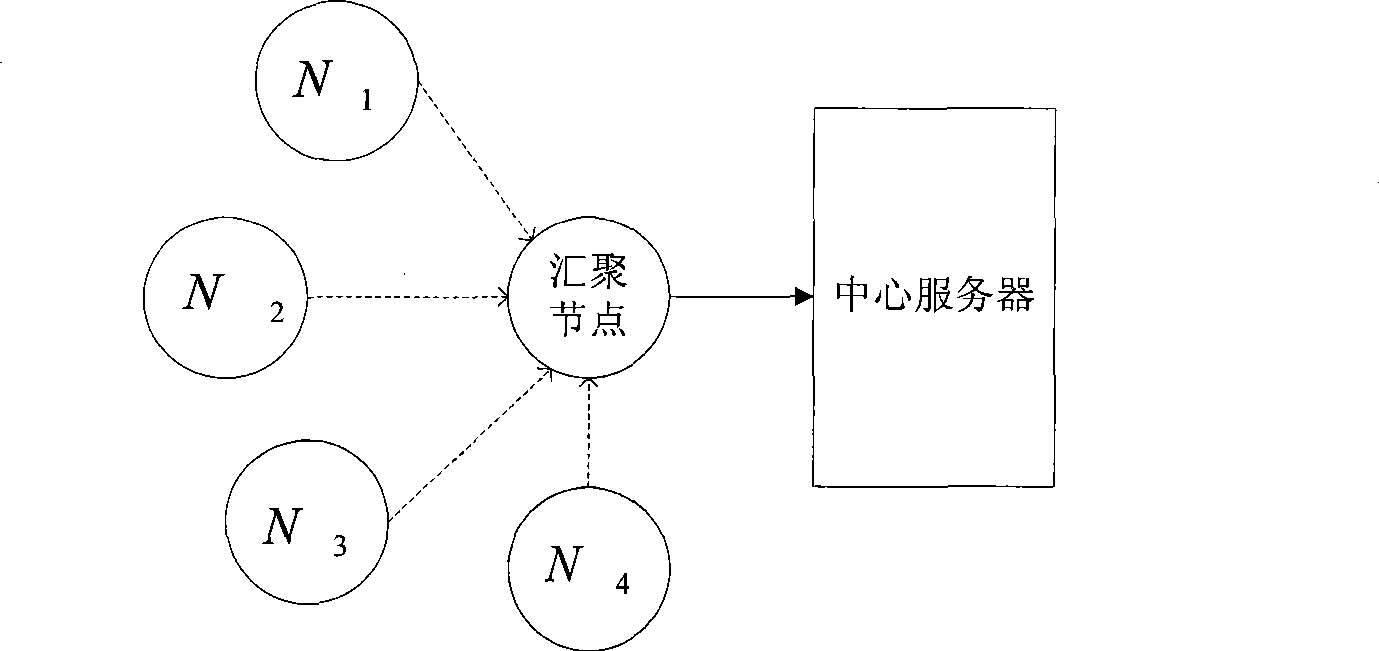
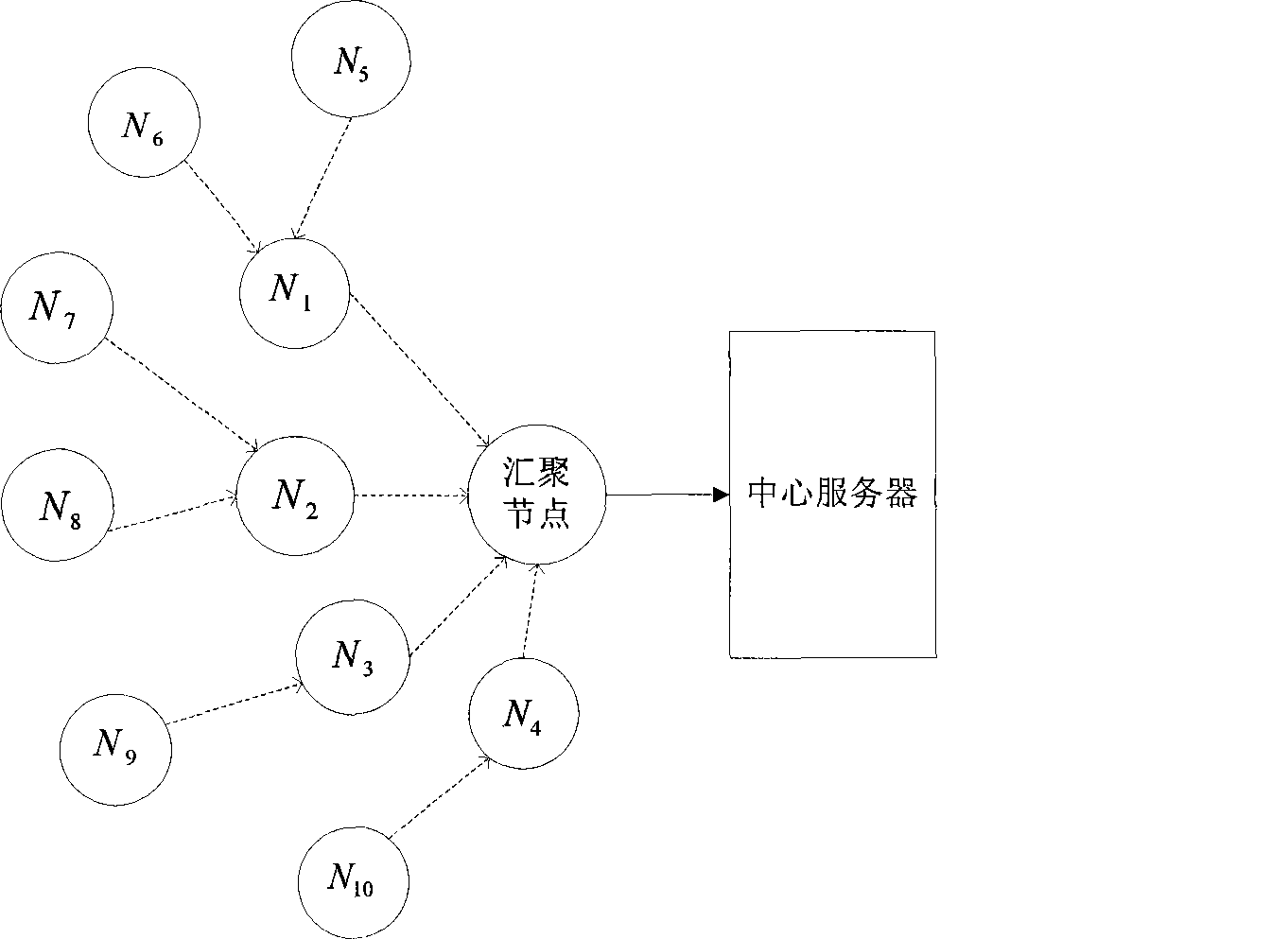
Examples
Embodiment Construction
[0079] The hardware devices used in the implementation are:
[0080] 1. Node: The telosb node developed by UC Berkeley University is used. The node processor module is TI's ultra-low power MCU MSP430F1611, and the wireless communication module uses Chipcon's wireless transceiver chip CC2420. The operating system running on the node is the open source embedded operating system tinyos.
[0081] 2. Central server: PC
[0082] The node software in the implementation is developed by nesC, the compilation environment is cygwin, the central server software is developed by python, and the compilation environment is Pythonwin
[0083] First, the node program is refined to the telosb node developed by UC Berkeley University. The node processor module is TI's ultra-low power MCU MSP430F1611, and the wireless communication module uses Chipcon's wireless transceiver chip CC2420. The operating system running on the node is the open source embedded operating system tinyos.
[0084] After starting...
PUM
 Login to View More
 Abstract
Description
Claims
Application Information
 Login to View More