
Pentaprism combination ultralong focal-length measurement method and apparatus
A measurement method and measurement device technology, applied in the direction of testing optical properties, etc., to achieve the effect of improving resolution, improving sensitivity, and low cost
- Summary
- Abstract
- Description
- Claims
- Application Information
AI Technical Summary
Problems solved by technology
Method used
Image

Examples
Embodiment
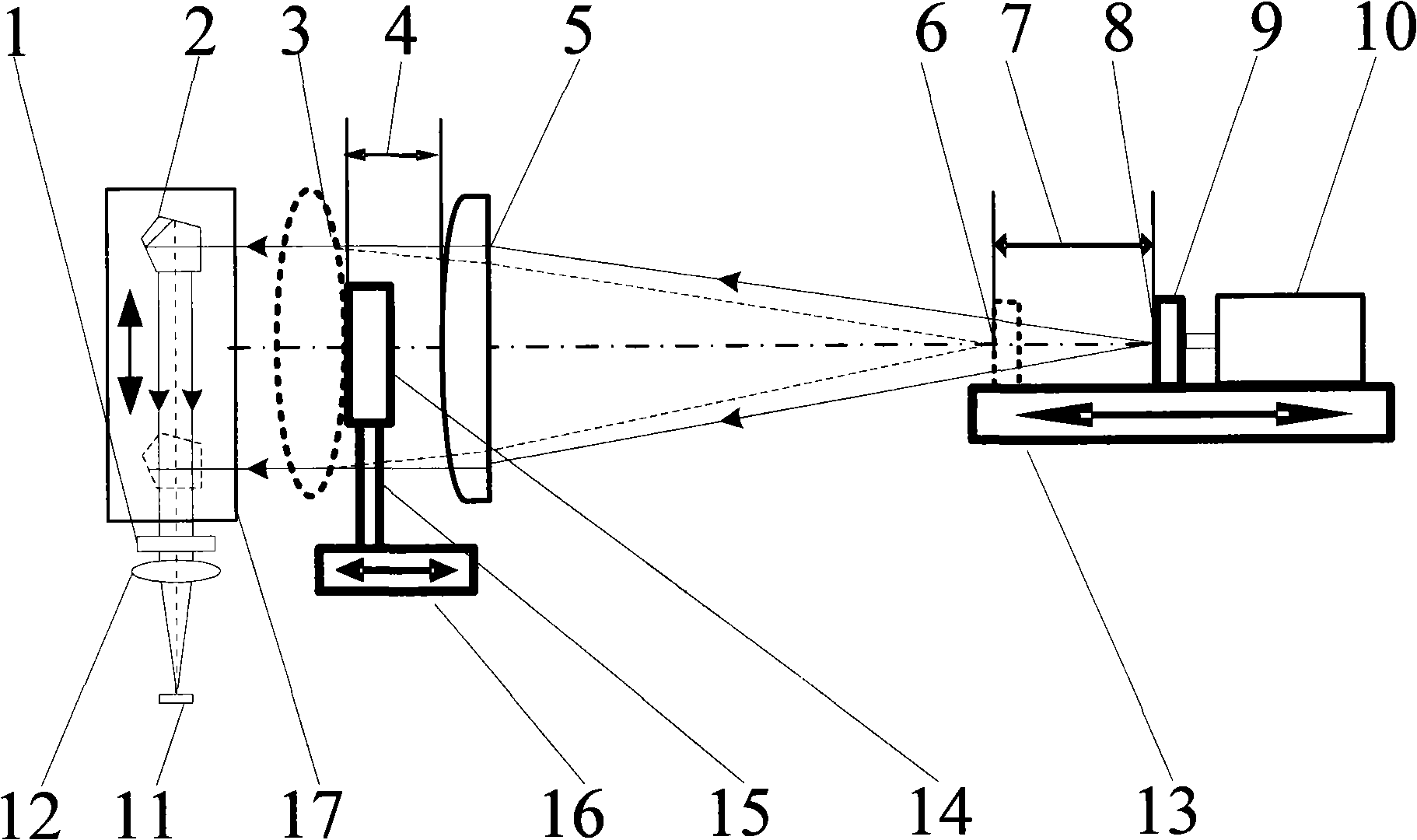
[0043] Such as figure 2 Shown, a kind of pentaprism combined ultra-long focal length measurement method, its measurement steps are:
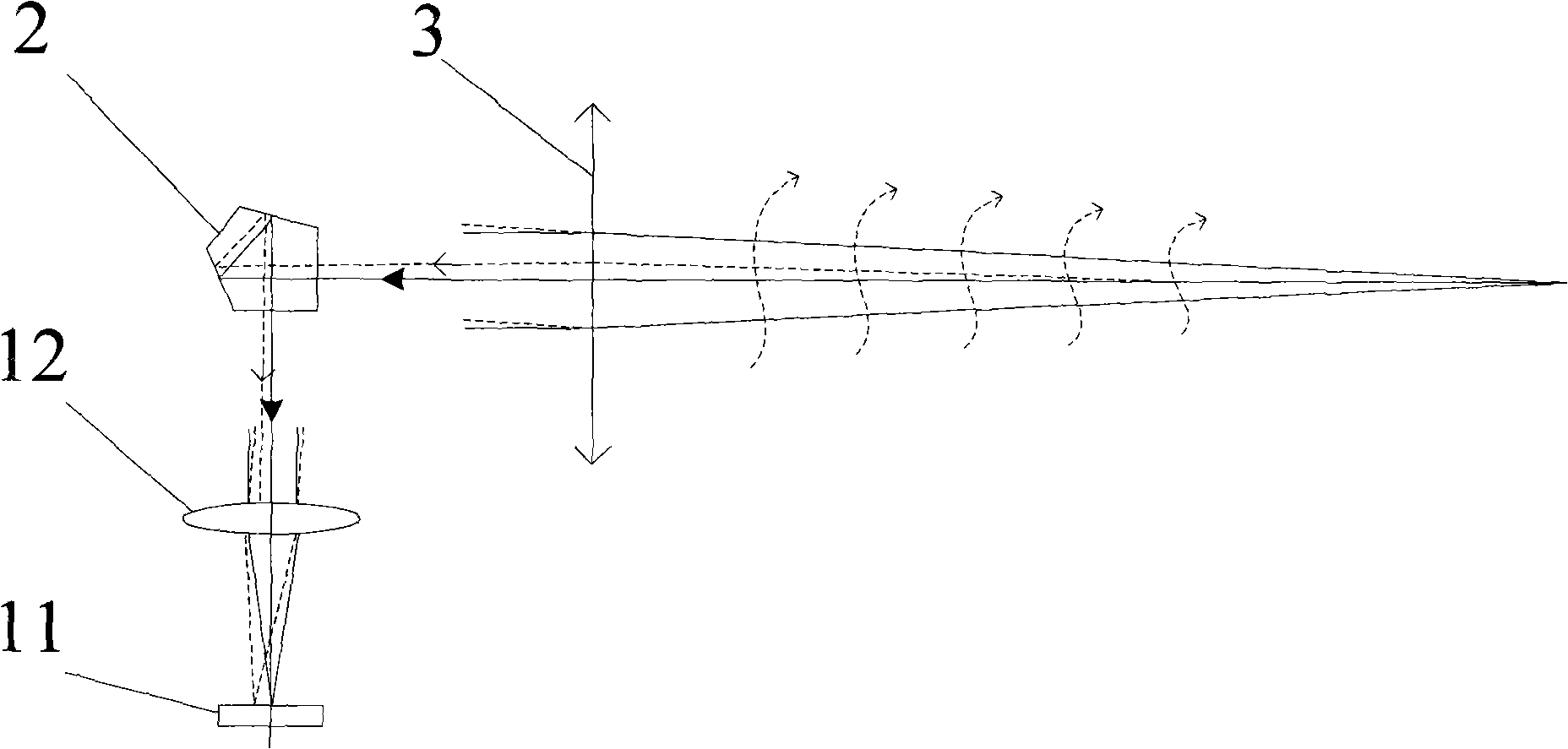
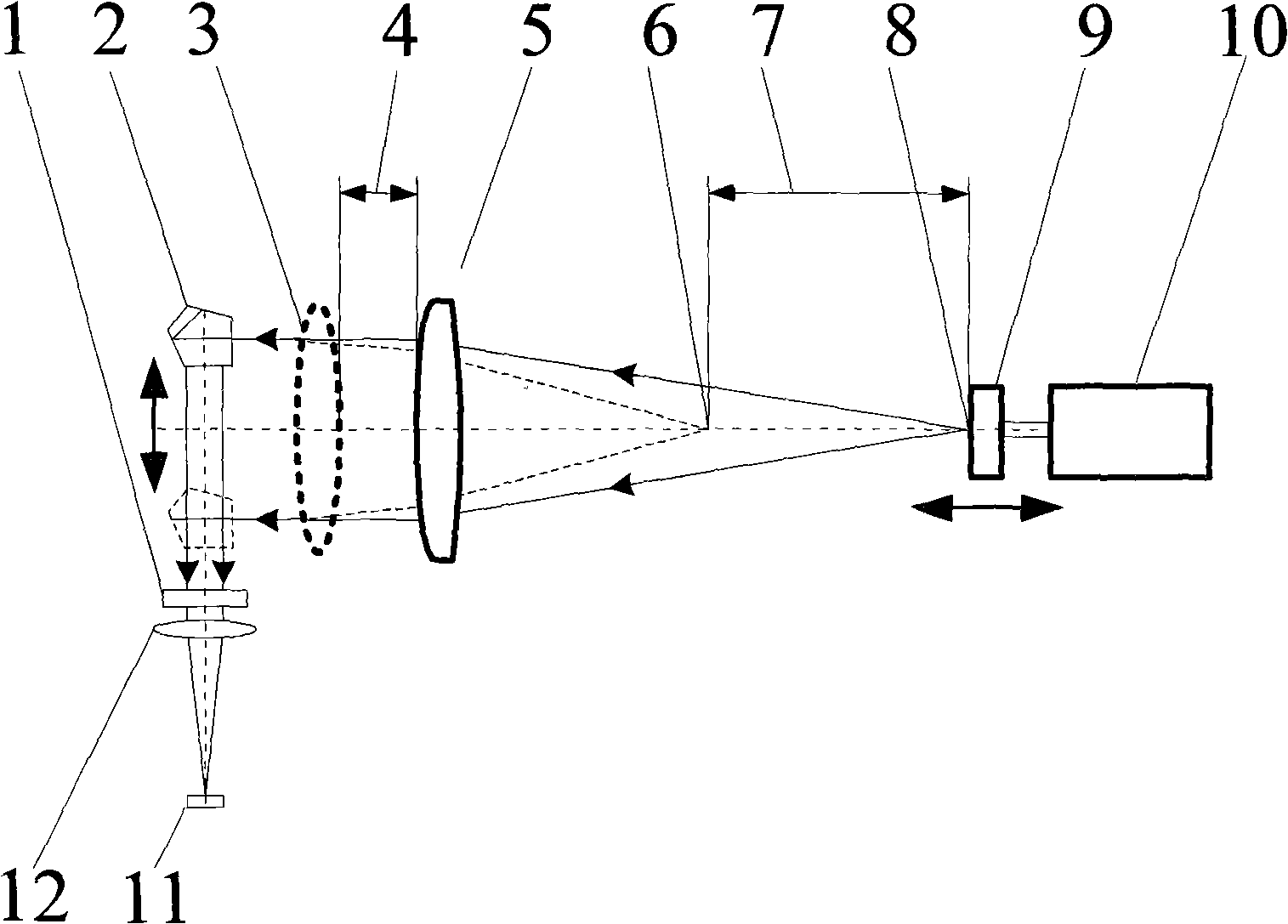
[0044] (a) Use a near-infrared 1064 μm laser to irradiate a slit as the alignment target 9. After the outgoing light is converged by the reference lens 5 and refracted by the pentaprism 2, it is imaged on the CCD detector 11 through the collimator 12. At this time, the translation stage 13 drives the alignment target 9 to scan and move in the direction of the optical axis of the reference lens 5, and when it moves to a new scanning position, it judges whether it coincides with the second focus position 8 by translating the pentaprism 2.
[0045] The judgment method is as follows: Figure 4 As shown, when there is a defocus amount 18 between the scanning position where the slit is aligned with the target 9 and the second focus position 8, the translation stage 17 drives the pentaprism 2 to translate in the direction of the CCD detector 11, and th...
PUM
 Login to View More
 Abstract
Description
Claims
Application Information
 Login to View More