
Adhesive for soft package compound and preparation method thereof
A flexible packaging and adhesive technology, applied in the direction of adhesives, adhesive types, polyurea/polyurethane adhesives, etc., can solve the problems of unusable, slow drying, product contamination, etc., and achieve the effect of reducing pollution and reducing viscosity
- Summary
- Abstract
- Description
- Claims
- Application Information
AI Technical Summary
Problems solved by technology
Method used
Image

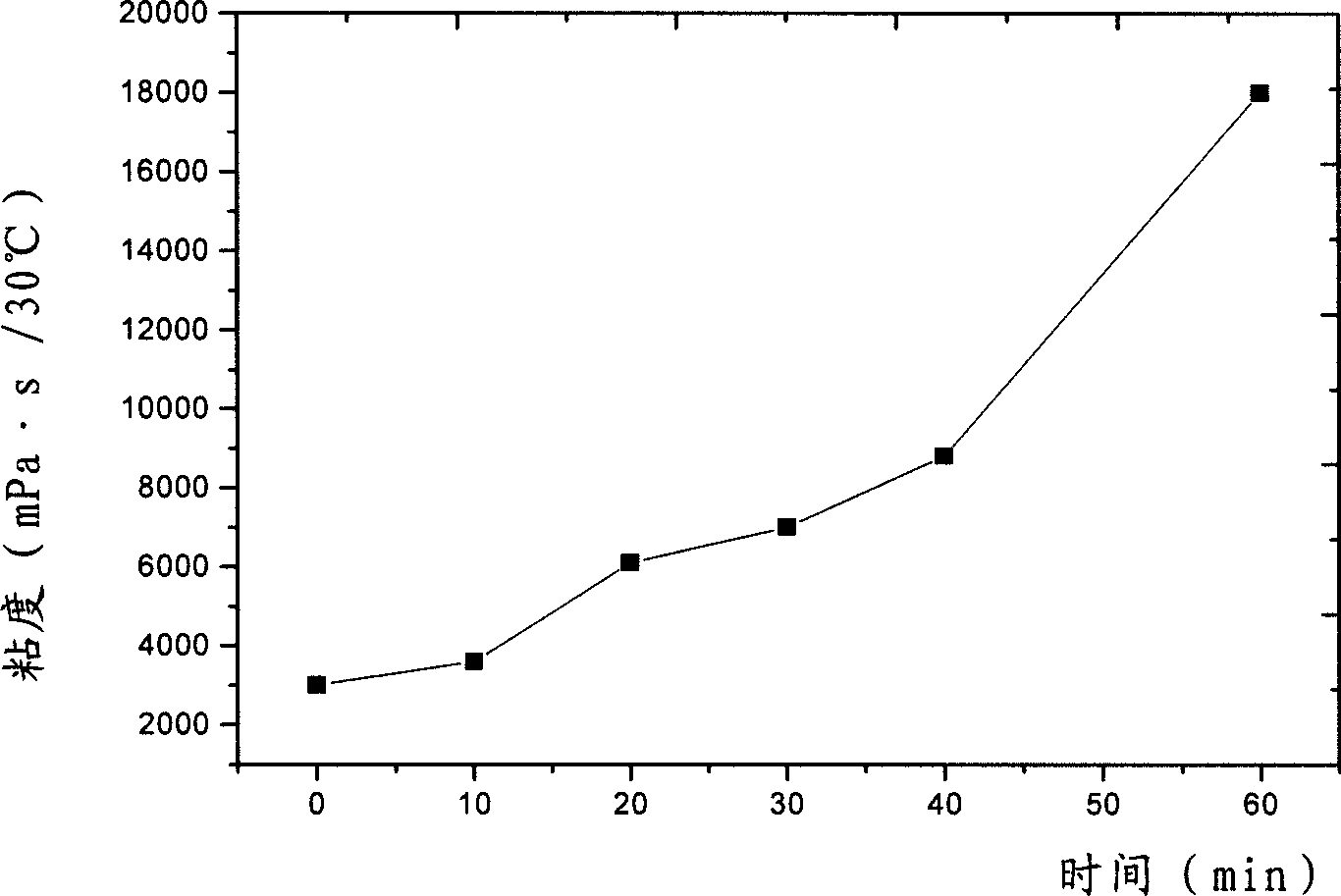
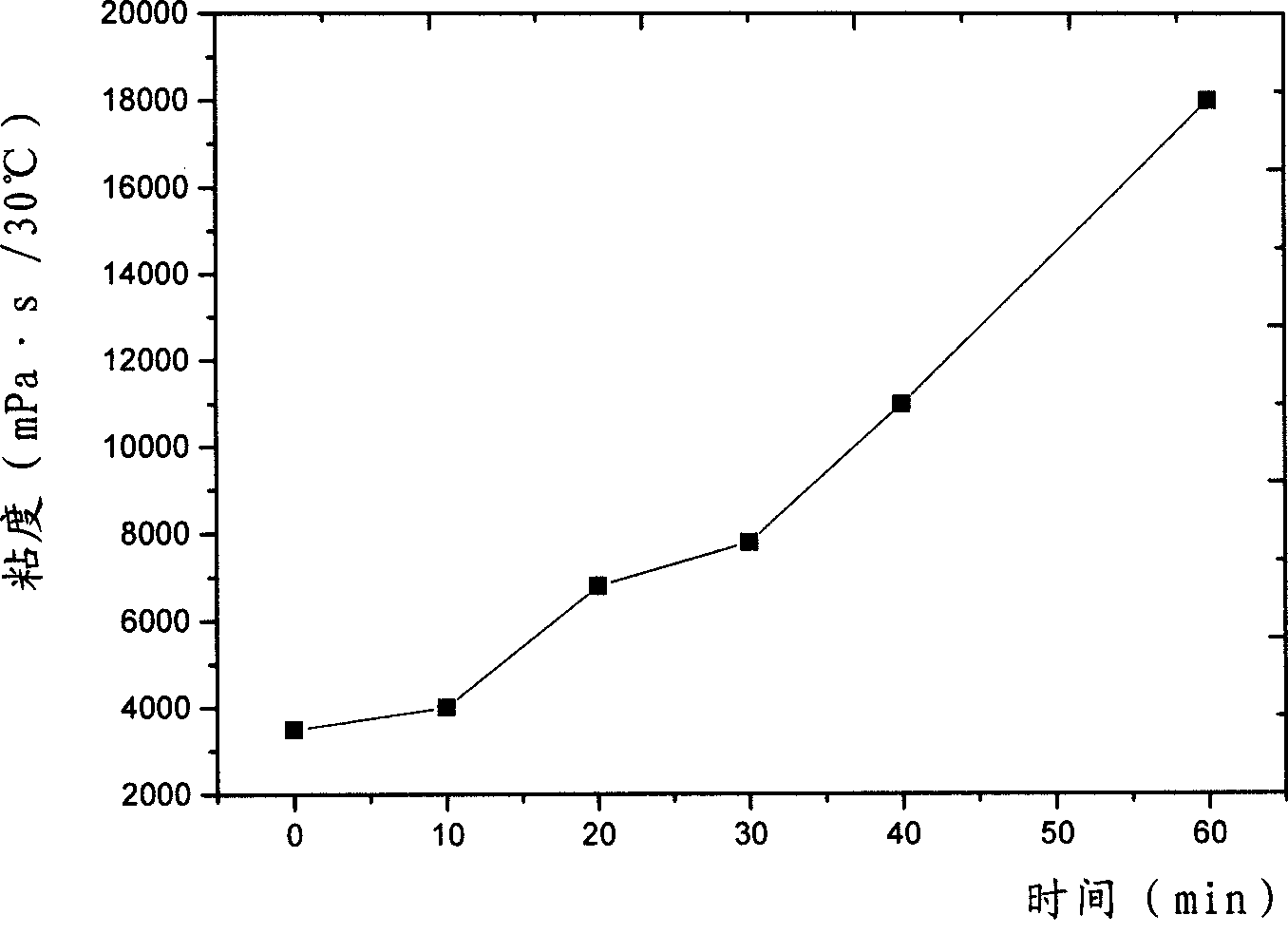
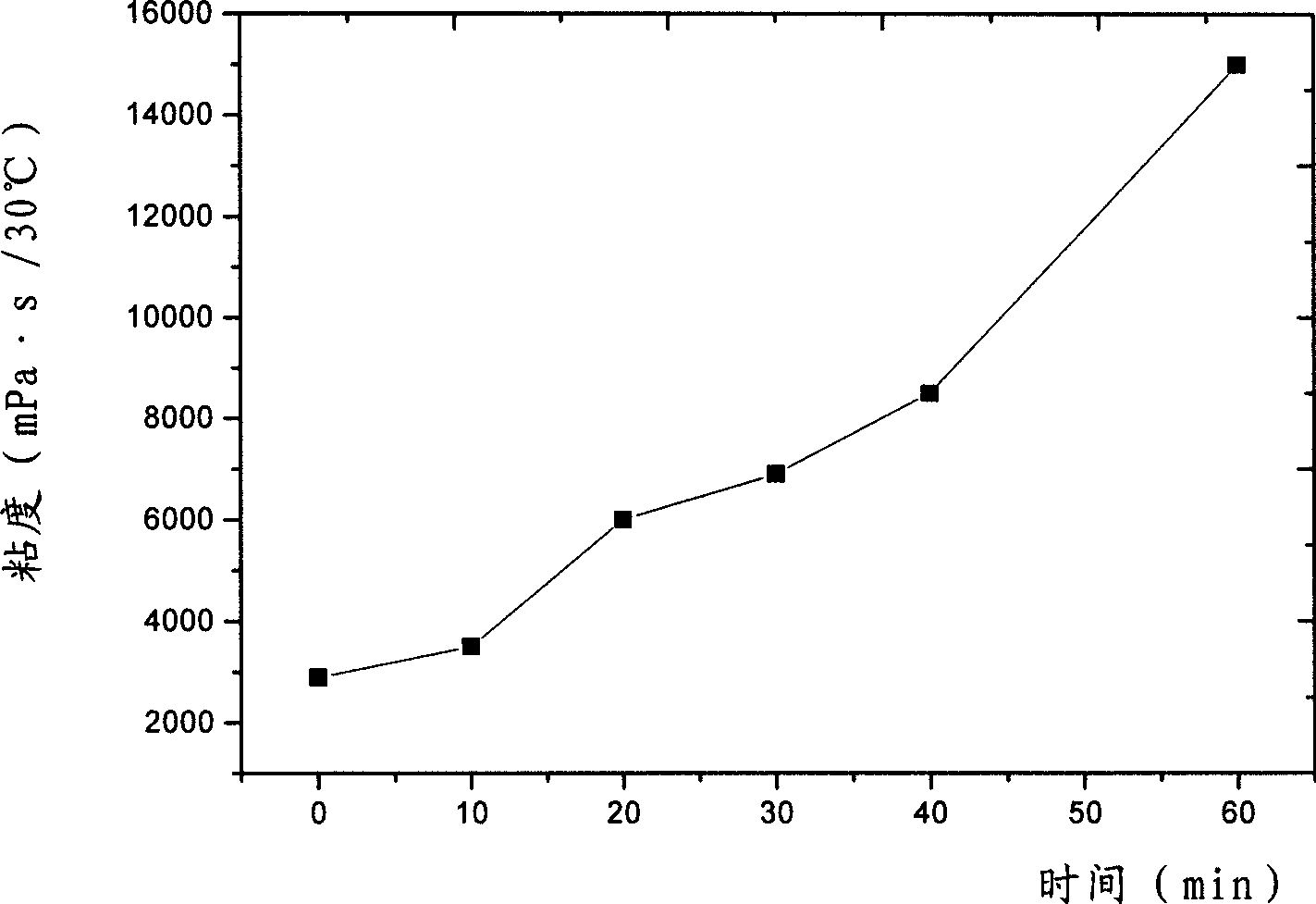
Examples
Embodiment 1
[0094] (1) Hydroxyl polyester polymer component (A):
[0095] The preparation of hydroxyl polyester polymer (I):
[0096] First, add 970g of adipic acid, 600g of diethylene glycol, 300g of 1,2- Propylene glycol and 0.2 g of catalyst tetrabutyl titanate. Then, the temperature was raised to 160°C for 2 hours, and then the temperature was gradually raised to 230°C at a rate of 10-15°C per hour. Finally, the reaction was incubated at 230° C. for 2.5 h. When the measured acid value is less than 20, start vacuuming for 1 hour under the condition of negative pressure less than 0.08MPa and temperature of 230°C. Finally, under the condition of a negative pressure of 0.1MPa, vacuumize for 1 hour to obtain the hydroxyl polyester polymer (I).
[0097] Preparation of hydroxyl polyester polymer (II):
[0098] First, add 1000g of adipic acid, 800g of ethylene glycol, 400g of glycerol, 500g of ortho Phthalic anhydride and 0.27 g of catalyst tetrabutyl titanate. Then, the temperature was ...
Embodiment 2
[0111] (1) Hydroxyl polyester polymer component (A):
[0112] The preparation of hydroxyl polyester polymer (I):
[0113] First, add 487g of adipic acid, 290g of diethylene glycol, 147g of 1,2- Propylene glycol and 0.09 g of catalyst tetrabutyl titanate. Then, the temperature was raised to 160°C for 2 hours, and then the temperature was gradually raised to 230°C at a rate of 10-15°C per hour. Finally, the reaction was incubated at 230° C. for 2.5 h. When the measured acid value is less than 20, start vacuuming for 1 hour under the condition of negative pressure less than 0.08MPa and temperature of 230°C. Finally, under the condition of a negative pressure of 0.1MPa, vacuumize for 1 hour to obtain the hydroxyl polyester polymer (I).
[0114] Preparation of hydroxyl polyester polymer (II):
[0115] First, in a reactor with stirrer, thermometer, straight cooler, horizontal cooler and nitrogen sealed tube, add 1080g of adipic acid, 790g of ethylene glycol, 580g of trimethylol...
Embodiment 3
[0128] (1) Hydroxyl polyester polymer component (A):
[0129] The preparation of hydroxyl polyester polymer (I):
[0130] First, add 241g of adipic acid, 150g of diethylene glycol, 75g of 1,2- Propylene glycol and 0.05 g of catalyst tetrabutyl titanate. Then, the temperature was raised to 160°C for 2 hours, and then the temperature was gradually raised to 230°C at a rate of 10-15°C per hour. Finally, the reaction was incubated at 230° C. for 2.5 h. When the measured acid value is <20, start vacuuming for 1 hour under the condition of negative pressure <0.08MPa and temperature of 230°C. Finally, under the condition of a negative pressure of 0.1MPa, vacuumize for 1 hour to obtain the hydroxyl polyester polymer (I).
[0131] Preparation of hydroxyl polyester polymer (II):
[0132] First, add 250g of adipic acid, 200g of ethylene glycol, 100g of glycerol, 125g of ortho Phthalic anhydride and 0.06 g of catalyst tetrabutyl titanate. Then, the temperature was raised to 150°C f...
PUM
| Property | Measurement | Unit |
|---|---|---|
| hydroxyl value | aaaaa | aaaaa |
| viscosity | aaaaa | aaaaa |
| viscosity | aaaaa | aaaaa |
Abstract
Description
Claims
Application Information
 Login to View More