
Post treatment for desalinated and soft water for balanced water composition supply
A salt water and seawater technology, applied in water/sewage treatment, neutralized water/sewage treatment, multi-stage water/sewage treatment, etc., can solve the problems of not being able to provide naturally, not meeting the proportion requirements, not being provided in water, etc.
- Summary
- Abstract
- Description
- Claims
- Application Information
AI Technical Summary
Problems solved by technology
Method used
Image

Examples
Embodiment 1
Embodiment 1 (operation under continuous mode)
[0057] Water quality requirements for post-treatment process outlets
Alkalinity>90mg / L CaCO 3
120>[Ca 2+ ]≥80mg / L CaCO 3
[Mg 2+ ]=24.3mg / L Mg 2+
CCPP≥3.0mg / L CaCO 3
pH=<8.5
General design
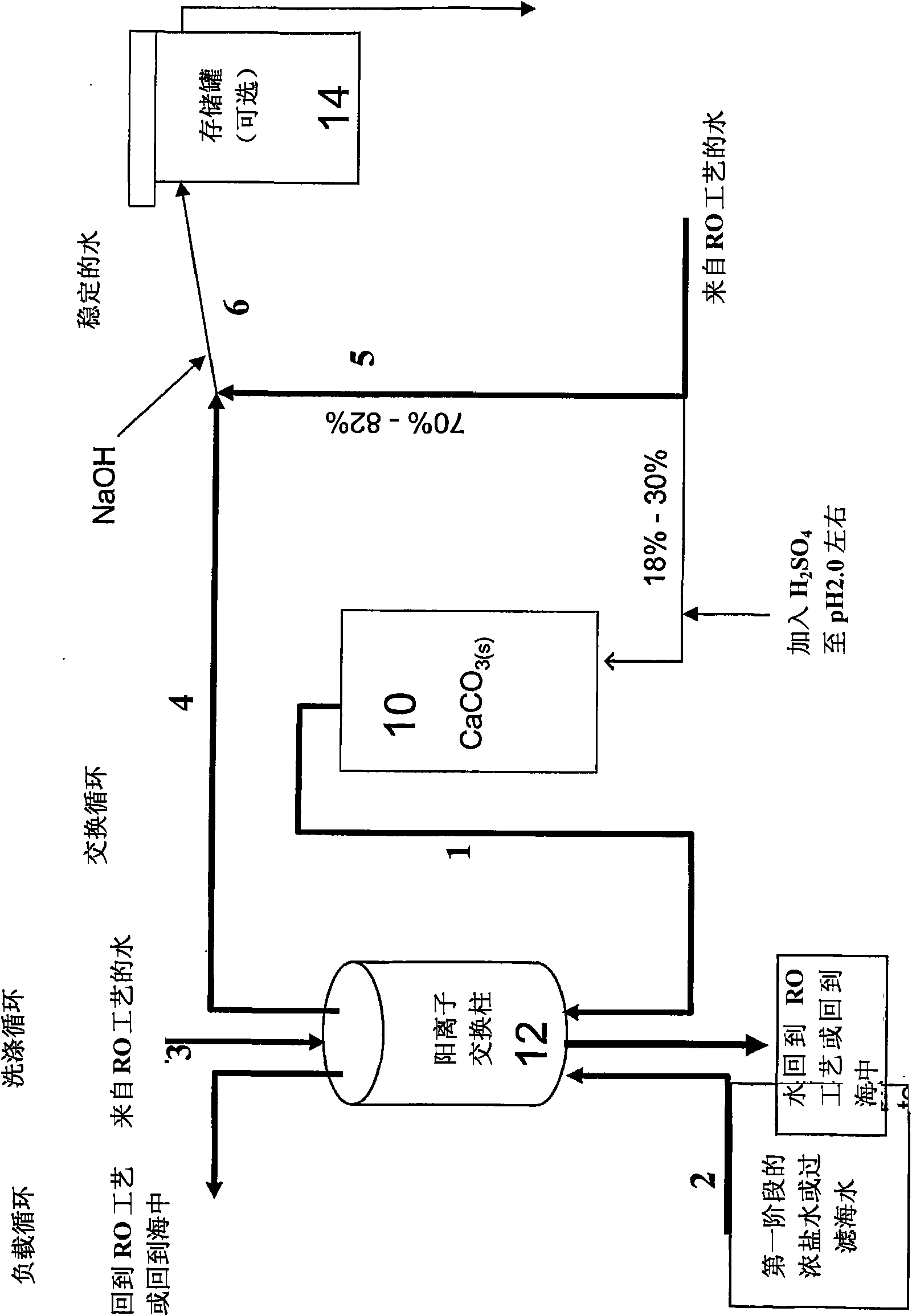
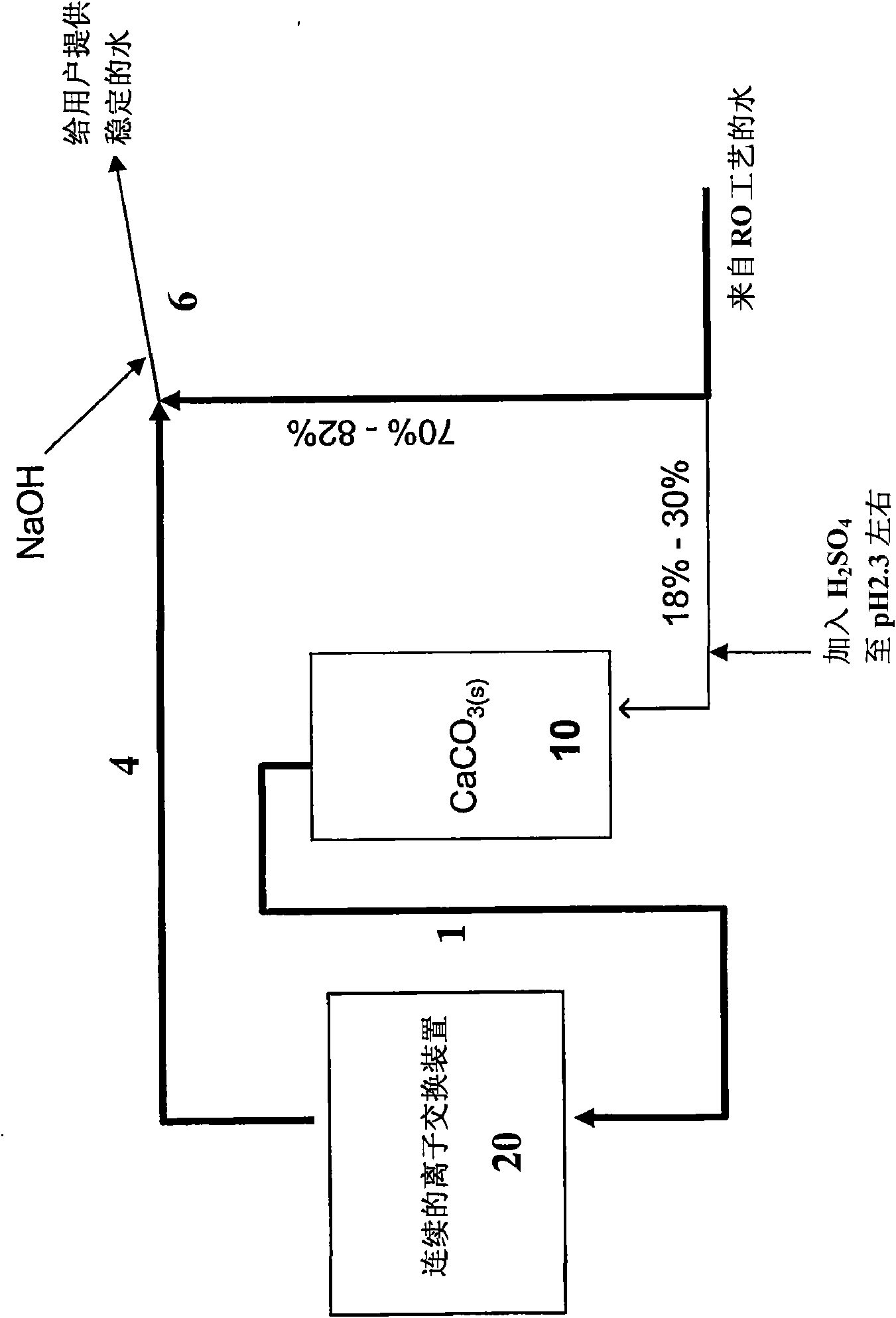
[0058] The chemicals that need to be added to the water as it passes through the calcite reactor are (assuming only 25% of the water passes through the calcite reactor, the chemical added per cubic meter of water represents 25% of these values):
h 2 SO 4 (100%)=487mg / L (pH reaches 2.06)
CaCO 3(s) =760mg / L
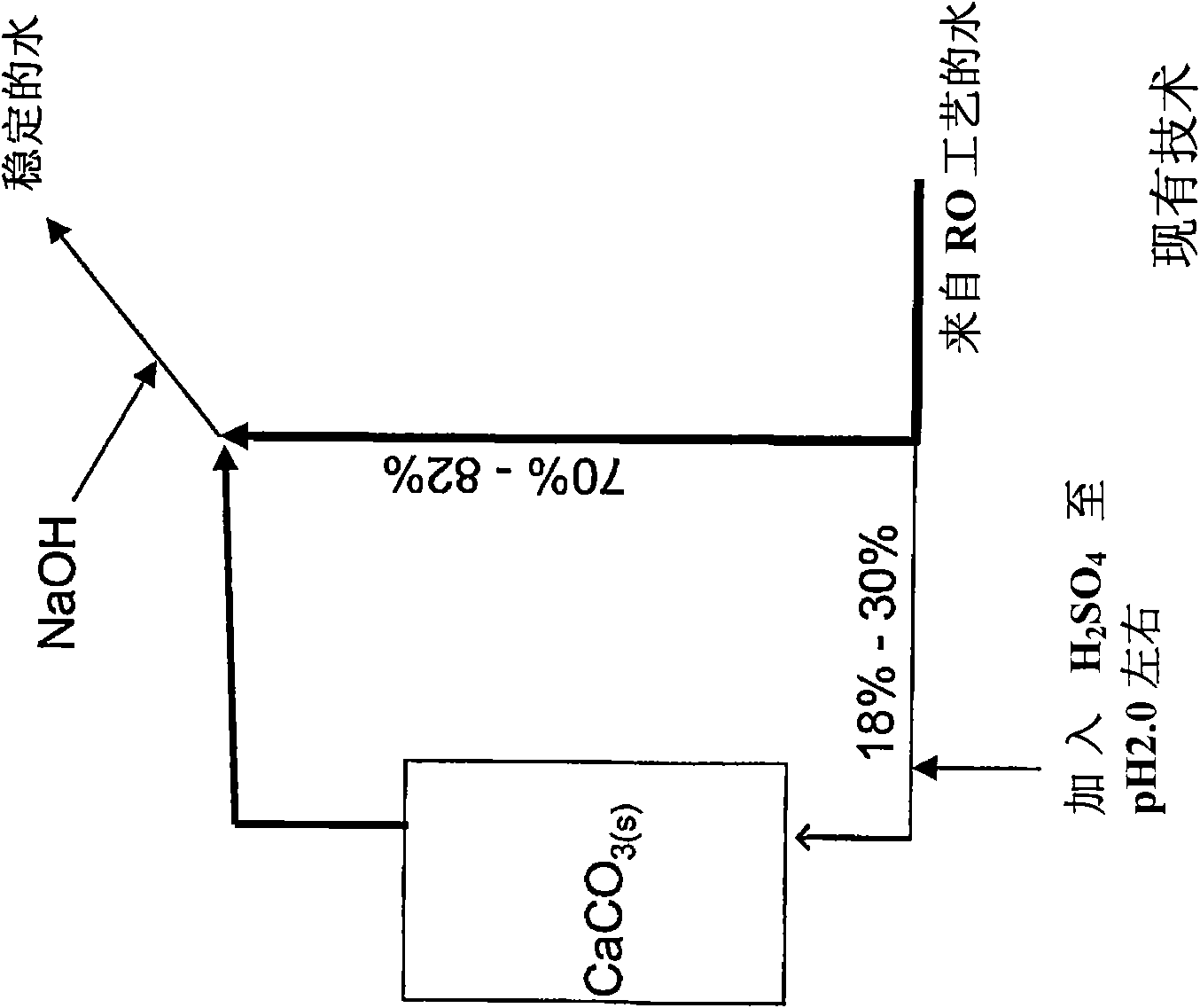
[0059] According to the existing calcite dissolution method, this water flow should be combined with 75% untreated water and added NaOH to obtain a pH value of about 7.8 to obtain the following results: Alkalinity = 92.5mg / L CaCO 3 , [Ca 2+ ]=190mg / L CaCO 3 , CCPP=3.2mg / L CaCO 3 (NaOH required in this hypothetical case is 21.4 mg / L).
[0060] In the method that the present invention proposes, the water quality...
Embodiment 2
Embodiment 2 (multi-column operation)
[0066] Water quality requirements for post-treatment process outlets
Alkalinity≥65mg / L CaCO 3
120>[Ca 2+ ]≥80mg / L CaCO 3
[Mg 2+ ]=12.15mg / L
CCPP≥2.0mg / L CaCO 3
pH<8.5
General design
[0067] The chemicals that need to be added to the water as it passes through the calcite reactor are (assuming only 25% of the water passes through the calcite reactor, the chemical added to the entire water flow represents a quarter of the dosage stated in this article):
h 2 SO 4 (100%)=316mg / L (pH reaches 2.24)
CaCO 3(s) =525mg / L
[0068] According to the existing calcite dissolution method, this water flow should be combined with 75% untreated water and added NaOH to obtain a pH value of about 8.2 to obtain the following results: Alkalinity = 66mg / L CaCO 3 , [Ca 2+ ]=132mg / L CaCO 3 , CCPP=3.0mg / L CaCO 3 (NaOH dosage required in this case is 12.3 mg / L).
[0069] In the method that the present invention proposes, the water (its...
PUM
 Login to View More
 Abstract
Description
Claims
Application Information
 Login to View More