
Method for inducing megakaryoblast and megakaryocyte in vitro
A technology for megakaryocyte progenitor cells and megakaryocyte cells is applied in the field of inducing and differentiating mononuclear cells into megakaryocyte progenitor cells and megakaryocyte cells in vitro, and can solve the problems of cumbersome methods and low expression levels.
- Summary
- Abstract
- Description
- Claims
- Application Information
AI Technical Summary
Problems solved by technology
Method used
Image

Examples
Embodiment 1
[0022] Example 1: Determination of Factor Combinations in Medium
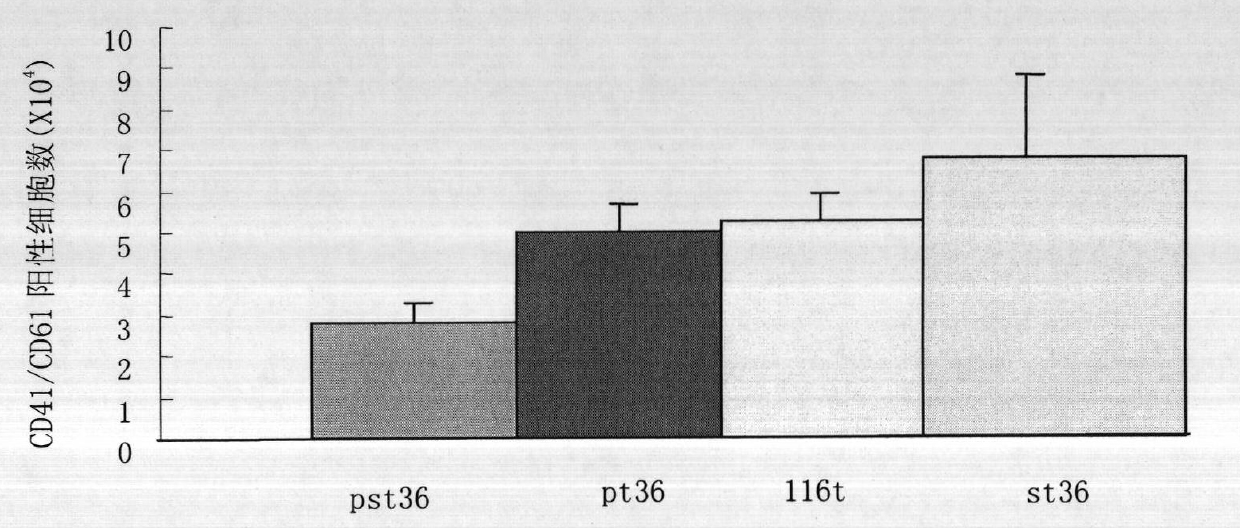
[0023] Experiment 1. Using domestic serum-free medium containing different cytokine combinations to induce cord blood mononuclear cells and observe the changes in the number of cells expressing CD41 / CD61
[0024] The domestic serum-free medium used in this experiment was BTN serum-free medium purchased from Beijing Botner Technology Co., Ltd.
[0025] Mononuclear cells (obtained from umbilical cord blood, see Example 2 for the process of isolating mononuclear cells) were seeded in 24-well plates, 1 ml per well, 10 6 cells / ml. The culture medium are:
[0026]Medium A: domestic serum-free medium, which contains 116t factor combination: 10ng / mL IL-11, 10ng / mL IL-6, 100ng / mL TPO.
[0027] Medium B: domestic serum-free medium, which contains st36 factor combination: 50ng / mL SCF, 50ng / mLTPO, 20ng / mL IL-3, 50ng / mLIL-6.
[0028] Medium C: domestic serum-free medium, which contains pt36 factor combination: 50ng / mL P...
Embodiment 2
[0039] Embodiment 2, in vitro induction of umbilical cord blood mononuclear cells to differentiate into megakaryotic progenitor cells and megakaryocytes and detection
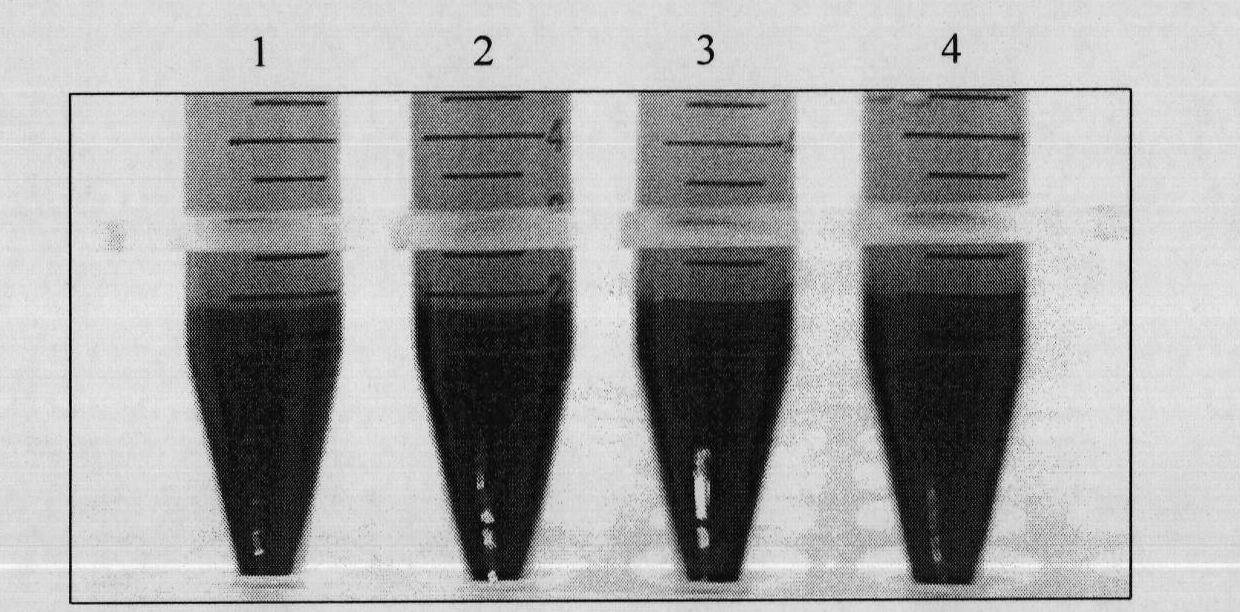
[0040] Experiment 3. Comparison of the sedimentation effect of different concentrations of hydroxyethyl starch (HES) in sedimentation of cord blood red blood cells
[0041] Mix 6% hydroxyethyl starch and cord blood in a certain proportion, so that the final concentration of hydroxyethyl starch is 2.0%, 1.5%, 1.2%, 1.0% ("%" means "g / 100ml"), and settle at room temperature Red blood cells for 30 minutes to compare the sedimentation effect. Then, carefully aspirate the supernatant, centrifuge at 1800rpm for 5min, suspend the cells in saline, and slowly add the cell suspension to the surface of an equal volume of human lymphocyte separation medium (FICOLL, Institute of Bioengineering, Chinese Academy of Medical Sciences) at 22°C , Centrifuge at 2000rpm for 25min, collect the mononuclear cell layer, wash with norm...
PUM
 Login to View More
 Abstract
Description
Claims
Application Information
 Login to View More