
Recombinant Pseudomonas putida CH01 capable of adsorbing heavy metal cadmium and application thereof
A technology of Pseudomonas putida and heavy metals, which is applied in the direction of recombinant DNA technology, bacteria, and the recovery of contaminated soil, etc., can solve the problem of weak tolerance of heavy metals, reduce the effective adsorption cycle of engineering bacteria, and improve the adsorption efficiency and capacity. Obvious enhancement and other issues to achieve the effect of reducing biological toxicity and promoting stable and high yield
- Summary
- Abstract
- Description
- Claims
- Application Information
AI Technical Summary
Problems solved by technology
Method used
Image

Examples
Embodiment 1
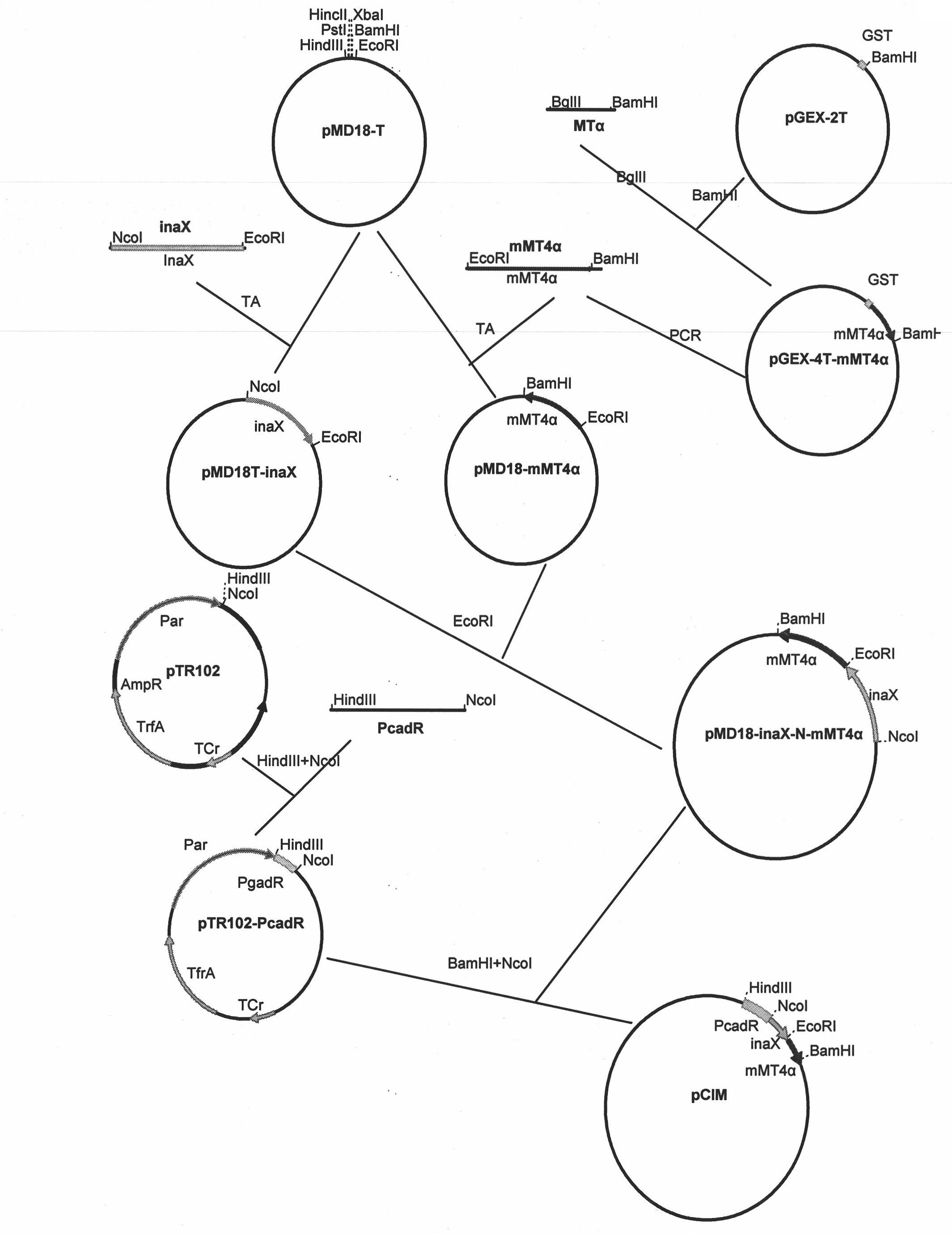
[0033] Example 1 Construction of functional plasmid pCIM for repairing cadmium pollution
[0034] The source of the nucleotide sequence utilized in the present invention is as follows: the cadmium responsive promoter is derived from Pseudomonas putida KT2440 (Pseudomonasputida) KT2440 (see SEQ ID NO: 3); the monkey metallothionein α domain sequence (see SEQ ID NO: 3) ID NO: 2), the sequence was provided by the laboratory of Professor Huang Zhongxian of Fudan University; inaX-N was derived from Xanthomonas campestris ATCC33913 (see SEQ ID NO: 1).
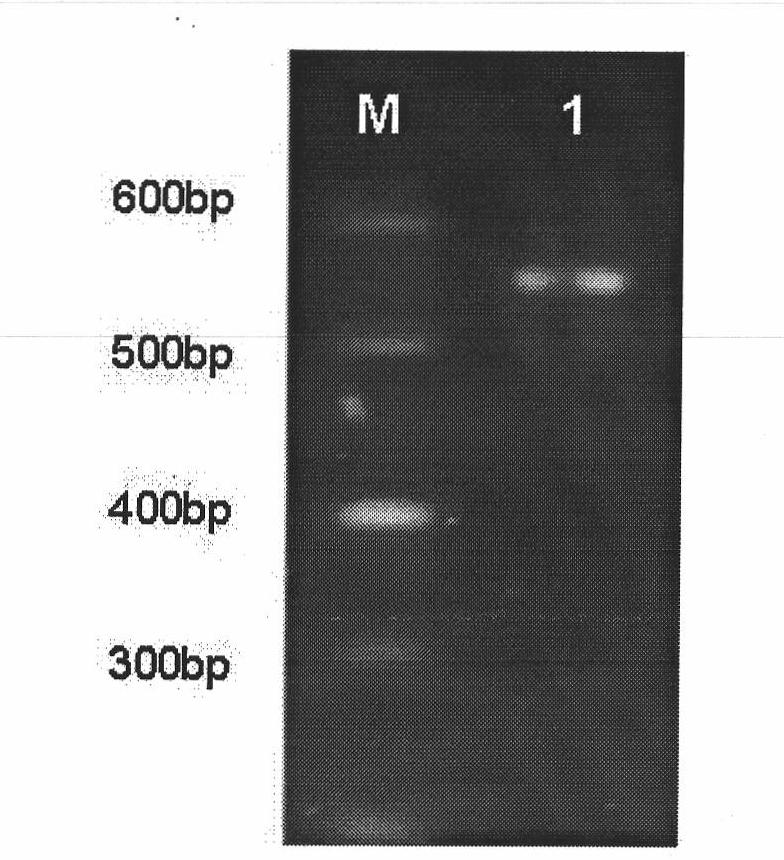
[0035] 1. Acquisition of Inax-N of Xanthomonas campestris
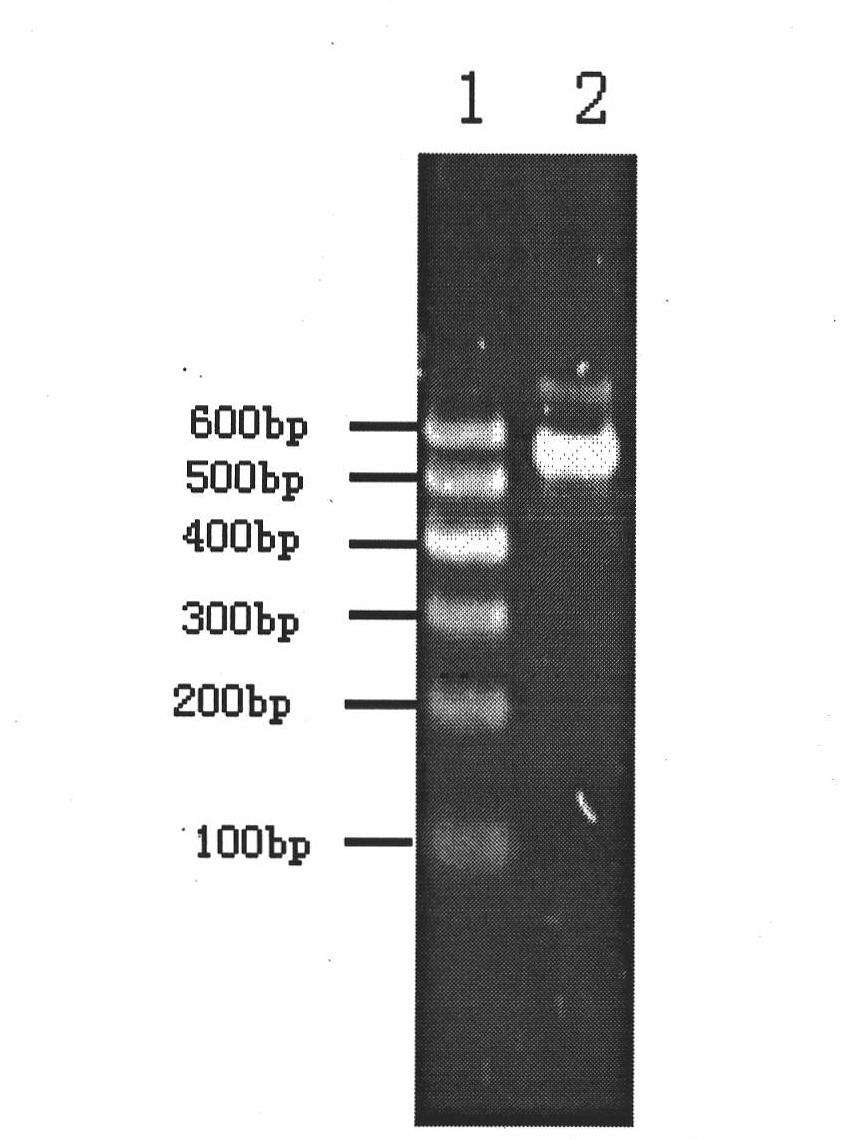
[0036]The applicant used the total DNA of Xanthomonas campestris ATCC33913 as a template, designed the upstream primer: 5'CCATGGATCGCGAAAAAGTCTTGG3', and the downstream primer 5'GAATTCTGCGTACCCGCGAAAT3', and carried out PCR amplification. PCR system includes 10×Buffer 2.5μl, Mg 2+ 1 μl, 2.5 μl of dNTP, 2 μl of template DNA, 1 μl of each primer, 0.5 μl of KOD-Plus, ddH 2 O...
Embodiment 2
[0063] Example 2 Experiment of the cadmium adsorption capacity of the genetically engineered bacteria CH01 of the present invention
[0064] 1. Adsorption of growing cadmium
[0065] The genetically engineered bacteria CHO1 constructed in the present invention and the starting strain Pseudomonas putida X4 were cultured overnight in the MJS medium containing the corresponding antibiotics, and then inoculated into 50 ml of fresh medium at a ratio of 1:100 and cultured to OD. 600 0.6, then add CdC1 with a final concentration of 100 μmol / L 2 , 2mL were sampled at 11h, 21h, and 31h, respectively, to measure the adsorption amount of cadmium. The specific measurement method is to centrifuge the bacterial sample at 13000 r / min for 5 min, wash the precipitate three times with 5 mmol / L HEPES buffer (pH 7.1) mixed with 0.8% NaCl solution, dry at 65 °C for 24 h, and then add 100 μL of concentrated nitric acid for 48 h. product with ddH 2 O dilution, and then the content of cadmium in t...
Embodiment 3
[0069] The genetic engineering bacteria CH01 of the present invention and the plant symbiotic hydroponic experiment
[0070] The plant nutrient solution for hydroponic culture prepared by the present invention is shown in Table 1.
[0071] Table 1 The formula of plant nutrient solution for hydroponics experiment
[0072]
[0073] The concrete steps of this embodiment are as follows:
[0074] (1) Soak corn and cowpea seeds with 95% ethanol for 5 minutes, then wash with 100% NaClO for 5 minutes, and then rinse with sterile water for 5-10 times. Put the corn and cowpea seeds in a petri dish with sterile water, and place them in a constant temperature light incubator at 28°C for germination. After the water in the petri dish of corn and cowpea seeds becomes turbid, change the water, and take about 3 days to root. The rooted seeds were placed on quartz sand to continue cultivation, and Hoagland's nutrient solution was poured once a day, and cultivated under constant temperatur...
PUM
 Login to View More
 Abstract
Description
Claims
Application Information
 Login to View More