
Interference detection device based on light-splitting synchronous phase shifting and detection method
A technology of interference detection and synchronous phase shifting, applied in the direction of measuring devices, optical devices, instruments, etc., can solve the problems of complex operation and low measurement accuracy, and achieve convenient and flexible operation, simple mapping relationship, and suitable for real-time dynamic measurement Effect
- Summary
- Abstract
- Description
- Claims
- Application Information
AI Technical Summary
Problems solved by technology
Method used
Image

Examples
specific Embodiment approach 1
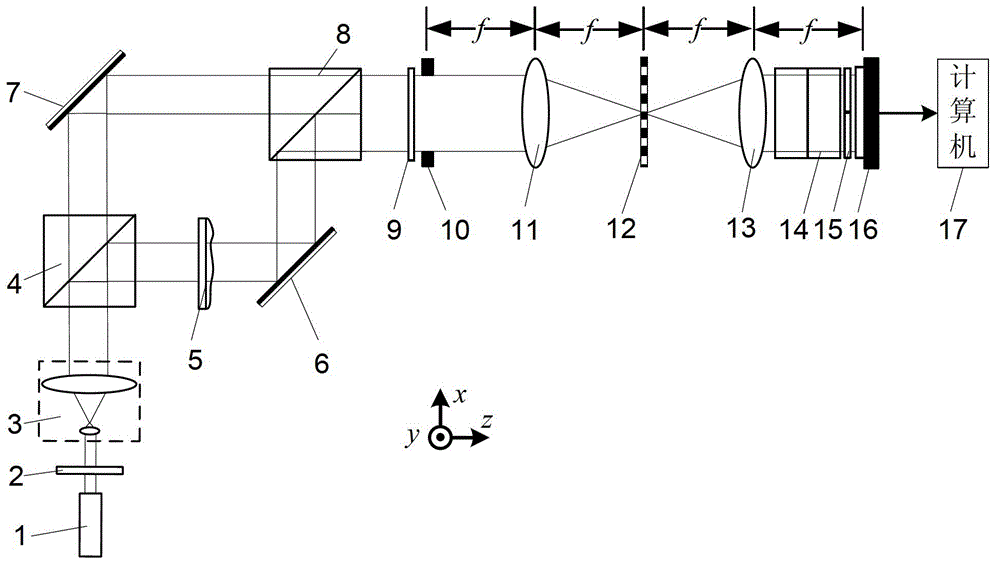
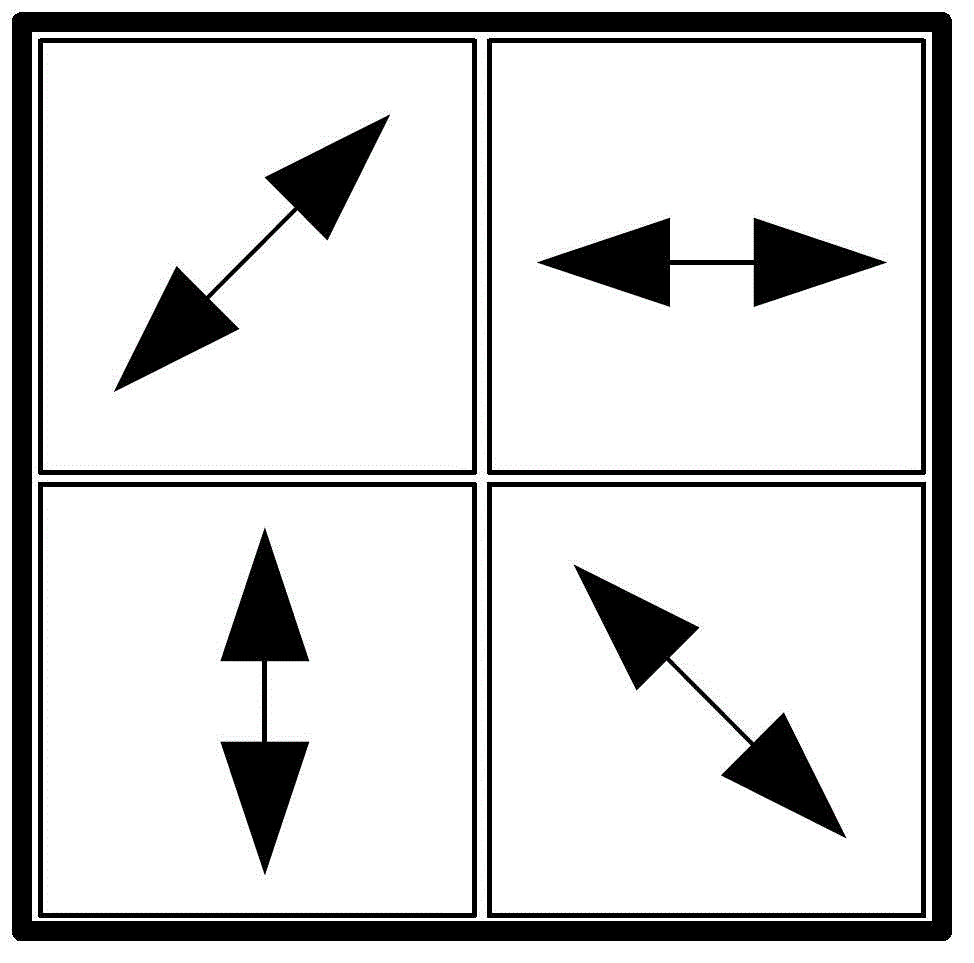
[0032] Specific implementation mode one: the following combination Figure 1 to Figure 4 Describe this embodiment mode, the interferometric detection device based on light splitting synchronous phase shifting described in this embodiment mode, it comprises light source 1, it also comprises polarizer 2, collimation beam expander system 3, first polarizing beam splitting prism 4, object to be measured 5 , the first reflector 6, the second reflector 7, the second polarization beam splitter prism 8, λ / 4 wave plate 9, rectangular window 10, the first Fourier lens 11, one-dimensional periodic grating 12, the second Fourier Lens 13, depolarization beamsplitter prism 14, four-quadrant polarizer group 15, image sensor 16 and computer 17, wherein λ is the light wavelength of the light beam emitted by light source 1,
[0033] The light beam emitted by the light source 1 enters the light receiving surface of the collimated beam expander system 3 through the polarizer 2, and the outgoing b...
specific Embodiment approach 2
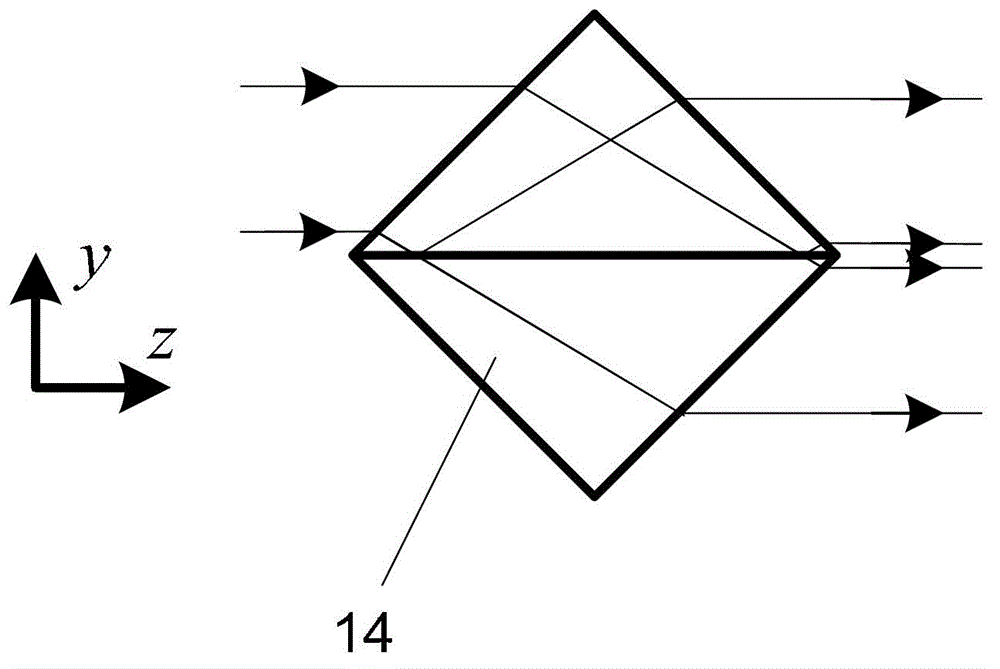
[0042] Specific implementation mode two: the following combination figure 2 Describe this embodiment mode, this embodiment mode will be further described to Embodiment 1, the depolarization dichroic prism 14 is placed according to the mode that its dichroic surface is parallel to the plane formed by x-axis and z-axis, and the incident light is from 45° or -45° to its dichroic plane. ° Angle of incidence.
specific Embodiment approach 3
[0043] Embodiment 3: This embodiment further describes Embodiment 1 or 2. The one-dimensional periodic grating 12 is a binary one-dimensional periodic grating or a sine one-dimensional periodic grating or a cosine one-dimensional periodic grating.
[0044] In this embodiment, the one-dimensional periodic grating 12 adopts a Ronchi grating with a period d=50 μm.
PUM
 Login to View More
 Abstract
Description
Claims
Application Information
 Login to View More