Single phase asymmetrical full-bridge non-isolated photovoltaic grid-connected inverter

An asymmetric, non-isolated technology, applied in photovoltaic power generation, AC network circuits, conversion of AC power input to DC power output, etc., can solve problems such as leakage current loss

CN103166495AInactive Publication Date: 2013-06-19SHANGHAI CONVERTERGY ENERGY TECH
2 Cites 7 Cited by

Patent Information

Authority / Receiving Office
CN · China
Current Assignee / Owner
Publication Date
2013-06-19
Estimated Expiration
Not applicable · inactive patent

Smart Images

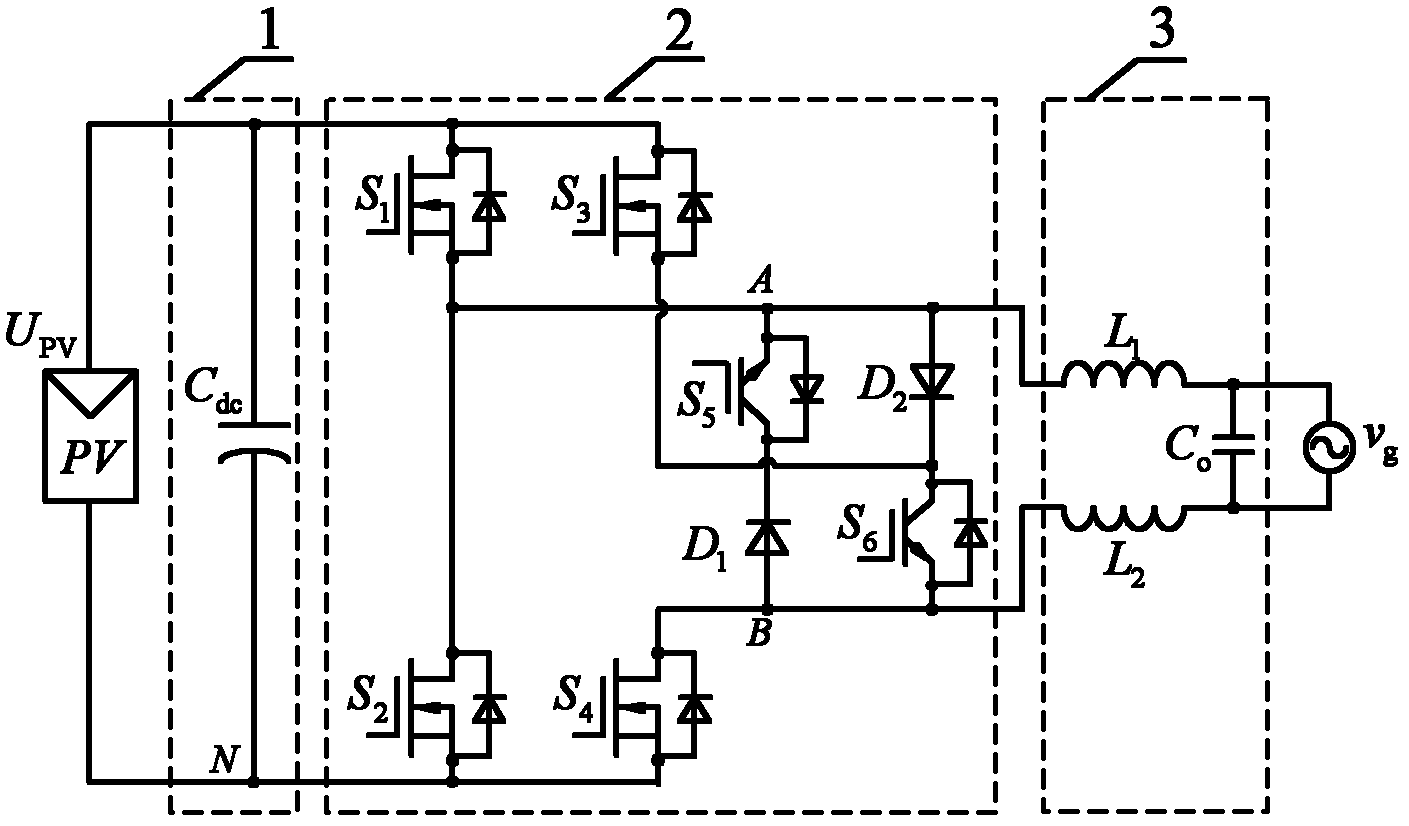
  • Figure 1
    Figure 1
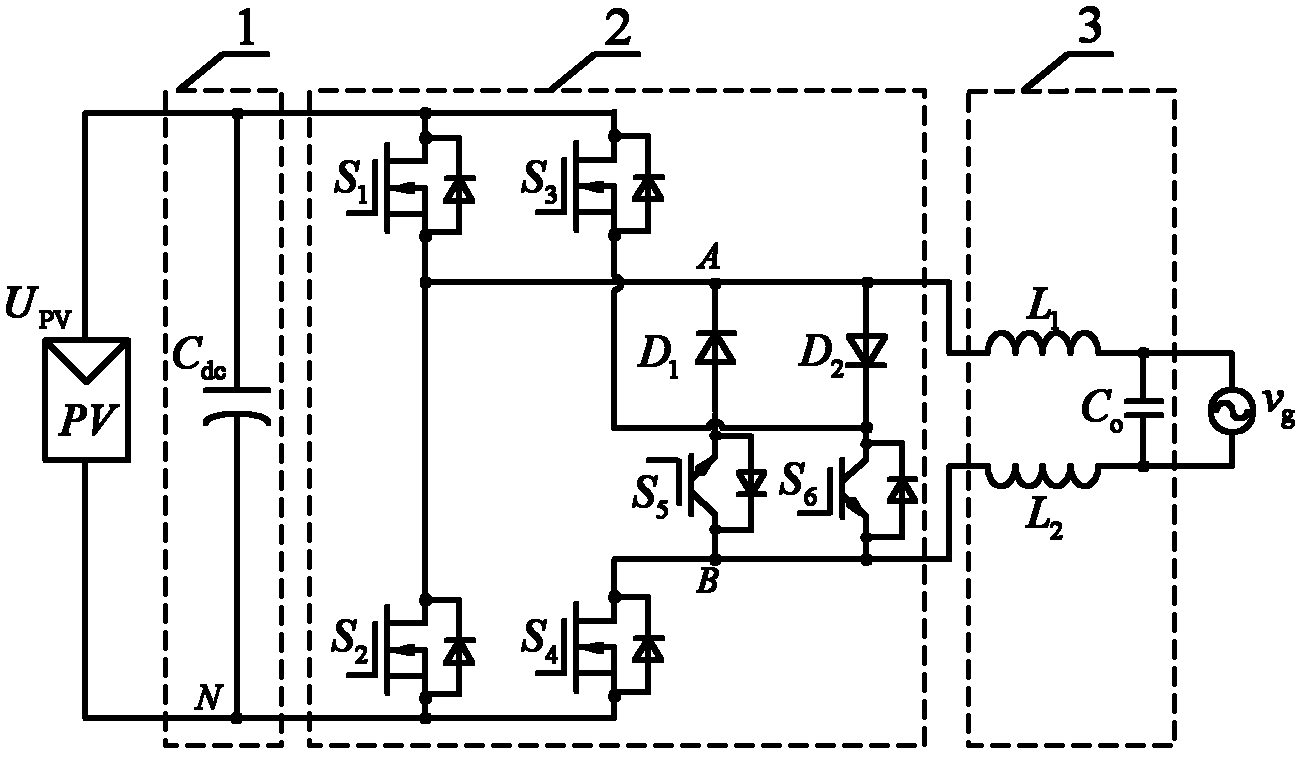
  • Figure 2
    Figure 2
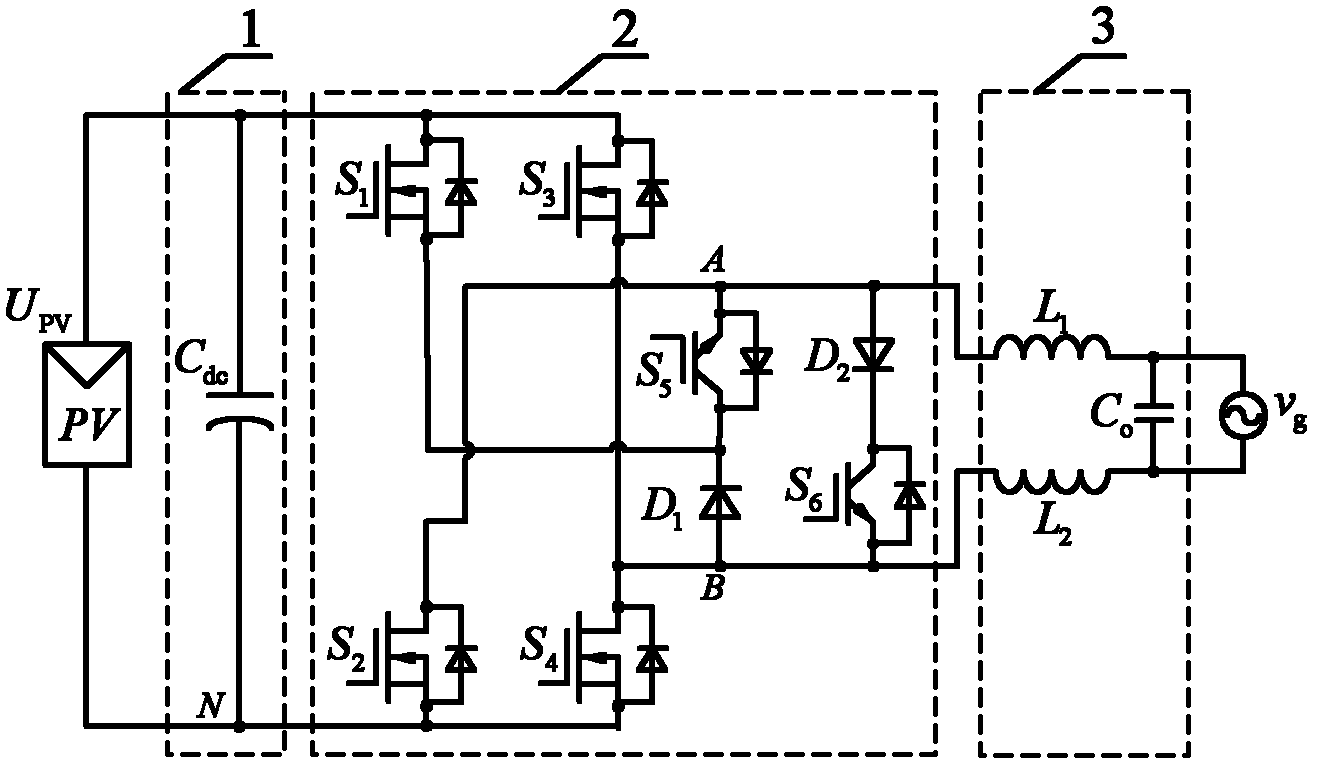
  • Figure 3
    Figure 3
Patent Text Reader

Abstract

The invention discloses a single phase asymmetrical full-bridge non-isolated photovoltaic grid-connected inverter, and belongs to the technical field of power electronic converters. The single phase asymmetrical full-bridge non-isolated photovoltaic grid-connected inverter is composed of an input capacitance branch, an improved full-bridge switch unit and a net filter branch. On the basis of a basic full-bridge circuit, an auxiliary switch is disposed on the single phase asymmetrical full-bridge non-isolated photovoltaic grid-connected inverter, so that a after-flow return circuit is separated from an output end of a photovoltaic cell during after-flow, electric potential of the after-flow return circuit is or near to half of the cell voltage, and thus the non-isolated photovoltaic grid-connected inverter is prevented and avoided from leaking currents. Compared with the prior non-isolated photovoltaic inverter topology, the single phase asymmetrical full-bridge non-isolated photovoltaic grid-connected inverter has the advantages that number of switch tubes of current paths decreases, conduction losses are reduced, and conversion efficiency is improved. Further, the single phase asymmetrical full-bridge non-isolated photovoltaic grid-connected inverter is suitable for photovoltaic grid-connected sites without isolation of transformers.
Need to check novelty before this filing date? Find Prior Art

Description

technical field

[0001] The invention belongs to the technical field of power electronic converters, relates to photovoltaic grid-connected power generation technology, and in particular to a single-phase asymmetric full-bridge non-isolated photovoltaic grid-connected inverter. Background technique

[0002] Non-isolated photovoltaic grid-connected inverters have the absolute advantages of high efficiency, small size, light weight and low cost. However, due to the existence of the parasitic capacitance of the photovoltaic panel to the ground, the switching action of the switching device of the grid-connected inverter may generate a high-frequency time-varying voltage to act on the parasitic capacitance, and the resulting leakage current may exceed the allowable range. The generation of high-frequency leakage current will also bring conduction and radiation interference, increase the harmonics and loss of the network current, and even endanger the safety of equipment and person...

Examples

Embodiment Construction

[0036] In order to make the technical means, creative features, goals and effects achieved by the present invention easy to understand, the present invention will be further described below in conjunction with specific illustrations.

[0037] The single-phase asymmetric full-bridge non-isolated photovoltaic grid-connected inverter provided by the present invention is the same as the existing inverter in application, and the input end is connected to the solar cell, and the output end is connected to the power grid.

[0038] In order to solve the defects existing in the prior art, the present invention adds an auxiliary switch on the basis of the basic full-bridge circuit to realize the separation between the freewheeling circuit and the output terminal of the photovoltaic cell during the freewheeling stage, and the potential of the freewheeling circuit is at or approximately at half of the Battery voltage, thereby suppressing and eliminating the leakage current of non-isolated ...