Positive definite matrix floating point inversion device based on FPGA and inversion method thereof

A positive definite matrix, floating point technology, applied in the field of high performance computing

CN103678257AActive Publication Date: 2014-03-26上海碧帝数据科技有限公司
3 Cites 18 Cited by

Patent Information

Authority / Receiving Office
CN · China
Current Assignee / Owner
Publication Date
2014-03-26

Smart Images

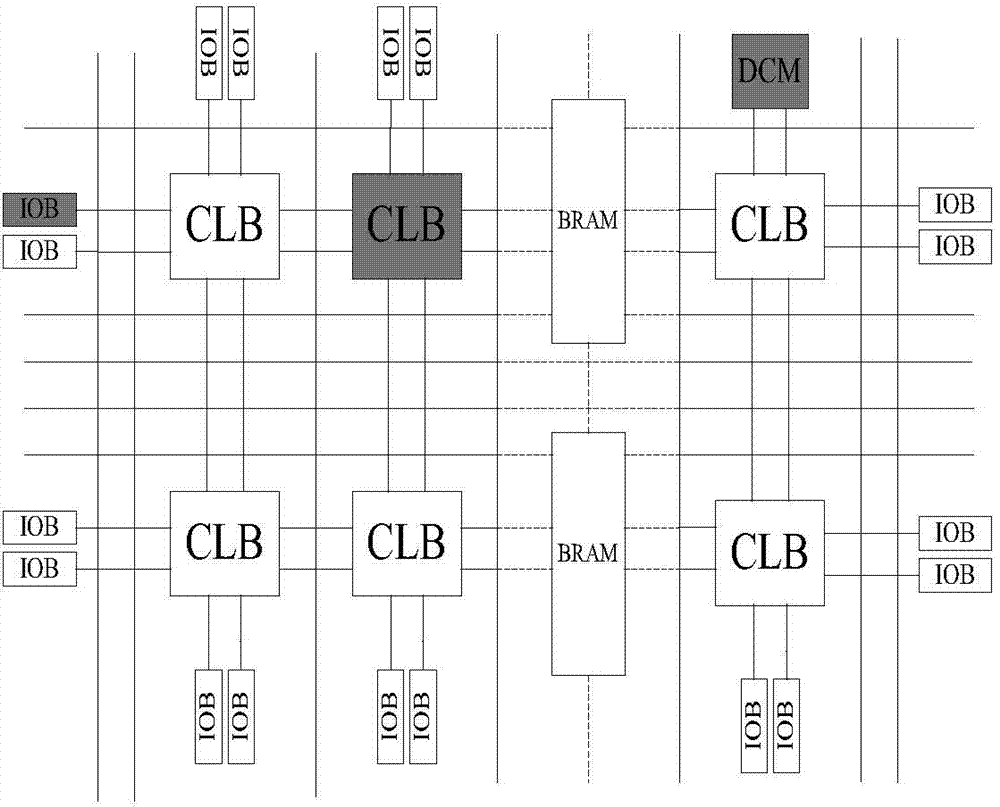
  • Figure 1
    Figure 1
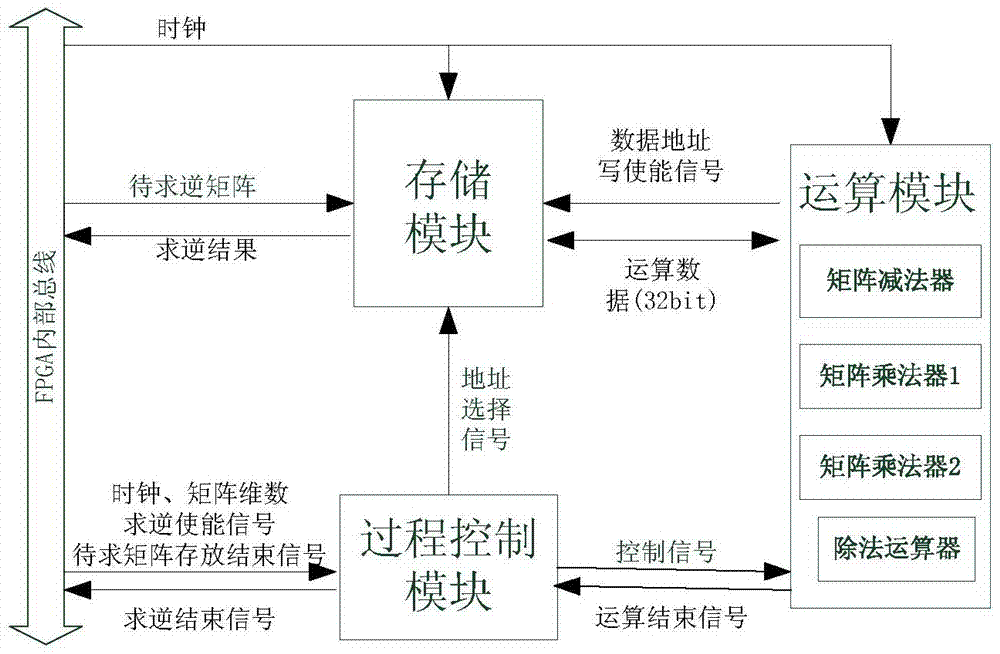
  • Figure 2
    Figure 2
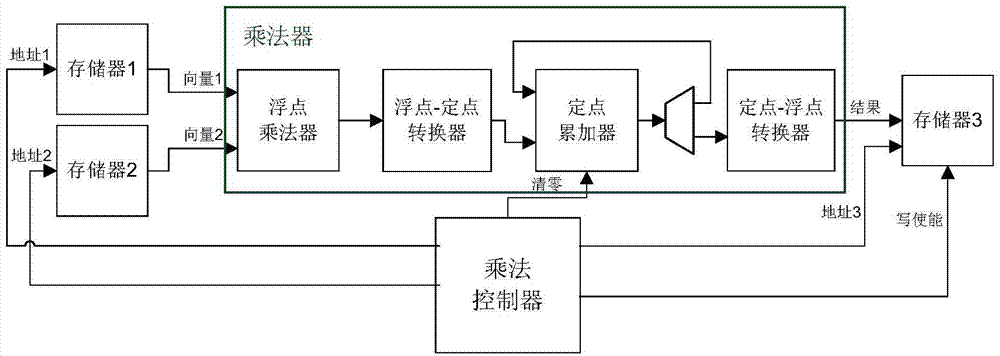
  • Figure 3
    Figure 3
Patent Text Reader

Abstract

The invention discloses a positive definite matrix floating point inversion device based on an FPGA and an inversion method thereof. The inversion device comprises a process control module, an operation module and a storage module. The process control module is respectively connected with the operation module and the storage module. The operation module is connected with the storage module. The process control module is used for generating a signal to control the orderly operation of the operation module and the storage module. The operation module is used for carrying out the matrix operation. The storage module is used for caching data of a matrix to be operated and data of a result matrix and providing a system bus access interface. The positive definite matrix floating point inversion device can be conveniently and rapidly achieved on a chip of the FPGA, and on the premise of guaranteeing the precision, the matrix inversion speed is improved.
Need to check novelty before this filing date? Find Prior Art

Description

technical field

[0001] The invention belongs to the field of high-performance computing, in particular to an FPGA-based positive definite matrix floating-point invertor and an inversion method thereof. Background technique

[0002] Matrix operation is a basic operation in scientific computing, and it exists widely in the fields of industrial control, pattern recognition, digital signal processing, etc. Especially in the process of predictive control quadratic programming, positive definite matrix inversion becomes the most time-consuming in the calculation process. Critical operations that seriously affect the overall performance of the control. At present, most matrix inversions are realized by software, but as the dimension of the matrix increases, the speed of software processing will also slow down significantly. And because the calculation software cannot be embedded in the embedded electronic system with high real-time requirements, the defect that the inversion of th...

Examples

Embodiment Construction

[0055] The present invention will be further described below in conjunction with the embodiments and accompanying drawings, but the protection scope of the present invention should not be limited thereby.

[0056] The positive definite matrix floating-point invertor of the present invention is mainly composed of three parts: a process control module, an operation module and a storage module, and its overall structure and internal signal flow are as follows: figure 2 shown. The positive definite matrix floating-point invertor is implemented by using Xilinx's Virtex IV (XC4VFX12-10-ffg668) chip. The specific implementation process of each module is:

[0057] 1. Process control module

[0058] In this embodiment, the process control module is implemented by digital logic circuits such as LUTs (look-up tables) and FF (flip-flops) inside the XC4VFX12-10-ffg668 chip, such as basic units such as finite state machines, multiplexers, and counters. The multiplexer mainly includes an ...