
Time division multiplexing optical fiber grating sensing network with high renewability
A high reproducibility, fiber grating technology, applied in the field of sensing, can solve problems such as failure to work normally, limited number of gratings, and increased scanning cycle, etc., to achieve high reproducibility and reliability, high degree of automation, and convenient The effect of post-maintenance
- Summary
- Abstract
- Description
- Claims
- Application Information
AI Technical Summary
Problems solved by technology
Method used
Image

Examples
Embodiment Construction
[0030] The technical solutions and implementation principles of the present invention will be further described below in conjunction with the accompanying drawings.
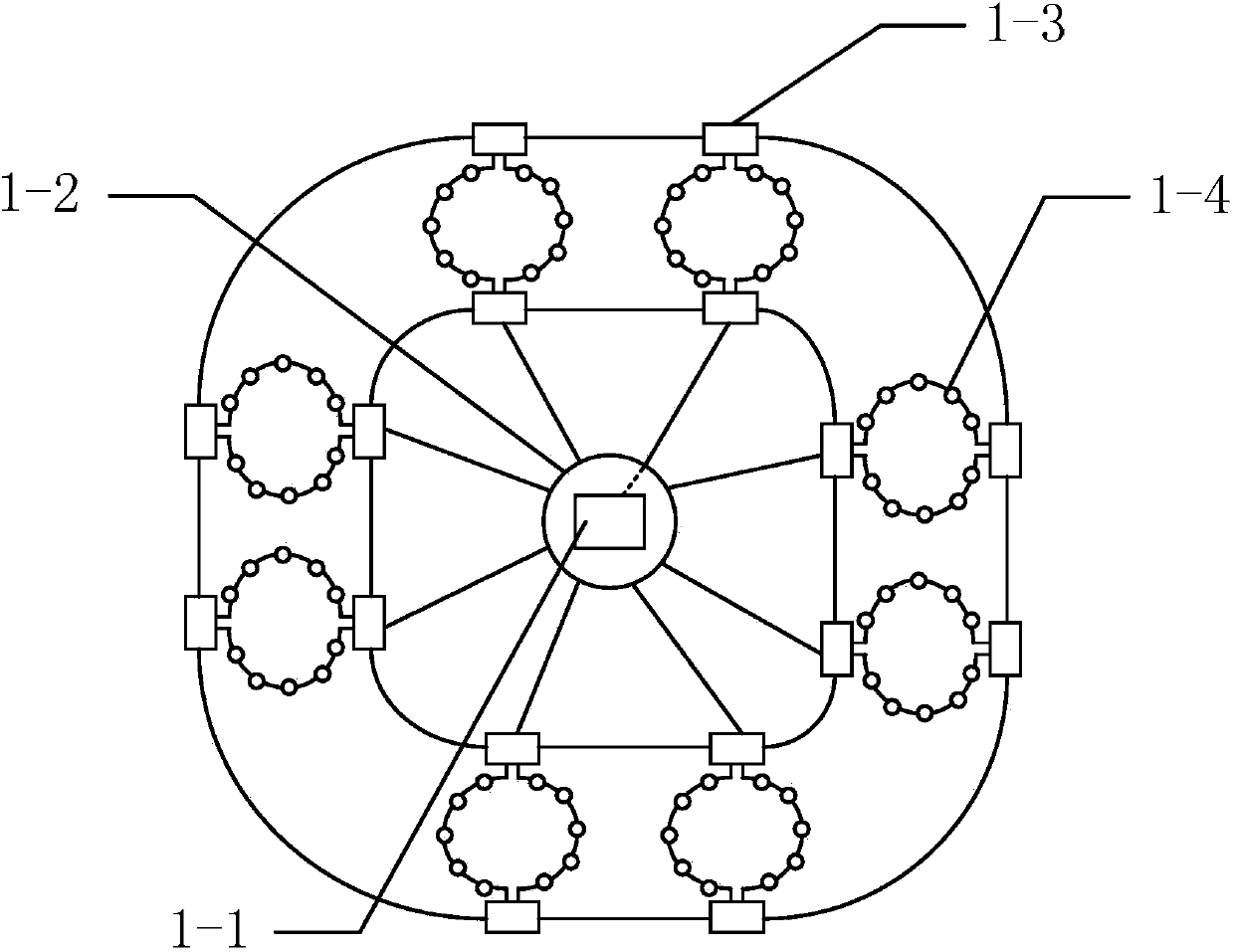
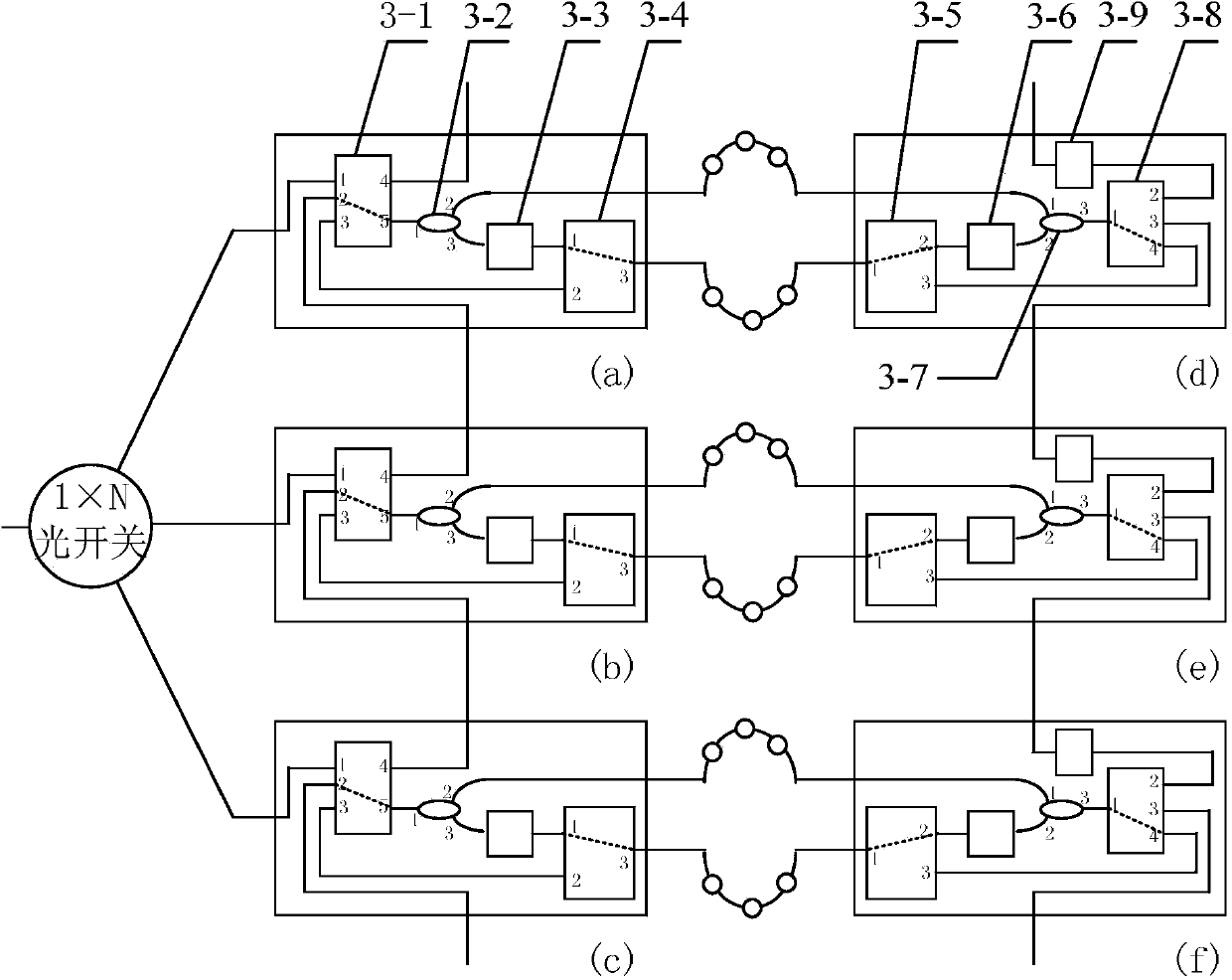
[0031] The present invention is a highly reproducible time-division multiplexing fiber grating sensor network, such as figure 1 As shown, it includes a control center 1-1, a 1×N optical switch 1-2 (that is, the main switch), N path selection and delay nodes 1-3 (that is, a remote node) and N weak reflection fiber grating transmission Sensing subnet 1-4 (that is, sensing subnet). The control center 1-1 is connected to N weak reflection fiber Bragg grating sensing subnets 1-4 through 1×N optical switches 1-2, and the weak reflection fiber Bragg grating sensing subnet 1-4 is selected by the path and the delay node 1-3 connected to form a ring structure.
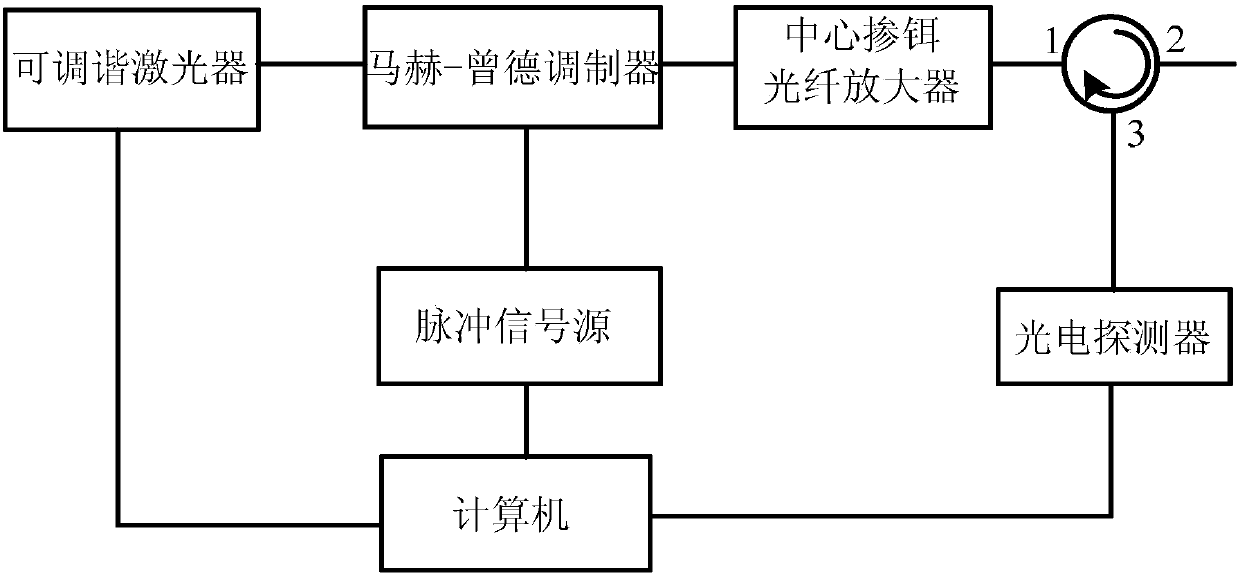
[0032] The role of the control center 1-1 is to provide light sources, demodulate sensing signals, and realize the control of optical switches and programmable o...
PUM
 Login to View More
 Abstract
Description
Claims
Application Information
 Login to View More