Petroleum catalytic processing method
A catalytic processing and petroleum technology, which is applied in the petroleum industry, catalytic cracking, cracking, etc., can solve the problems of unsatisfactory product distribution and low yield of target products, so as to improve the distribution of cracked products, increase the yield, and increase the secondary cracking The effect of the reaction
- Summary
- Abstract
- Description
- Claims
- Application Information
AI Technical Summary
Problems solved by technology
Method used
Image

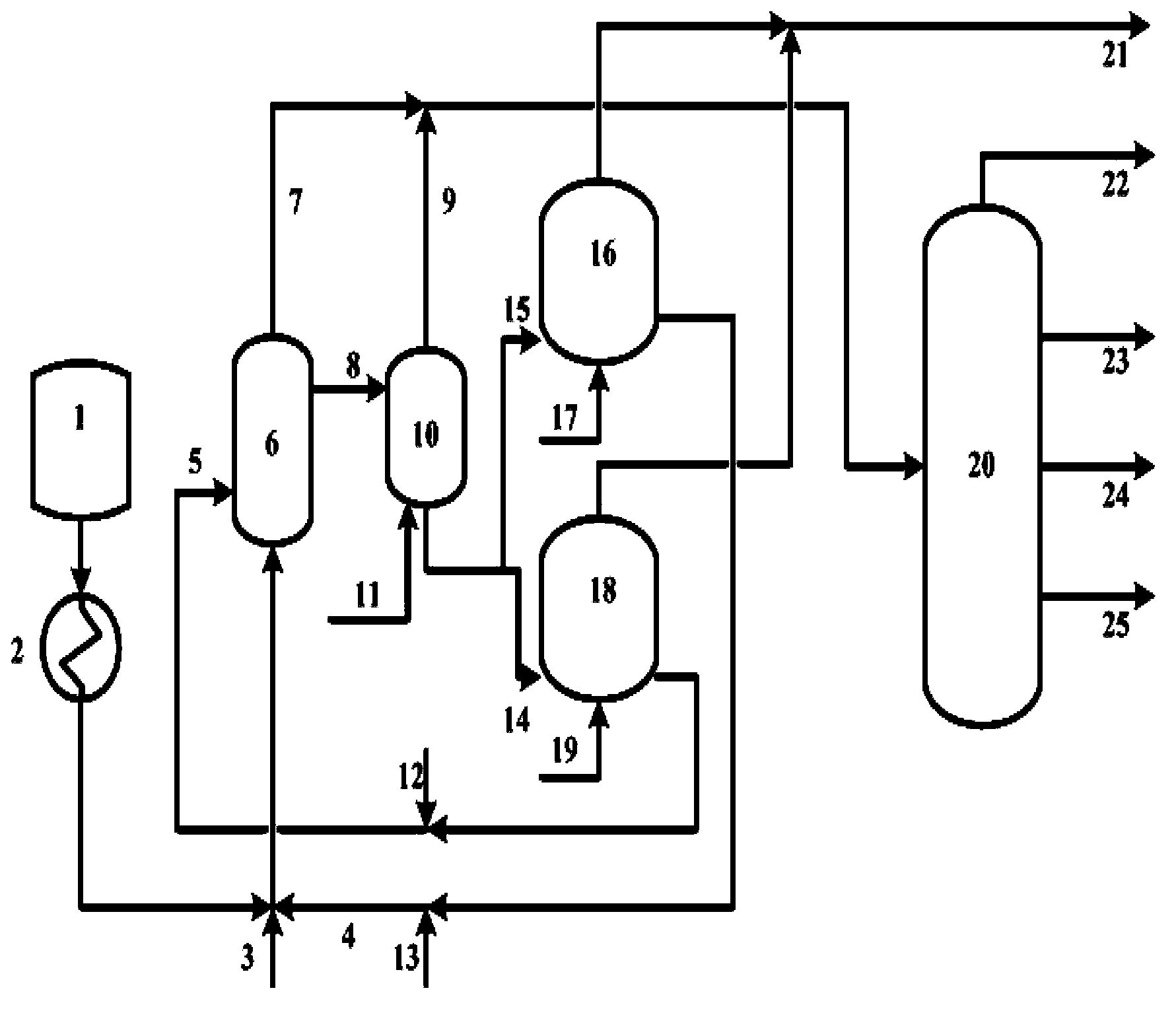


Examples
Embodiment 1
[0036] Using oil A (see Table 1 for its properties) as raw oil, the small riser reactor with catalyst inlets on the side wall and bottom is in contact with Y-15 catalytic cracking catalyst to undergo catalytic cracking reaction, and the raw material oil enters from the bottom inlet reactor. Among them, the side wall inlet is at the lower 1 / 4 position of the reactor, the catalyst flow ratio between the bottom inlet and the side wall inlet is 5:5, the carbon content of the catalyst at the bottom inlet is 0.44%, and the carbon content of the catalyst at the side wall inlet is 0.06%. The catalytic cracking process conditions are: the reactor outlet temperature is 498°C, the catalyst oil ratio is 4.5, the half regeneration temperature is 648°C, and the full regeneration temperature is 668°C. The distribution of catalytic cracking products is shown in Table 2.
Embodiment 2
[0041] Using oil B (see Table 1 for its properties) as feedstock oil, in a small riser reactor with catalyst inlets on the side wall and bottom, it contacts with the catalytic cracking catalyst of commercial brand DVR-3 to undergo catalytic cracking reaction. The bottom inlet enters the reactor. Among them, the side wall inlet is located in the lower 1 / 3 of the reactor, the catalyst flow ratio between the bottom inlet and the side wall inlet is 6:4, the carbon content of the catalyst at the bottom inlet is 0.52%, and the carbon content of the catalyst at the side wall inlet is 0.05%. The catalytic cracking process conditions are: the reactor outlet temperature is 498°C, the catalyst oil ratio is 4.5, the half regeneration temperature is 644°C, and the full regeneration temperature is 667°C. The distribution of catalytic cracking products is shown in Table 2. Comparative example 2
Embodiment 3
[0045] Using oil C (see Table 1 for its properties) as feedstock oil, in a small riser reactor with catalyst inlets on the side wall and bottom, it contacts with commercial brand CRC-1 catalytic cracking catalyst to undergo catalytic cracking reaction. The bottom inlet enters the reactor. Among them, the side wall inlet is at the lower 1 / 5 position of the reactor, the catalyst flow ratio between the bottom inlet and the side wall inlet is 4:6, the carbon content of the catalyst at the bottom inlet is 0.52%, and the carbon content of the catalyst at the side wall inlet is 0.05%. The catalytic cracking process conditions are: the reactor outlet temperature is 498°C, the catalyst oil ratio is 4.5, the half regeneration temperature is 698°C, and the full regeneration temperature is 732°C. The distribution of catalytic cracking products is shown in Table 2.
PUM
| Property | Measurement | Unit |
|---|---|---|
| quality score | aaaaa | aaaaa |
Abstract
Description
Claims
Application Information
 Login to View More