Method for rapidly evaluating freeze-thaw resistance of water-based polymer coating material

A water-based polymer and coating material technology, which is applied in the analysis of materials, flow characteristics, strength characteristics, etc., can solve the problems of time-consuming, heavy workload, and affecting the accuracy of experiments, so as to improve the overall quality and save time. Effect

A water-based polymer and coating material technology, which is applied in the analysis of materials, flow characteristics, strength characteristics, etc., can solve the problems of time-consuming, heavy workload, and affecting the accuracy of experiments, so as to improve the overall quality and save time. Effect

CN105954150AInactive Publication Date: 2016-09-21NIPPON PAINT GUANGZHOU

Image

Smart Image Click on the blue labels to locate them in the text.
Viewing Examples
Smart Image
  • Method for rapidly evaluating freeze-thaw resistance of water-based polymer coating material
  • Method for rapidly evaluating freeze-thaw resistance of water-based polymer coating material
  • Method for rapidly evaluating freeze-thaw resistance of water-based polymer coating material

Examples

Experimental program
Comparison scheme
Effect test

Embodiment 1

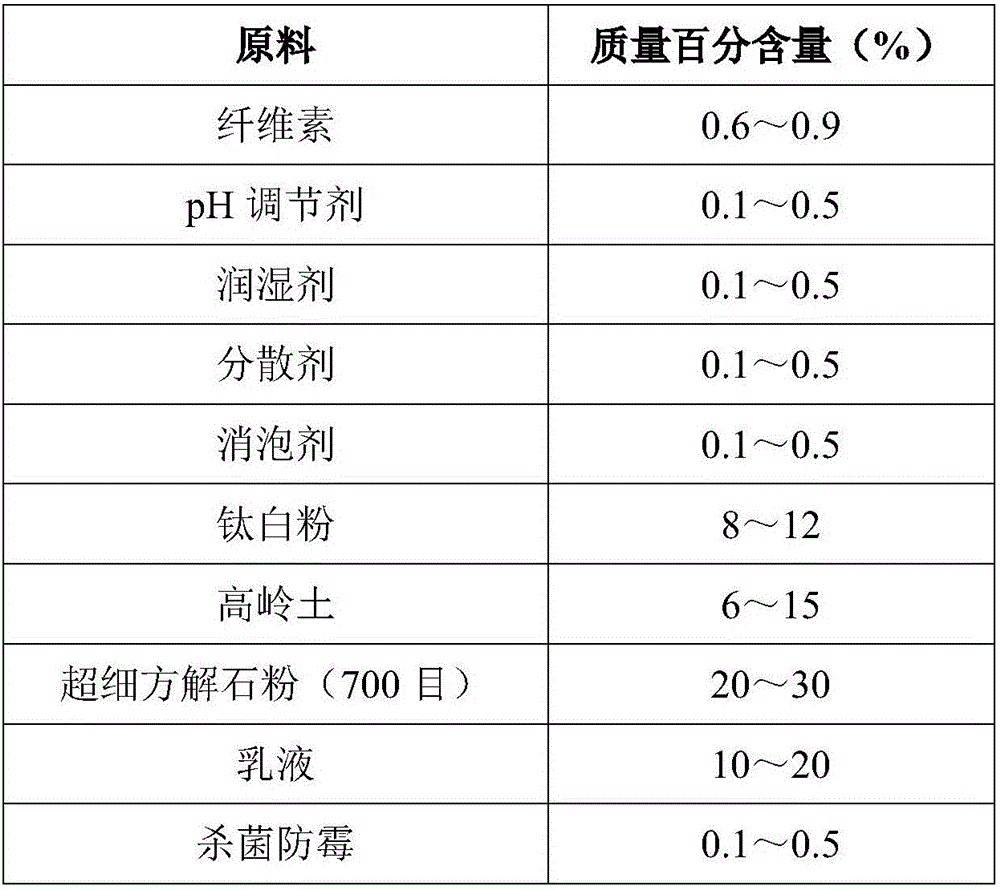
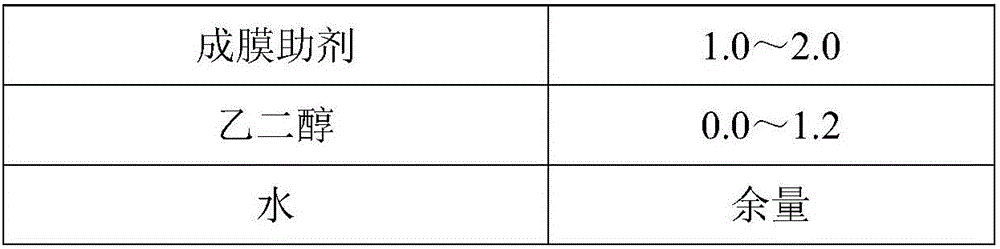
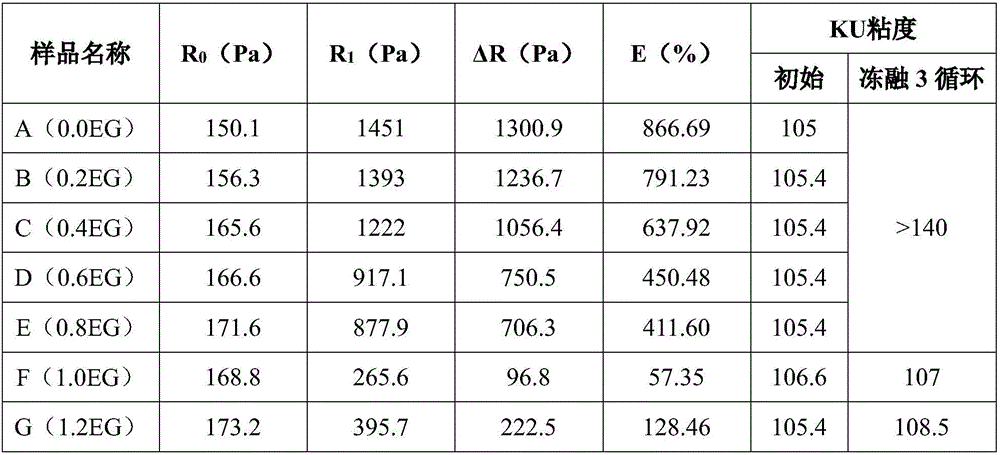
[0036] 1) Select 7 latex paint samples A, B, C, D, E, F, G (the mass fractions of antifreeze ethylene glycol in the samples are respectively: 0, 0.2%, 0.4%, 0.6%, 0.8%, 1.0%, 1.2%, the complete formulations of samples A to G are shown in Table 1), and the amplitude sweep test was carried out to measure the linear viscoelastic region and oscillation test recommended amplitude of the above-mentioned 7 samples at room temperature;

[0037] 2) According to the test conditions calculated in step 1), the initial rheological information of samples A, B, C, D, E, F, and G was measured using the rotational rheometer oscillation mode;

[0038] 3) Use a rheometer to perform a rheometer freeze-thaw cycle. During the cycle, measure the rheological information of the sample during the rheometer freeze-thaw cycle according to the test conditions calculated in step 1), and obtain the sample at Stable time at low temperature;

[0039] 4) After the sample returns to room temperature, according...

Embodiment 2

[0051] 1) Select 7 latex paint samples H, I, J, K, L, M, N (the mass percentages of antifreeze agent propylene glycol in the samples are respectively: 0, 0.2%, 0.4%, 0.6%, 0.8%, 1.0%, 1.2%, the complete formulations of samples H to N are shown in Table 3), and the amplitude sweep test was carried out to measure the linear viscoelastic region and the recommended amplitude of the oscillation test of the above-mentioned 7 samples at room temperature;

[0052] 2) According to the test conditions calculated in step 1), the initial rheological information of samples H, I, J, K, L, M, N is measured using a rotational rheometer oscillation mode;

[0053] 3) Use a rheometer to perform a rheometer freeze-thaw cycle. During the cycle, measure the rheological information of the sample during the rheometer freeze-thaw cycle according to the test conditions calculated in step 1), and obtain the sample at Stable time at low temperature;

[0054] 4) After the sample returns to room temperatu...

Embodiment 3

[0066] 1) Select 4 commercially available latex paint products of the same grade, which are: A company's products 1, 2, 3, B company's products 1, 2, 3, C company's products 1, 2, Nippon's products 1, 2. Carry out the amplitude scanning test to measure the linear viscoelastic region and the recommended amplitude of the oscillation test of the above 10 samples at room temperature;

[0067] 2) According to the test conditions calculated in step 1), the initial rheological information of the above-mentioned 10 samples was measured using the rotational rheometer oscillation mode;

[0068] 3) Use a rheometer to perform a rheometer freeze-thaw cycle. During the cycle, measure the rheological information of the sample during the rheometer freeze-thaw cycle according to the test conditions calculated in step 1), and obtain the sample at Stable time at low temperature;

[0069] 4) After the sample returns to room temperature, according to the test conditions calculated in step 1), use...

the structure of the environmentally friendly knitted fabric provided by the present invention; figure 2 Flow chart of the yarn wrapping machine for environmentally friendly knitted fabrics and storage devices; image 3 Is the parameter map of the yarn covering machine
Login to View More

PUM

No PUM Login to View More

Abstract

The invention discloses a method for rapidly evaluating the freeze-thaw resistance of a water-based polymer coating material. The method includes the following steps of firstly, preparing a rotational rheometer and a to-be-detected sample; secondly, detecting the linear viscoelastic region and the oscillation test recommend amplitude of the sample; thirdly, detecting the initial rheology information of the sample; fourthly, conducting rheometer freeze-thaw circulation, and detecting the rheology information of the sample in the freeze-thaw circulation process; fifthly, after completing freeze-thaw circulation, detecting the after-circulation rheology information of the sample; sixthly, evaluating the freeze-thaw resistance of the sample according to the change situation of the rheology information, existing before freeze-thaw circulation, of the sample and the rheology information, existing after freeze-thaw circulation, of the sample. The method and standard for rapidly evaluating the freeze-thaw resistance of the water-based polymer coating material are developed, the freeze-thaw resistance of the product can be rapidly detected, the production standard of the water-based polymer coating material can be further defined instantly according to the test result of the freeze-thaw resistance of the product, and therefore the overall quality of the water-based polymer coating material product is improved.

Description

technical field [0001] The invention relates to a method for quickly evaluating the freeze-thaw resistance of water-based polymer coating materials. Background technique [0002] The freeze-thaw resistance test of water-based polymer coating materials (such as latex paint) refers to whether the water-based paint based on synthetic resin emulsion is frozen and thawed, whether its viscosity, anti-coagulation or anti-caking are damaged. Test methods for changing and maintaining the original performance level. The freeze-thaw resistance of latex paint products will directly affect the transportation and storage stability of latex paint in winter, and it is an important indicator in the development and production process of latex paint. [0003] At present, the field usually measures the freeze-thaw resistance of latex paint products according to GB / T 9268-2008 "Determination of Freeze-Thaw Resistance of Latex Paint". During the test, stir the sample evenly and put it into a cl...

Claims

the structure of the environmentally friendly knitted fabric provided by the present invention; figure 2 Flow chart of the yarn wrapping machine for environmentally friendly knitted fabrics and storage devices; image 3 Is the parameter map of the yarn covering machine
Login to View More

Application Information

Patent Timeline
21 Sep 2016
Publication
CN105954150A
IPC
G01N11/14; G01N3/60
CPC
G01N11/14; G01N3/60
Inventors
周复荣; 熊绍泊