[0027] Ⅰ. The fire reconnaissance and fire extinguishing robot has insufficient protection level or no protection ability, and is not suitable for reconnaissance operations in high-risk and harsh environments such as flammable and explosive gases, toxic and harmful, high temperature and
high humidity.
At the same time, the sensor equipment carried by the fire reconnaissance and fire extinguishing robot generally does not have the protection ability, so it cannot work normally in high-risk places.
[0028] Ⅱ. When the fire reconnaissance and fire extinguishing robot drags the water-filled hose on the ground, it needs to overcome the drag force of the hose, and when the fire extinguishing robot is spraying water, the road ahead is wet and slippery. The existing crawler The vast majority of fire-fighting robots use ordinary suspension and crawler walking systems. At this time, the friction between the crawler and the ground will decrease sharply, and slipping will easily occur, which will affect the working efficiency of the robot.
[0029] Ⅲ. When the fire reconnaissance and fire extinguishing robot moves in a complex environment on the ground, it sometimes needs to cross larger obstacles or wider ravines, and even
climb stairs with a
steep slope. When climbing obstacles with a belt, due to the rearward center of gravity, neither the ordinary Christie suspension nor the Matilda suspension
system is suitable for the climbing function of the water belt
In addition, when the fire reconnaissance and fire extinguishing robot drags the hose to
climb the
stairs, it is easy to overturn due to the extremely backward center of gravity; Very prone to
rollover problems
[0030] Ⅳ. When the fire reconnaissance and fire fighting robot enters a high-temperature and high-
humidity environment, there will be burning objects around it that will cause damage to the robot body, such as burning the robot shell and tracks, and the rubber tracks will deform and burn when exposed to high temperatures and flames. Only the suspension
system is left for the fire reconnaissance and extinguishing robot, and the robot can no longer move at this time
This not only causes the loss of the entire set of
fire detection and fire extinguishing robots, but also delays the entire accident handling process.
[0031] Ⅴ. The fire extinguishing water cannon installed in the current fire reconnaissance and fire extinguishing robot is connected to the rear fire hose through a buckle connection. The fire reconnaissance and fire extinguishing robot that drags the fire hose filled with water can only move forward and make a large
radius turn, and cannot retreat ; When the fire reconnaissance and fire extinguishing robot finishes fighting the fire at the fire scene or retreats in an emergency situation, rescuers need to enter the fire scene and manually remove the hose connector from the fire water cannon, which greatly increases the casualty rate of firefighters and the
fire detection and fire fighting.
Robot Loss Rate [0032] Ⅵ. The current fire-fighting robot has a relatively single function. Either the robot is only equipped with a fire-extinguishing function, or it is only equipped with a reconnaissance function. It cannot complete the real-time detection of on-site environmental parameters by the fire-fighting robot, and cannot complete the fire-extinguishing function of the reconnaissance robot on the scene. The scope of application of robots in complex and harsh environments
[0033] Ⅶ. At present, the suspension structure and softness and
hardness of crawler robots are fixed. When the load on the robot body changes according to different disaster sites, or the road environment of different disaster sites is different, the robot is suspended during work. If the
hardness is not suitable, it will easily cause the car body to vibrate or cause excessive vibration, which will affect the sensors and other equipment on the body.
That is: the robot suspension
system cannot adapt to the
variable load and disaster road environment
[0034] Existing fire reconnaissance and fire extinguishing robots have poor applicability and adaptability to fire or other harsh disaster scenes, and cannot meet the needs of reconnaissance and fire extinguishing in complex, harsh or even high-risk environments, which largely limits fire reconnaissance Promotion and use of fire fighting robots



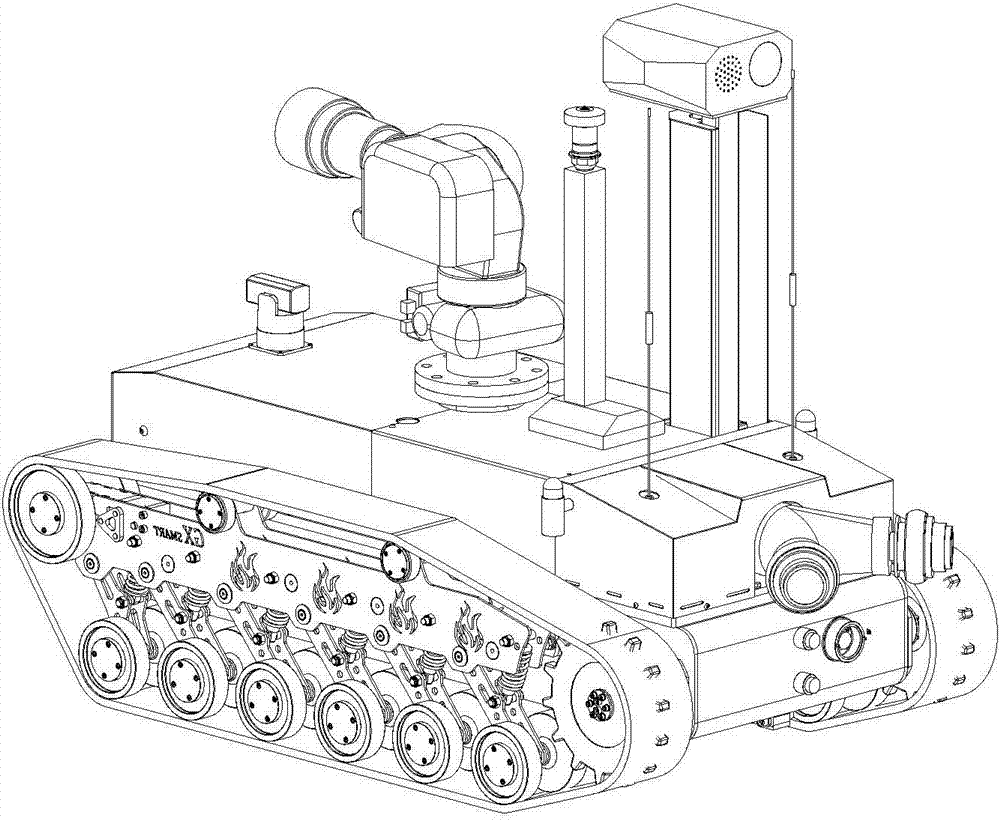
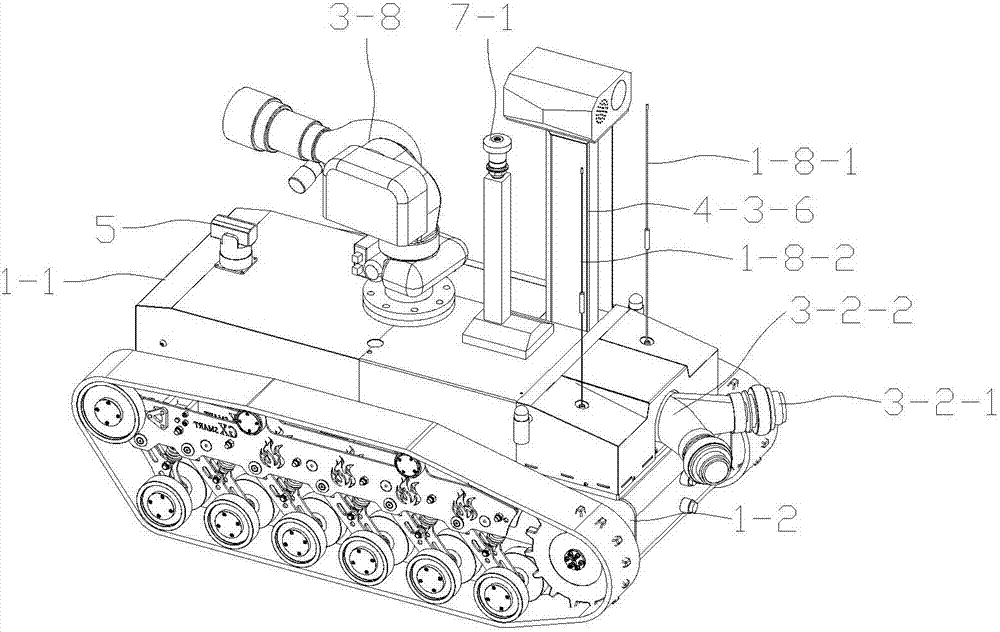
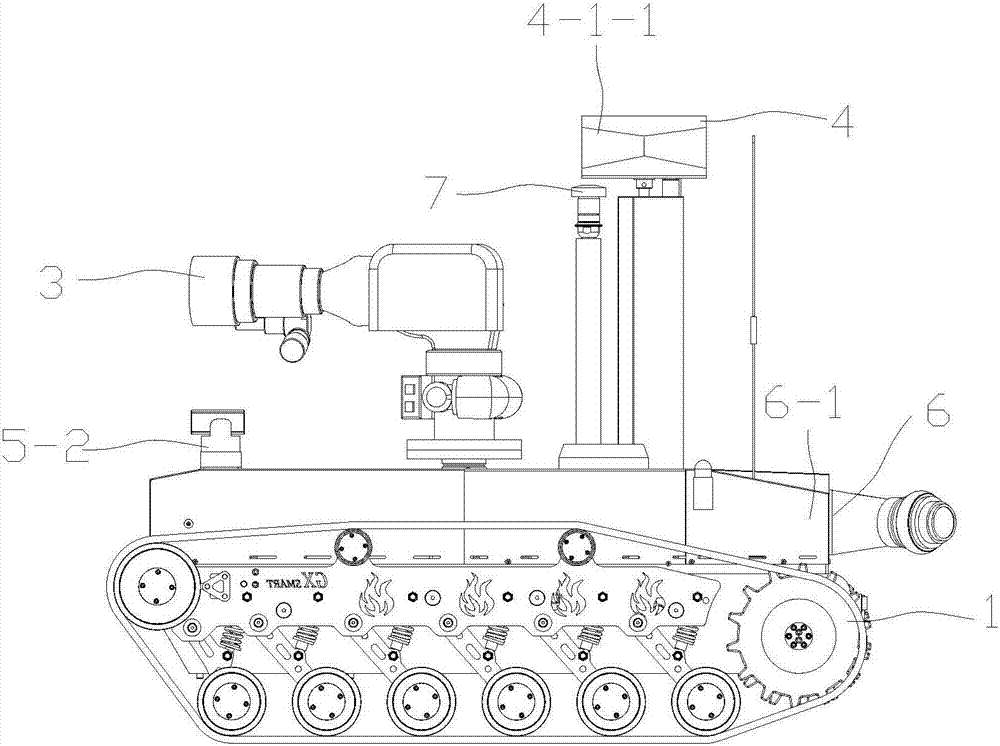
 Login to View More
  Login to View More