
A method for vulcanizing on the surface of spinel lithium nickel manganate positive electrode material
A technology of lithium nickel manganese oxide and positive electrode materials, which is applied in the field of lithium ion battery material preparation, can solve the problem of weak adhesion between the surface modification layer and the surface of the positive electrode material, the improvement of the electrochemical performance of the positive electrode material, and the increase of the interface of the positive electrode material Resistance and other issues, to achieve the effect of improving cycle performance and rate performance, low cost, and low equipment requirements
Patent Information
- Authority / Receiving Office
- CN · China
- Patent Type
- Patents(China)
- Current Assignee / Owner
- Publication Date
- 2020-07-10
- Estimated Expiration
- Not applicable · inactive patent
Smart Images
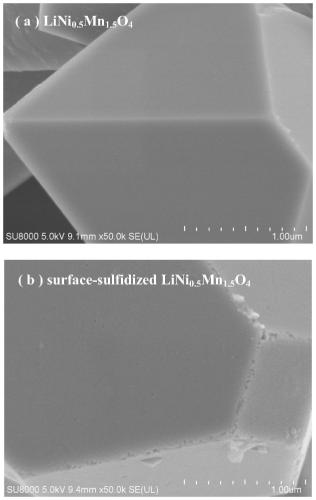
Figure 1 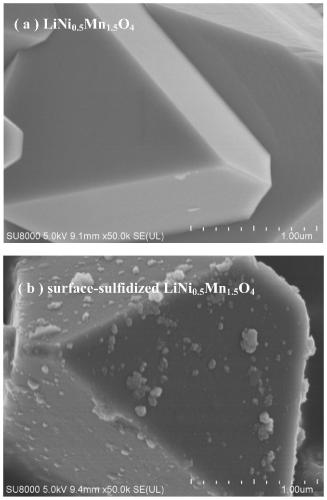
Figure 2 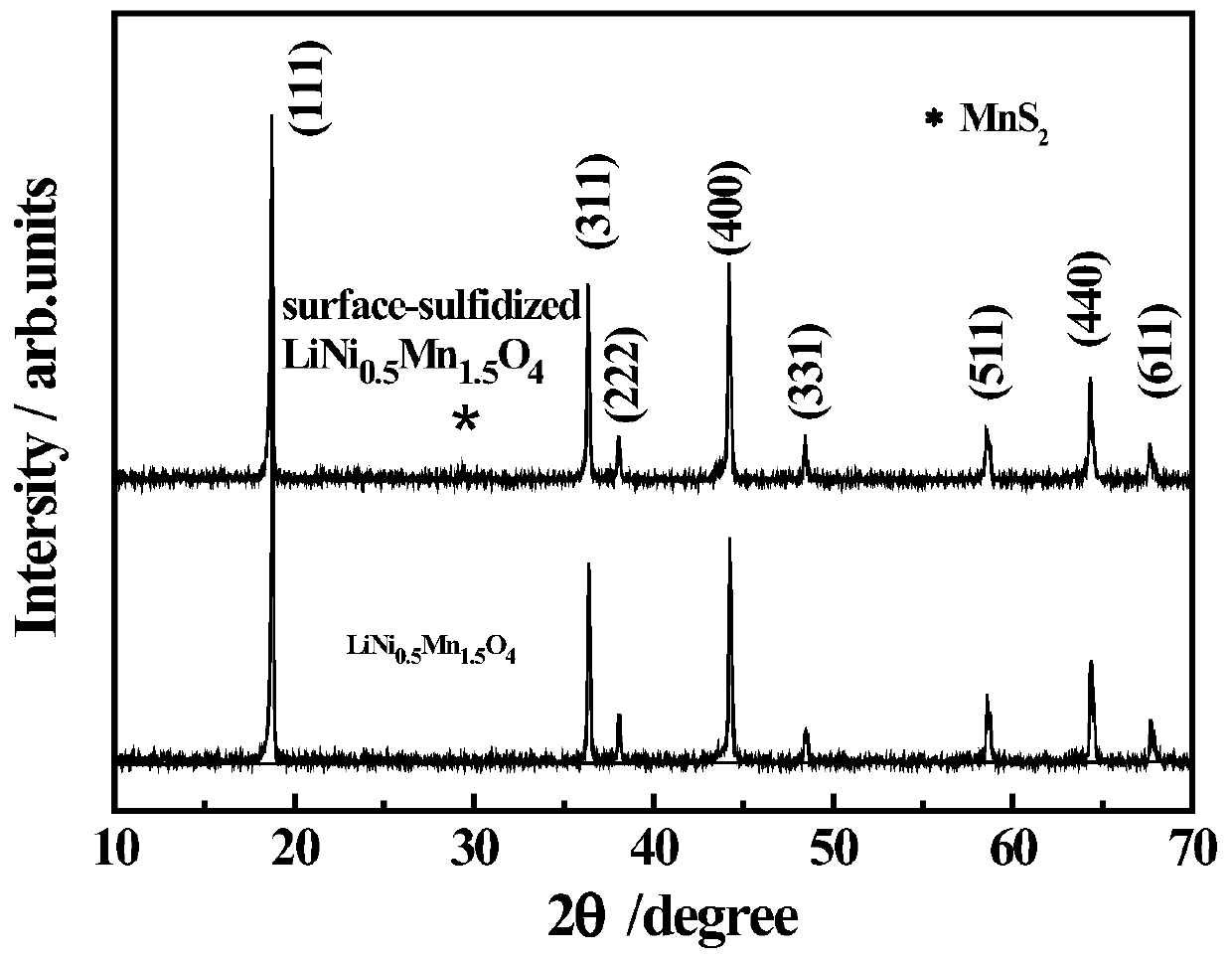
Figure 3
Abstract
Description
Technical field:
[0001] The invention relates to a method for vulcanizing the surface of a spinel lithium nickel manganese oxide positive electrode material, and belongs to the technical field of lithium ion battery material preparation.
[0002] technical background
[0003] Lithium-ion batteries are a new generation of practical rechargeable batteries, which have the advantages of high working voltage, high energy density, long cycle life, no memory effect and small self-discharge, and have been widely used in portable electronic products, electric tools, new energy Vehicles, military equipment, aerospace and energy storage power systems and many other fields are regarded as high-tech products that are of great significance to people's lives, national economy and social development in the 21st century. With the vigorous development of electric vehicles, smart grids and large-scale energy storage, lithium-ion batteries with high operating voltage and high energy density have...
Examples
Embodiment 1
[0028] Take by weighing 2.724 gram of nickel acetate, 7.348 gram of manganese acetate and 2.300 gram of lithium acetate are dissolved in 400ml deionized water, add 13.142 gram of tartaric acid after continuous stirring at room temperature for 30 minutes, drip ammoniacal liquor in stirring state, adjust the pH value of solution, the solution The pH value is controlled at about 6.8, and then continuously stirred under a water bath at 90°C until a gel-like liquid is obtained.
[0029] The gel liquid was dried for 10 hours in a forced air drying oven at a temperature of 280° C., and then the fluffy substance obtained after drying was ground to obtain a gel precursor powder.
[0030] The collected gel precursor powder was placed in a muffle furnace and calcined in an air atmosphere: firstly, the temperature was raised from room temperature to 500°C at a rate of 3°C / s, and then sintered at 500°C for 5 hours, and then sintered at 3°C / s. The heating rate of °C / min was increased to 900...
Embodiment 2
[0040] Weigh 2.918 grams of nickel nitrate, 7.364 grams of manganese acetate and 1.421 grams of lithium nitrate and dissolve them in 400 ml of deionized water. After stirring for 30 minutes at room temperature, add and weigh 12.621 grams of citric acid. PH value, the pH value of the solution is controlled at about 6.8, and then continuously stirred in a water bath at 85 °C until a gel-like liquid is obtained. The gel liquid was dried in a blast drying oven at a temperature of 260° C. for 16 hours, and then the fluffy substance obtained after drying was ground to obtain a gel precursor powder. The collected gel precursor powder was placed in a muffle furnace and calcined in an air atmosphere: firstly, the temperature was raised from room temperature to 550 °C at a heating rate of 3 °C / s, sintered at 550 °C for 5 hours, and then calcined at 3 °C. The temperature increase rate of °C / min was increased to 900 °C, and the calcination was carried out at 900 °C for 15 hours. After ca...