Battery cell testing device and method for thermal battery
A single battery and testing device technology, applied in the direction of measuring devices, measuring electricity, measuring electrical variables, etc., can solve the problems of long preparation time of thermal batteries, large demand for powder materials, difficult serialization research, etc., to speed up research and development Single battery process, low contact internal resistance, and the effect of alleviating contradictions
- Summary
- Abstract
- Description
- Claims
- Application Information
AI Technical Summary
Problems solved by technology
Method used
Image

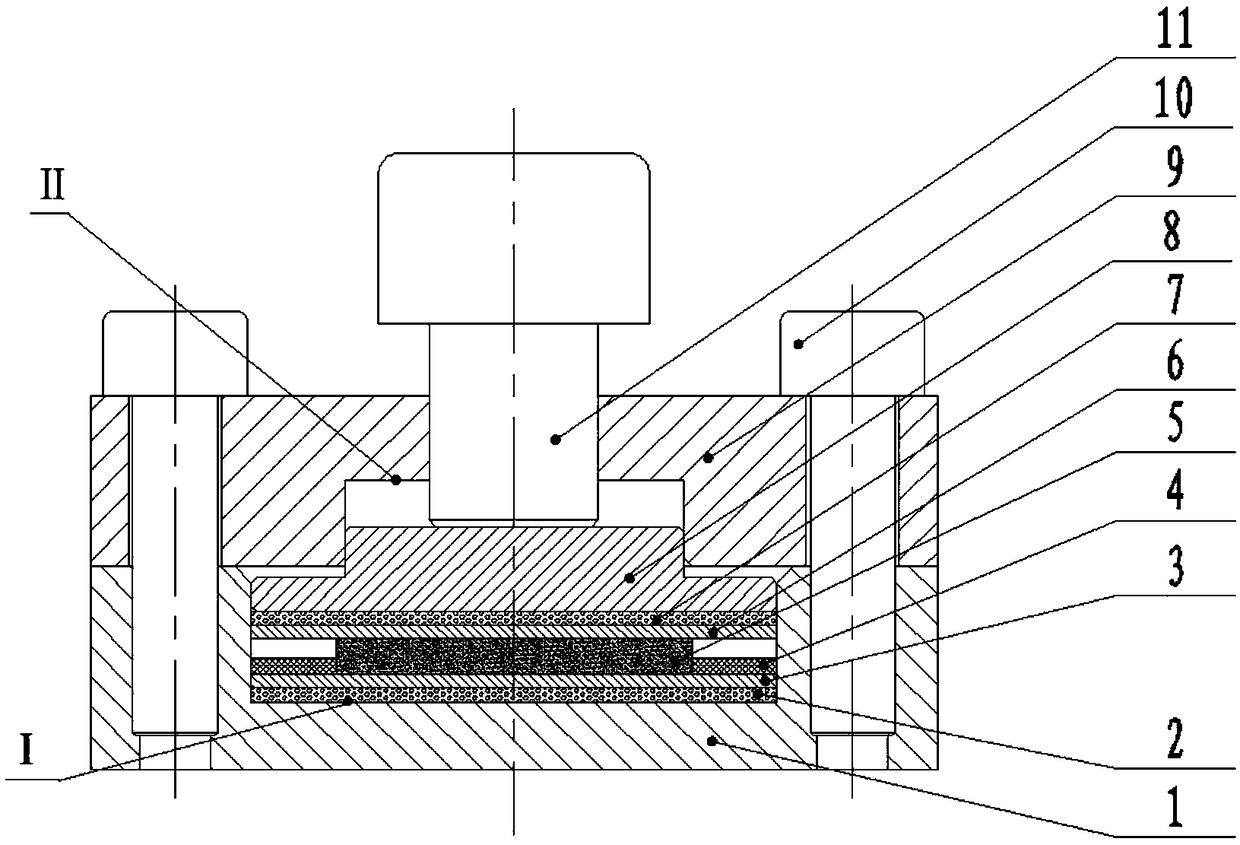
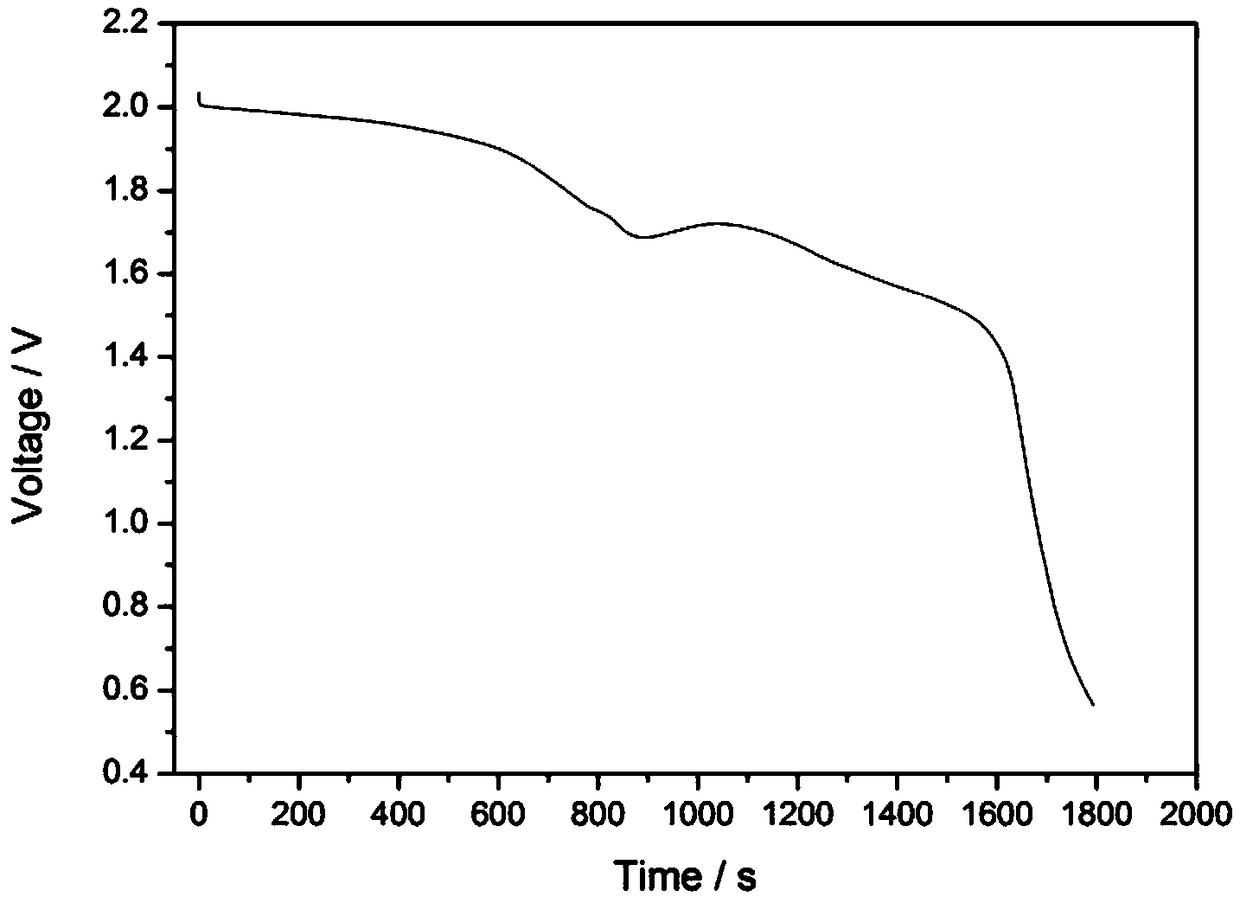
Examples
Embodiment 1
[0032] (1) Single battery preparation
[0033] The single battery 5 includes a graphite substrate, negative electrode material, diaphragm material, and positive electrode material.
[0034] 1) negative electrode material: the negative electrode material is LiB alloy;
[0035] 2) Preparation of diaphragm material: Take ternary all-lithium electrolyte LiF-LiCl-LiBr and MgO, according to mass ratio, ternary all-lithium electrolyte LiF-LiCl-LiBr:MgO=1:1, mix well. The ternary all-lithium electrolyte LiF-LiCl-LiBr is composed of 9.6% anhydrous LiF, 22% anhydrous LiCl and 68.4% LiBr by weight percentage.
[0036] 3) Preparation of cathode material:
[0037] a) Vacuum drying: take NiS respectively 2 , FeS 2 , Li 2 O and the binary electrolyte LiCl-KCl are placed in a vacuum drying oven for drying, the drying temperature is 120±10°C, the relative vacuum degree is ≤-0.09Mpa, and the drying time is 8 hours. The binary electrolyte LiCl-KCl is composed of 45 wt% anhydrous LiCl and 5...
PUM
 Login to View More
 Abstract
Description
Claims
Application Information
 Login to View More