

Antibacterial spectacle lens and manufacturing process thereof
A production process and antibacterial eye technology, applied in the field of spectacle lenses, can solve the problems of no antibacterial property, light transmittance, etc., and achieve the effects of long-lasting and effective antibacterial function, high heat resistance, and low hygroscopicity
- Summary
- Abstract
- Description
- Claims
- Application Information
AI Technical Summary
Problems solved by technology
Method used
Image

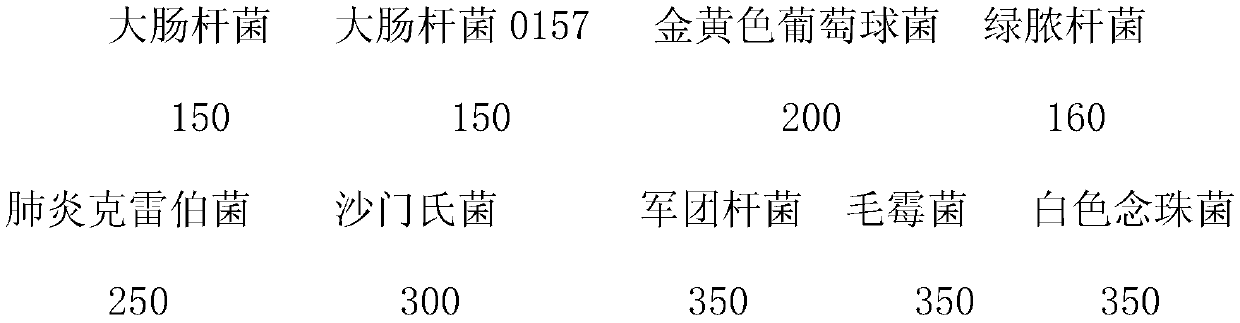
Examples
Embodiment Construction
[0014] An antibacterial spectacle lens, which is formed by extrusion and solidification of the following components by weight percentage: 70-80 parts of propylene glycol diethylene glycol carbonate, 5-8 parts of polypropylene glycol, 2-3 parts of nano silicon dioxide, silver 0.5-1 parts of ions, 0.5-1 parts of zinc ions, 5-8 parts of organic solvents, 2-4 parts of glass particles. Polypropylene glycol is a plasticizer, and nano-silica can further increase the strength of the lens.
[0015] Optimized, the following components are extruded and solidified by weight percentage, 75 parts of propylene glycol diethylene glycol carbonate, 6.5 parts of polypropylene glycol, 2.5 parts of nano-silicon dioxide, 0.8 parts of silver ions, 0.8 parts of zinc ions, organic 6.5 parts of solvent, 3 parts of glass particles, using this component to process spectacle lenses, the antibacterial effect, the light transmittance of the lens and the cost performance are higher.
[0016] A kind of antib...
PUM
 Login to View More
 Abstract
Description
Claims
Application Information
 Login to View More