Write-optimized persistent memory heap management method

A management method and persistent technology, applied in the field of write-optimized persistent memory heap management, can solve problems such as high overhead, frequent writing of persistent memory, and inaccurate recovery

CN112084032AActive Publication Date: 2020-12-15UNIV OF ELECTRONIC SCI & TECH OF CHINA
9 Cites 6 Cited by

Patent Information

Authority / Receiving Office
CN · China
Current Assignee / Owner
Publication Date
2020-12-15

Smart Images

  • Figure 1
    Figure 1
  • Figure 2
    Figure 2
  • Figure 3
    Figure 3
Patent Text Reader

Abstract

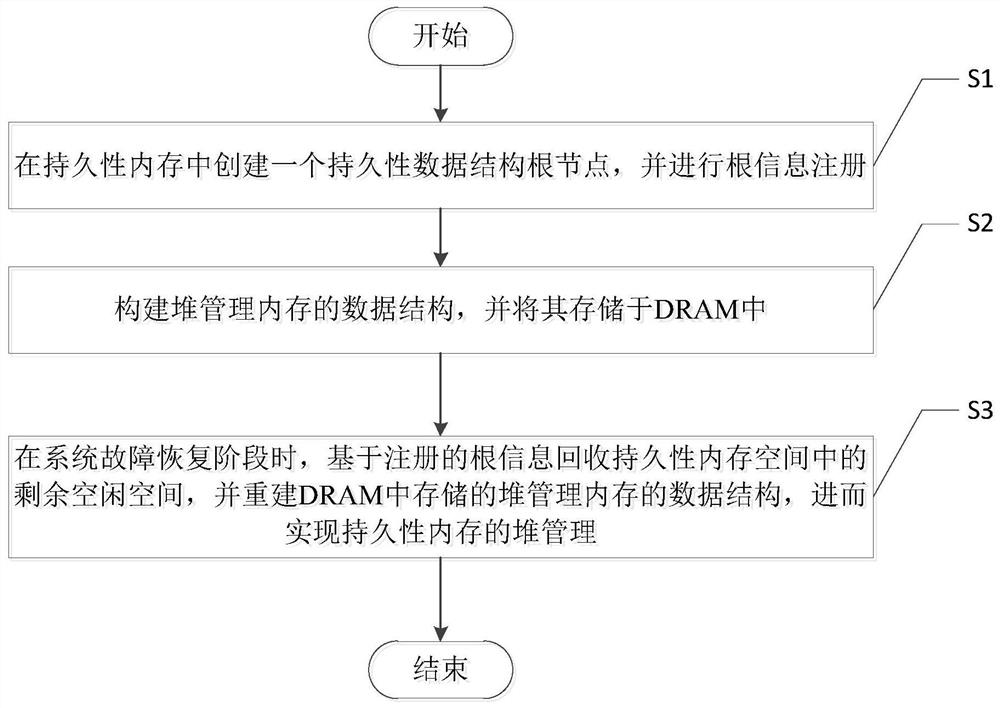
The invention discloses a write-optimized persistent memory management method. The method comprises the steps of S1, performing root information registration in a persistent memory; s2, constructing adata structure of a heap management memory, and storing the data structure in a DRAM; and S3, in a system fault recovery stage, recovering residual free space in the persistent memory space based onthe registered root information, and reconstructing a data structure of the heap management memory stored in the DRAM to achieve heap management of the persistent memory. According to the method, allmetadata structures allocated to the management memory can be stored in the DRAM, and extra write operation on the persistent memory cannot be caused by allocation or release operation of any persistent memory space; in addition, in the fault recovery process, the reference count of the object can be accurately restored through the number of times of searching the same object while the allocated space is searched, so that the reference count of the object can be stored in the DRAM without worrying about the reference count error or loss caused by the fault.
Need to check novelty before this filing date? Find Prior Art

Description

technical field

[0001] The invention belongs to the technical field of persistent heap management, and in particular relates to a write-optimized persistent memory heap management method. Background technique

[0002] With the vigorous development of Internet applications, massive data storage and access have brought great challenges to cloud computing and big data processing platforms. In current computer systems, DRAM is usually used as memory, and solid-state hard drives or mechanical hard drives are used as external storage. , the capacity of the external memory is large, but the access delay is high, and it is not only addressable by byte, but can only be accessed in units of "blocks", so the data cannot be directly processed in the external memory, and the data can only be processed after being read into the memory . The memory access speed is fast, but the capacity is small, and data will be lost when the power is turned off, so the computer system often needs to exc...

Examples

Embodiment Construction

[0098] The specific embodiments of the present invention are described below so that those skilled in the art can understand the present invention, but it should be clear that the present invention is not limited to the scope of the specific embodiments. For those of ordinary skill in the art, as long as various changes Within the spirit and scope of the present invention defined and determined by the appended claims, these changes are obvious, and all inventions and creations using the concept of the present invention are included in the protection list.

[0099] As mentioned above, the existing persistent heap management technical solutions mainly have three problems. The first is that the allocation and deallocation of persistent memory will result in a large number of write operations to persistent memory. The second is that the fault recovery based on the non-intrusive garbage collection algorithm cannot accurately identify the allocated space, which may cause memory leak...