
A method for detecting and distinguishing engine pre-ignition and carbon deposition based on ion current
An ion current and engine technology, applied in combustion engine, engine control, machine/engine, etc., can solve the problem that the threshold judgment method is easy to cause misjudgment, and achieve the effect of protecting the engine structure, high timeliness, and reducing additional emissions
- Summary
- Abstract
- Description
- Claims
- Application Information
AI Technical Summary
Problems solved by technology
Method used
Image

Examples
Embodiment
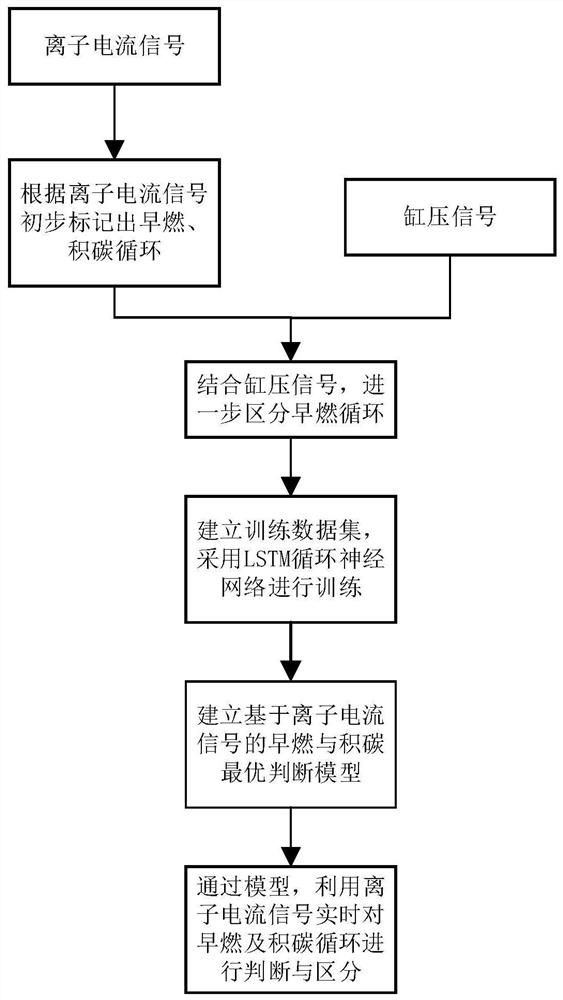
[0042] like figure 1 As shown, the present invention provides a kind of engine pre-ignition detection method based on ion current, comprises the following steps:
[0043] A. Collect ion current signals and cylinder pressure signals under different working conditions of the engine (normal, pre-ignition, carbon deposition), where the ion current signals come from the electric field applied between the positive and negative electrodes of the spark plug. ;
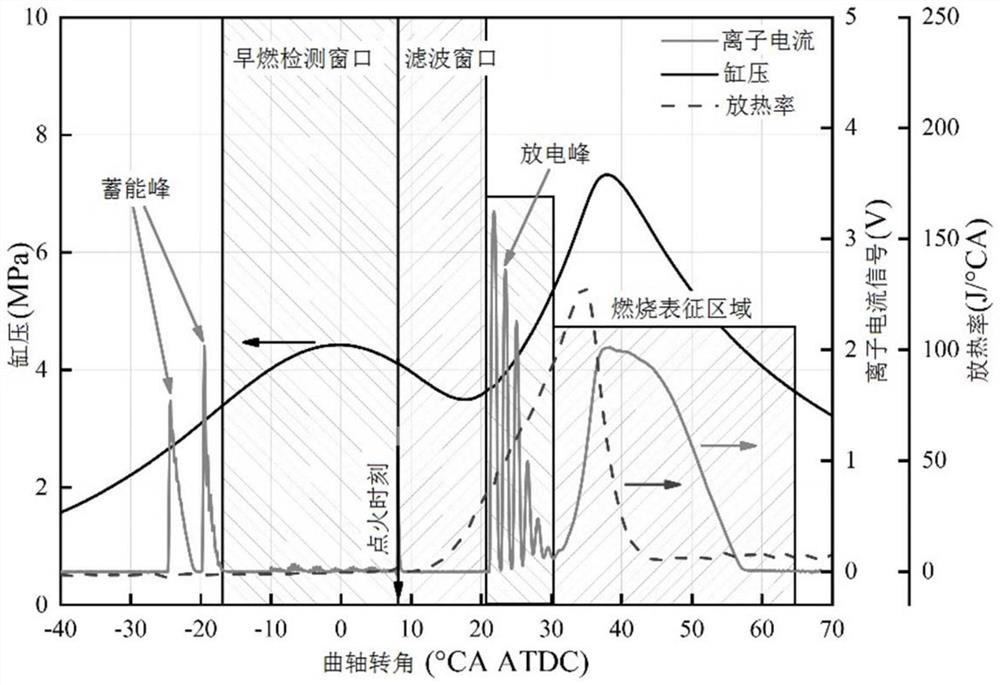
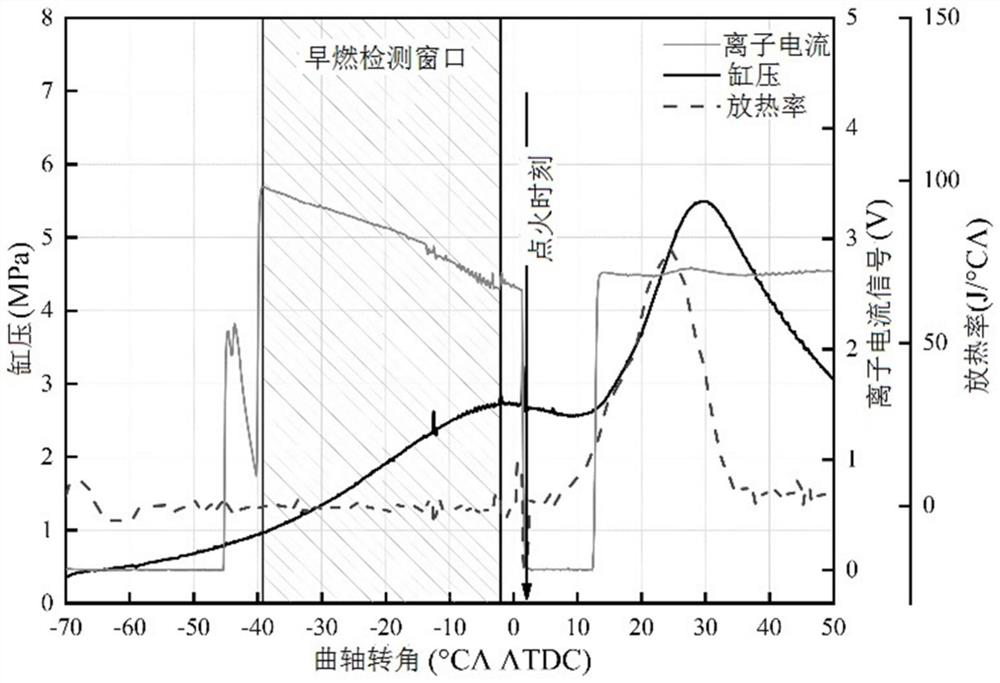
[0044] B. Process the collected signal, and use the ion current signal to initially distinguish the pre-ignition cycle and the carbon deposition cycle, specifically: distinguish the pre-ignition and carbon deposition cycles from all data by the ion current signal amplitude in a period of time before the ignition time carbon cycle;
[0045] C. Use the cylinder pressure signal to mark the pre-ignition cycle and the pre-ignition time, specifically: calculate the heat release rate and combustion phase through the cylinder pressu...
PUM
 Login to View More
 Abstract
Description
Claims
Application Information
 Login to View More