Adaptive beamformer design method based on Bayesian compressed sensing algorithm

An adaptive beam, Bayesian compression technology, applied in instruments, re-radiation of sound waves, radio wave measurement systems, etc., can solve the problems of automatic tracking of desired signals, inability to adapt to the needs of work, etc., and achieve a good level of sidelobe control. , the effect of large output signal to drying ratio

CN112230226AActive Publication Date: 2021-01-15ZHEJIANG UNIV
9 Cites 3 Cited by

Patent Information

Authority / Receiving Office
CN · China
Patent Type
Applications(China)
Current Assignee / Owner
Publication Date
2021-01-15

Smart Images

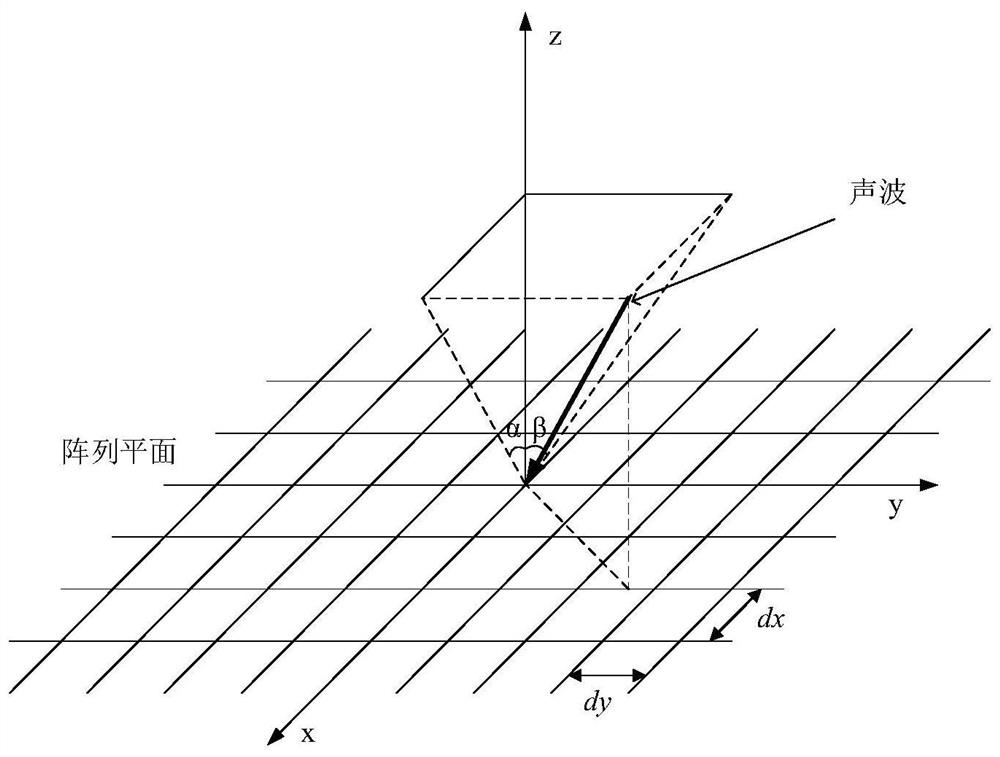
  • Figure 1
    Figure 1
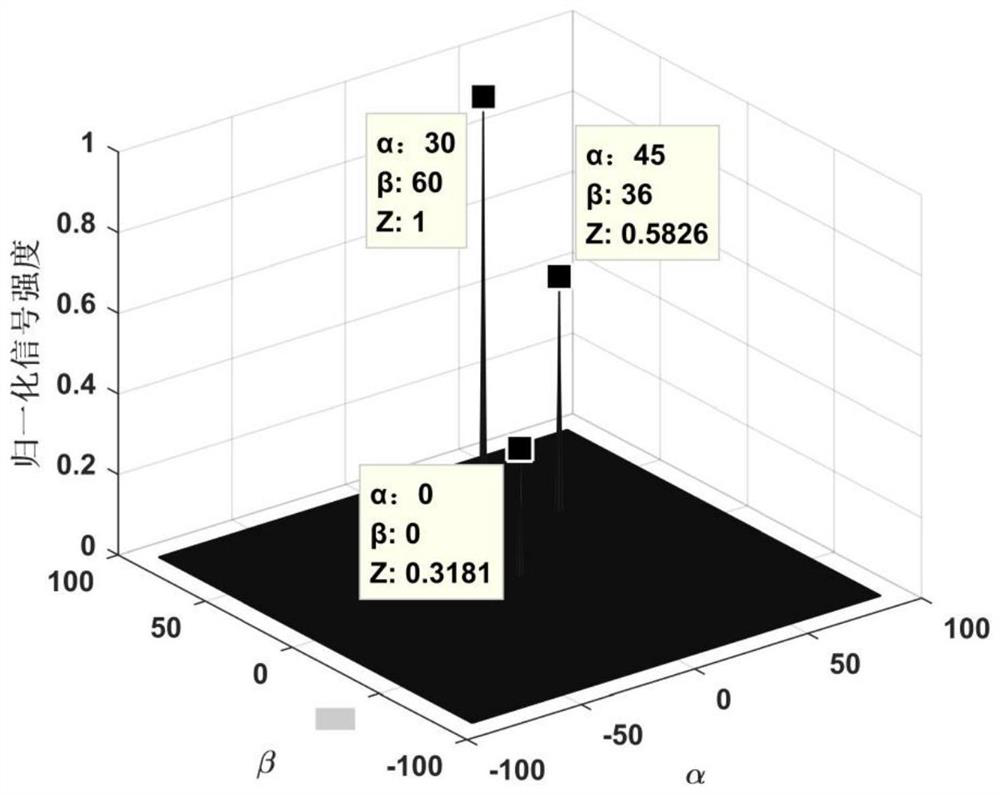
  • Figure 2
    Figure 2
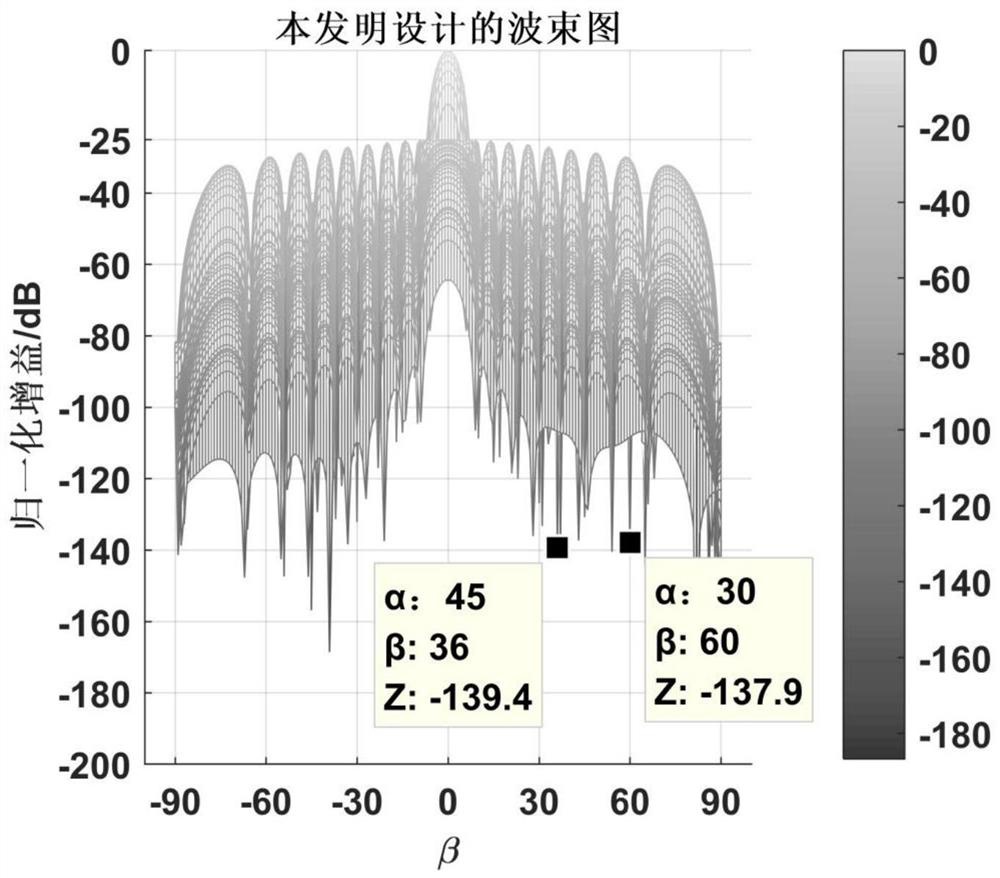
  • Figure 3
    Figure 3
Patent Text Reader

Abstract

The invention discloses an adaptive beamformer design method based on a Bayesian compressed sensing algorithm, and the method comprises the following steps: (1) enabling a planar array element to receive a sound wave incident signal, wherein the sound wave incident signal comprises a target signal and an interference signal, constructing an adaptive beamformer based on the sound wave incident signal, and adopting the Bayesian compressed sensing algorithm to perform direction-of-arrival estimation on the sound wave incident signal; (2) reconstructing according to the direction of arrival of theinterference signal and the Capon spatial spectrum of the incident signal of the incident sound wave to obtain an interference and noise covariance matrix; (3) defining a maximum sidelobe horizontalconstraint value, constraining a sidelobe of the target beam pattern according to the maximum sidelobe horizontal constraint value, and calculating an array element weight coefficient of the adaptivebeamformer through a convex optimization method according to the interference and noise covariance matrix. And the output signal-to-interference ratio is higher.
Need to check novelty before this filing date? Find Prior Art

Description

technical field

[0001] The invention relates to the field of sonar array signal processing, in particular to an adaptive beamformer design method based on a Bayesian compressed sensing algorithm (BCS). Background technique

[0002] In recent years, phased array 3D imaging sonar technology has developed rapidly due to its application in underwater physics, biology, geology and other aspects. The traditional phased array three-dimensional sonar has a fixed beam direction, which cannot automatically track the direction of the expected signal while canceling the interference, and cannot adapt to the needs of working in a complex underwater acoustic environment. For example, the patent application with the application publication number CN109116334A discloses A sonar beamforming method and system based on hyperbeam weighting.

[0003] As a new technical means, the adaptive beamforming algorithm adaptively aligns the beam pattern nulling with the interference direction under the ...

Examples

Embodiment Construction

[0060] In order to make the object, technical solution and advantages of the present invention clearer, the present invention will be further described in detail below in conjunction with the accompanying drawings and embodiments. It should be understood that the specific embodiments described here are only used to explain the present invention, and do not limit the protection scope of the present invention.

[0061] The present invention provides an adaptive beamformer design method based on the Bayesian compressed sensing algorithm. The method realizes more accurate reconstruction of the interference plus noise covariance matrix through the Bayesian compressed sensing algorithm. Compared with other automatic The adaptive algorithm has a larger output signal-to-dry ratio, and at the same time, the sidelobe peak of the beam pattern is constrained at a lower level.

[0062] In this embodiment, a 20×20 two-dimensional transducer array is considered in the design. figure 1 It is...