Power system machine room temperature control coordination control method based on optimal working point

A power system, coordinated control technology, applied in mechanical equipment, high-efficiency regulation technology, climate sustainability, etc.

CN113531835AInactive Publication Date: 2021-10-22GUIZHOU POWER GRID CO LTD
6 Cites 0 Cited by

Patent Information

Authority / Receiving Office
CN · China
Current Assignee / Owner
Publication Date
2021-10-22
Estimated Expiration
Not applicable · inactive patent

Smart Images

  • Figure 1
    Figure 1
  • Figure 2
    Figure 2
  • Figure 3
    Figure 3
Patent Text Reader

Abstract

The invention discloses a power system machine room temperature control coordination control method based on an optimal working point, which comprises the following steps: step 1, storing fan frequency, chilled water valve opening and load parameters under the optimal working point corresponding to each enthalpy value of a system into a database; 2, calculating an air enthalpy value at the front end of a heat exchanger after system pretreatment is finished; step 3, calculating a tail end load; step 4, querying the database according to calculation results of the step 2 and the step 3, and extracting optimal system operation parameters; and step 5, updating the optimal operation parameters. The technical problems that it is difficult to enable an air conditioner air system and a water system to have good dynamic performance and steady-state performance in the prior art and the like are solved.
Need to check novelty before this filing date? Find Prior Art

Description

technical field

[0001] The invention belongs to temperature control technology, and in particular relates to a coordinated control method for temperature control of a power system machine room based on an optimal working point. Background technique

[0002] The high energy consumption of the environmental control system has also received more and more attention. In related work, the quadratic model is used to study the optimal control of the chiller system, and the Nelder-Mead method is used for optimization. The energy consumption of the system was reduced by 3% after optimization, but the author did not consider the start-stop state of the chiller, nor the influence of the condensation temperature on the total energy consumption of the system. In related work, energy-saving technologies have been studied by adopting fresh air mixing technology, frequency conversion speed regulation technology, wet film humidification technology and other new fresh air treatment methods. ...

Examples

Embodiment Construction

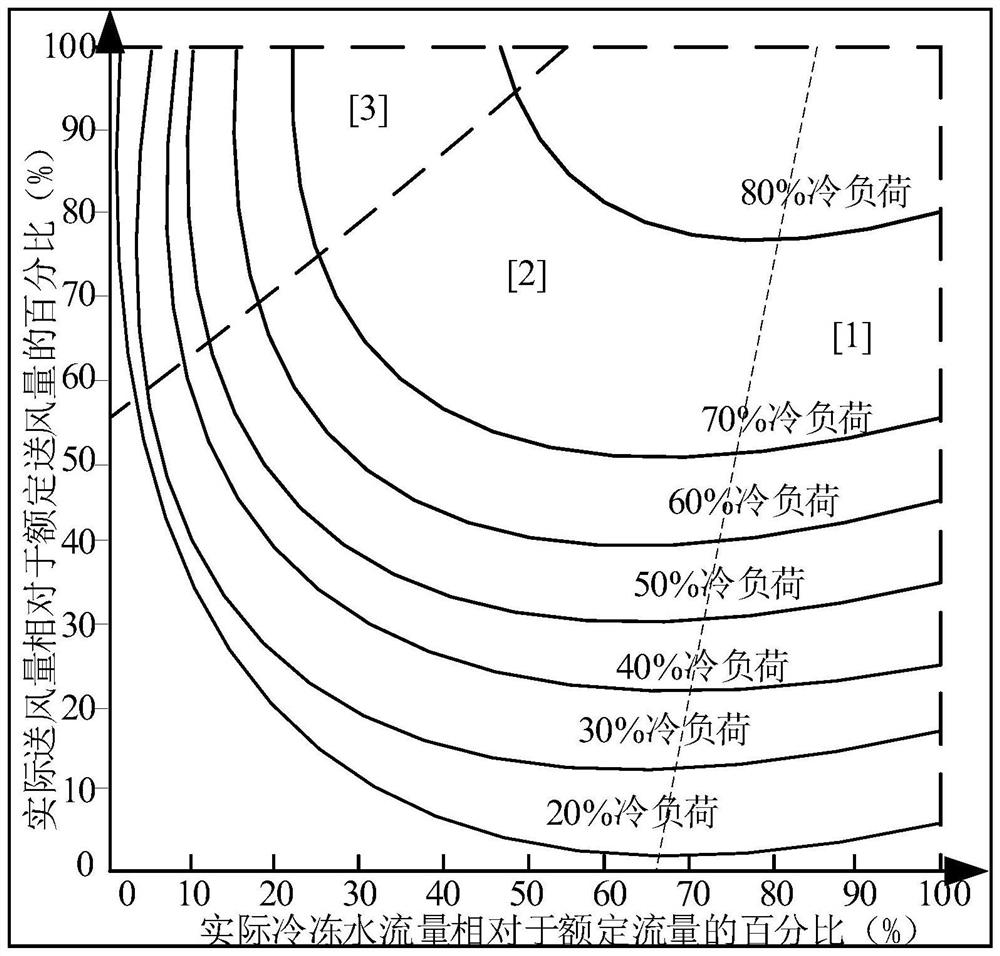
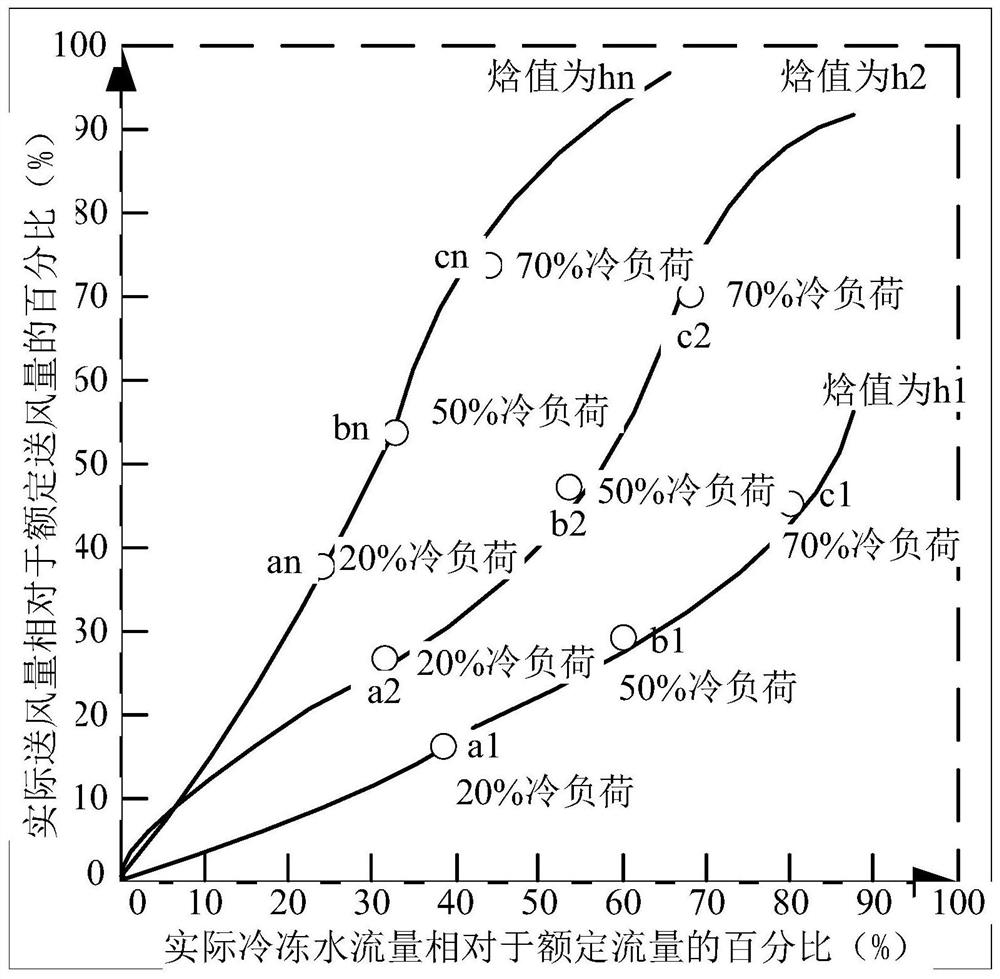
[0036] Because the energy consumption curves of fans and pumps are different, when the cooling load demand is given, there is an optimal operating point to minimize the sum of energy consumption of fans and chilled water pumps. Based on this understanding, the following energy-saving control ideas can be drawn:

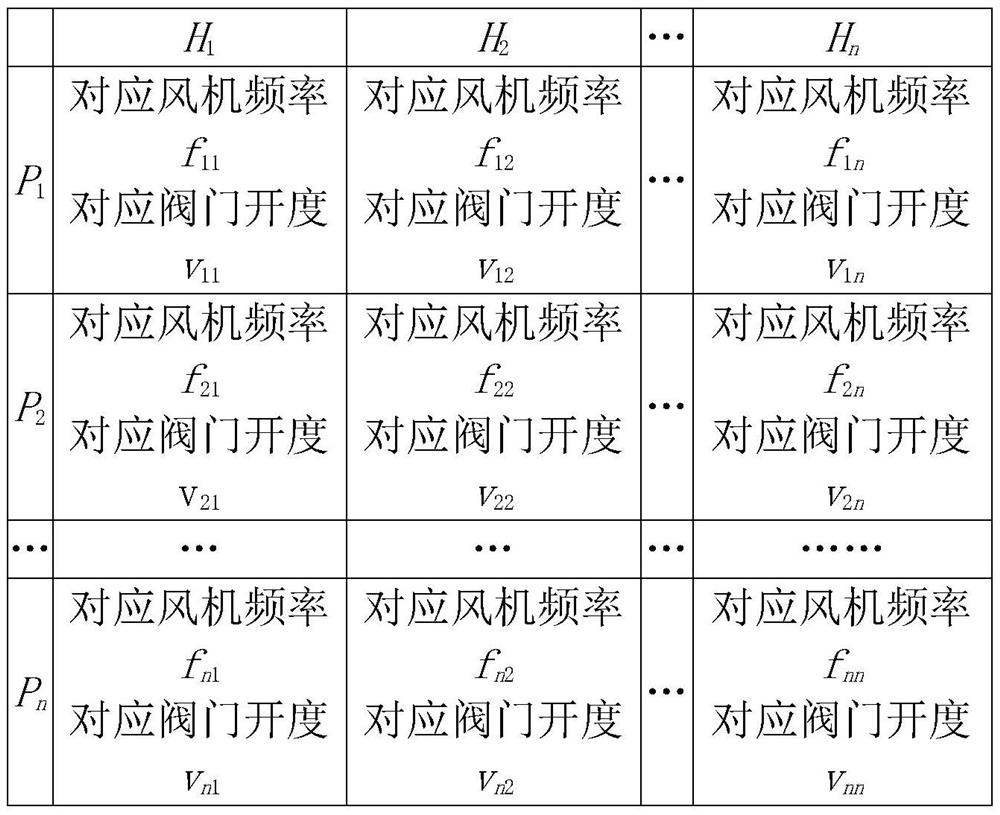
[0037] 1) Store parameters such as fan frequency, chilled water valve opening, and load at the optimal operating point corresponding to each enthalpy value into the database, and directly query the database to determine the ideal fan frequency and water valve during system operation. Ideal opening;

[0038] 2) Update the parameters stored in the database according to the operating conditions of the system. The air supply and exhaust air energy-saving control system includes sensors for measuring the temperature and humidity of the air, and the flow rate of cold slurry water.

[0039] System Tuning Control Process

[0040] Assuming that the optimal operating point o...