

Pressure proof strontium titanate base energy storage medium ceramic and its preparation method
A technology of energy storage medium and titanic acid, which is applied in the field of pressure-resistant strontium titanate-based energy storage medium ceramics and preparation, can solve the problems that have not yet been seen, and achieve the effects of high dielectric constant, high breakdown strength and low loss
Patent Information
- Authority / Receiving Office
- CN · China
- Patent Type
- Patents(China)
- Current Assignee / Owner
- Publication Date
- 2007-08-08
Smart Images
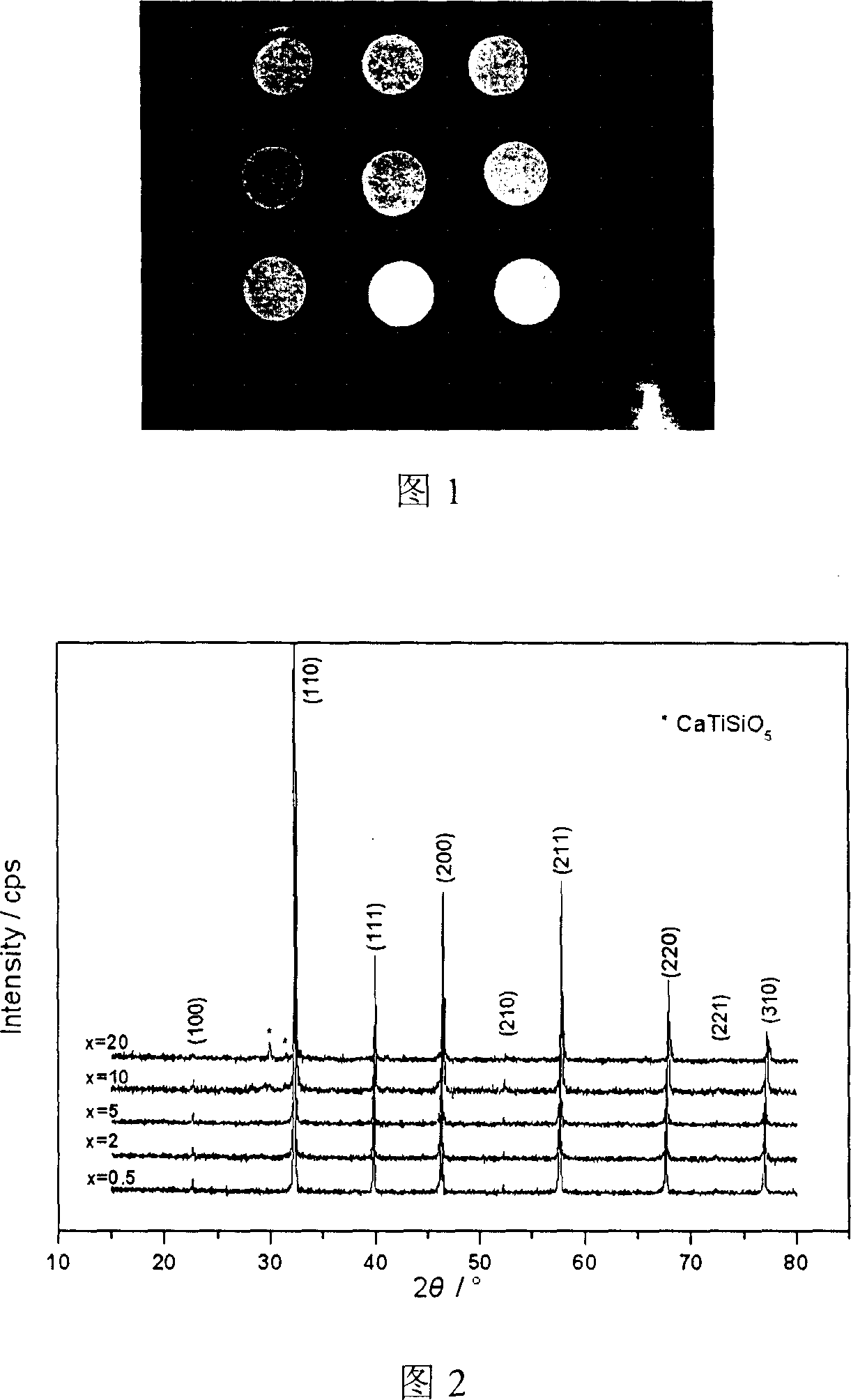
Figure 1 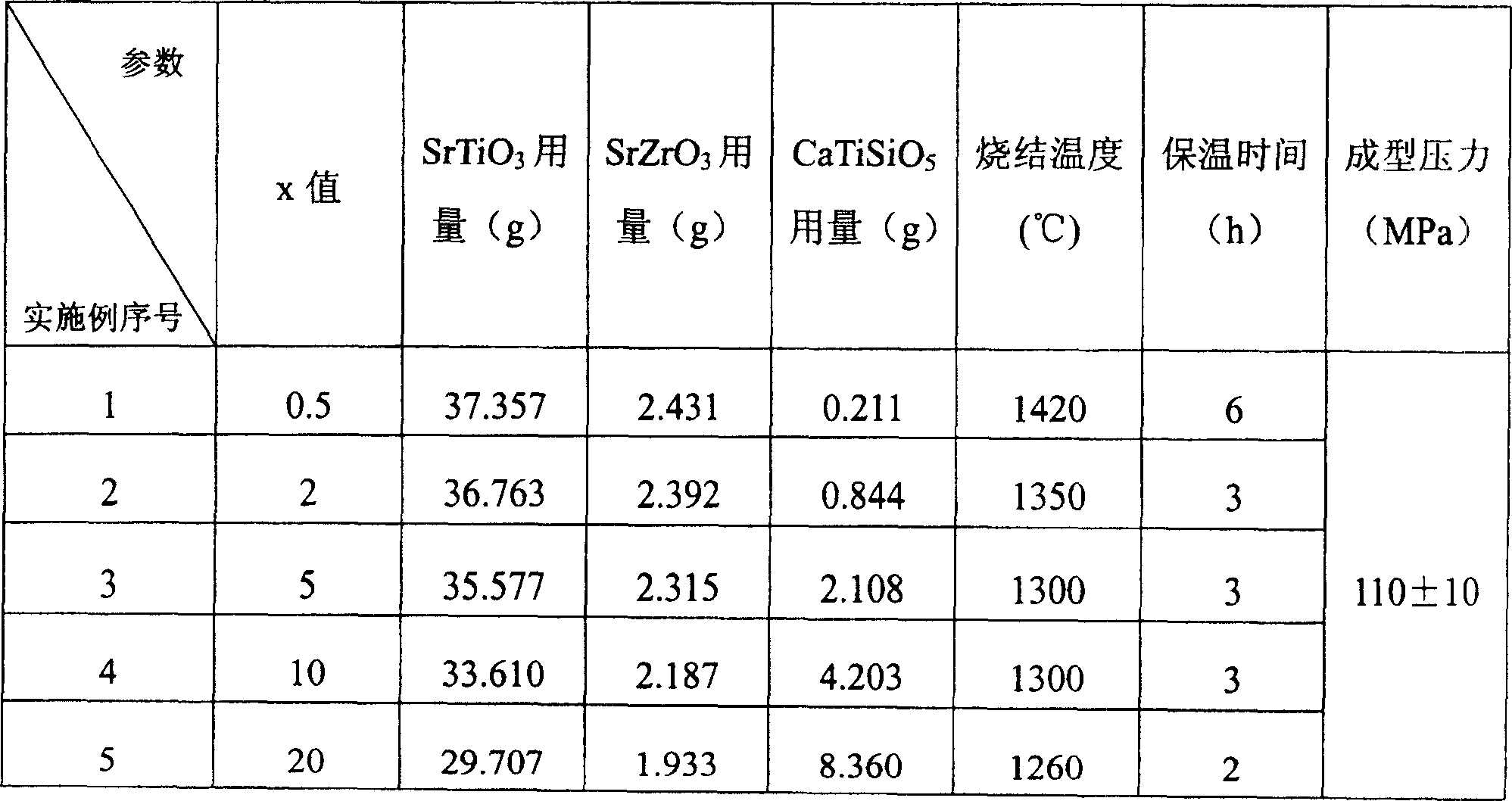
Figure 2 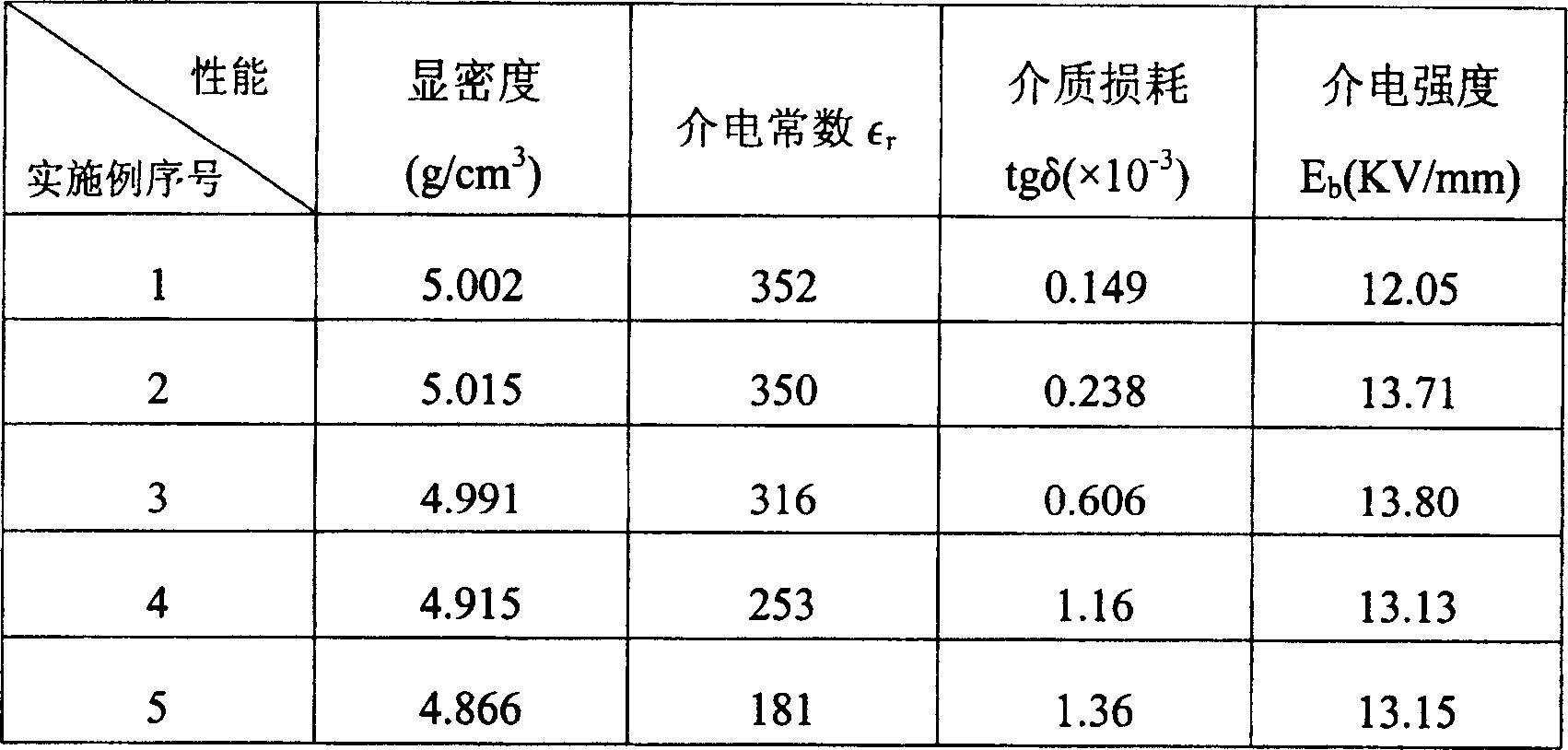
Figure 3
Abstract
Description
technical field
[0001] The invention relates to a pressure-resistant strontium titanate-based energy storage medium ceramic and a preparation method thereof, in particular to a CaTiSiO 5 Doped modified SrTiO 3 Base energy storage medium ceramic and preparation method thereof. Background technique
[0002] Pulse forming technology is an important topic in the research of high-voltage pulse power. Pulse forming line is one of the key factors of accelerator performance. Commonly used pulse compression forming structures include coaxial structure and flat plate structure. In order to adapt to the development of solid-state pulse forming lines, the energy storage medium is developing in the direction of low resistance, high flow and miniaturization. Energy storage dielectric ceramics used in solid-state pulse forming lines should meet the following requirements for dielectric and withstand voltage characteristics: (1) high relative permittivity ∈r; (2) low dielectric loss tgδ, ...
Examples
Embodiment Construction
[0016] The formulas of Examples 1-5 are listed in Table 1, and the properties of each example sample are listed in Table 2.
[0017] Table 1
[0018] Table 2
[0019] Test conditions: The apparent density is measured by the Archimedes drainage method; the dielectric constant and dielectric loss are measured at a frequency of 1MHz; the dielectric strength is measured with insulating transformer oil as the medium. The test temperature is room temperature.