
Treatment of autoimmune disorders
a technology for autoimmune disorders and cdk inhibitors, applied in the field of autoimmune disorders, can solve the problems of no teaching or suggestion in the prior art that purine-based cdk inhibitors would be suitable, and achieve the effect of improving the effect of cdk inhibitors
- Summary
- Abstract
- Description
- Claims
- Application Information
AI Technical Summary
Benefits of technology
Problems solved by technology
Method used
Image

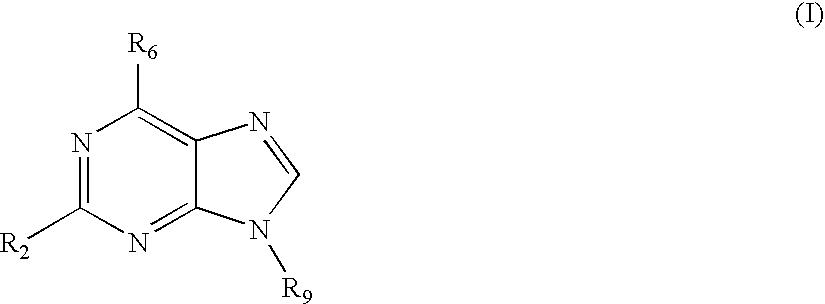
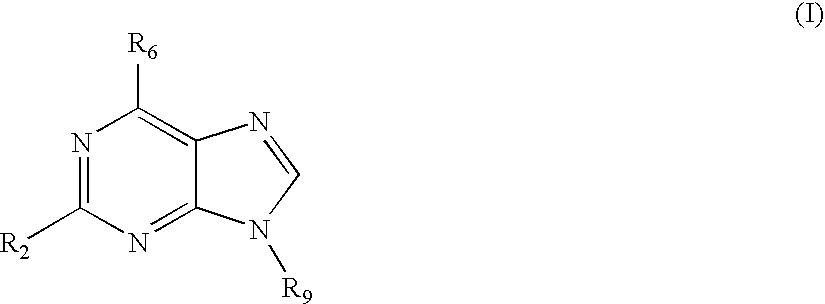

Examples
Embodiment Construction
[0108] Cell Culture, Peptides, Plasmids, Antibodies, and Drugs
[0109] ACH.sub.2 (7, 9) and 8E5 (10) cells are both HIV-1-infected lymphocytic cells, with the integrated wild-type single-copy (ACH.sub.2) reverse transcriptase and an integrated single-copy reverse transcriptase-defective virus (8E5) in CEM (12D7) cells (36). The CEM T cell (12D7) is the parental cell for both ACH.sub.2 and 8E5 cells. U1 is a monocytic clone harboring two copies of the viral genome (10) from parental U973 cells. MT-2 cells are infected with several copies of human T-cell leukemia virus type 1 (HTLV-1) and produce full-length viral particles. All cells were cultured at 37.degree. C. with up to 10.sup.5 cells per ml in RPMI 1640 media containing 10% fetal bovine serum and treated with a mixture of 1% streptomycin and penicillin antibiotics and 1% L-glutamine (Gibco-BRL).
[0110] Plasmids of HIV-LTR-CAT and pcTat were described previously (6). The Tat protein was produced in Escherichia coli and purified usi...
PUM
 Login to View More
 Abstract
Description
Claims
Application Information
 Login to View More