

Plastic rail system and other building products reinforced with polymer matrix composites
a composite material and polymer technology, applied in the direction of girders, balusters, synthetic resin layered products, etc., can solve the problems of metal fences and rails being constantly under the threat of corrosion attack, need periodic painting, metal railings in industrial atmospheres are often exposed to chemical gases or acids, etc., to achieve excellent mechanical properties, easy to use, and consistent processing
- Summary
- Abstract
- Description
- Claims
- Application Information
AI Technical Summary
Benefits of technology
Problems solved by technology
Method used
Image

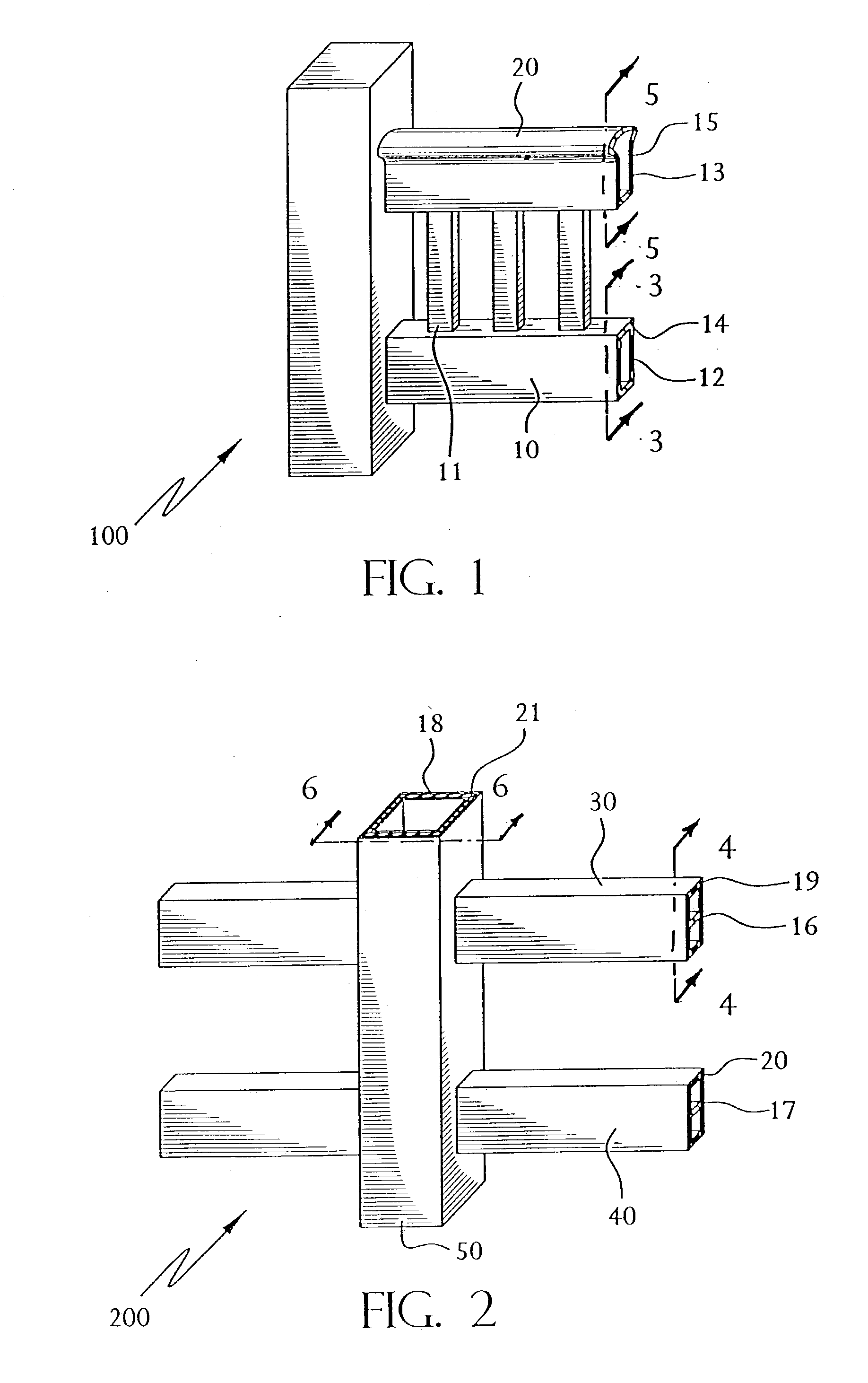
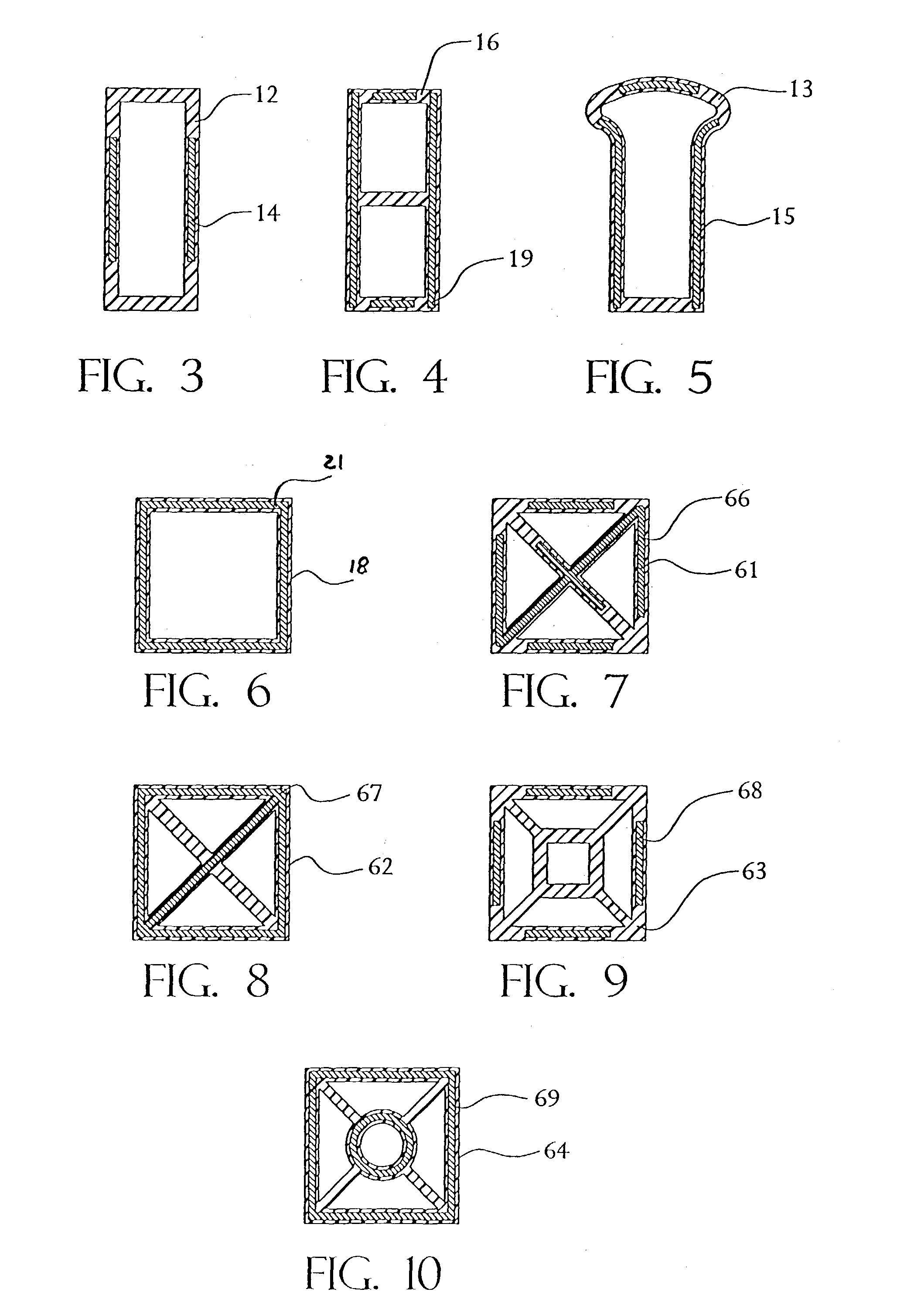
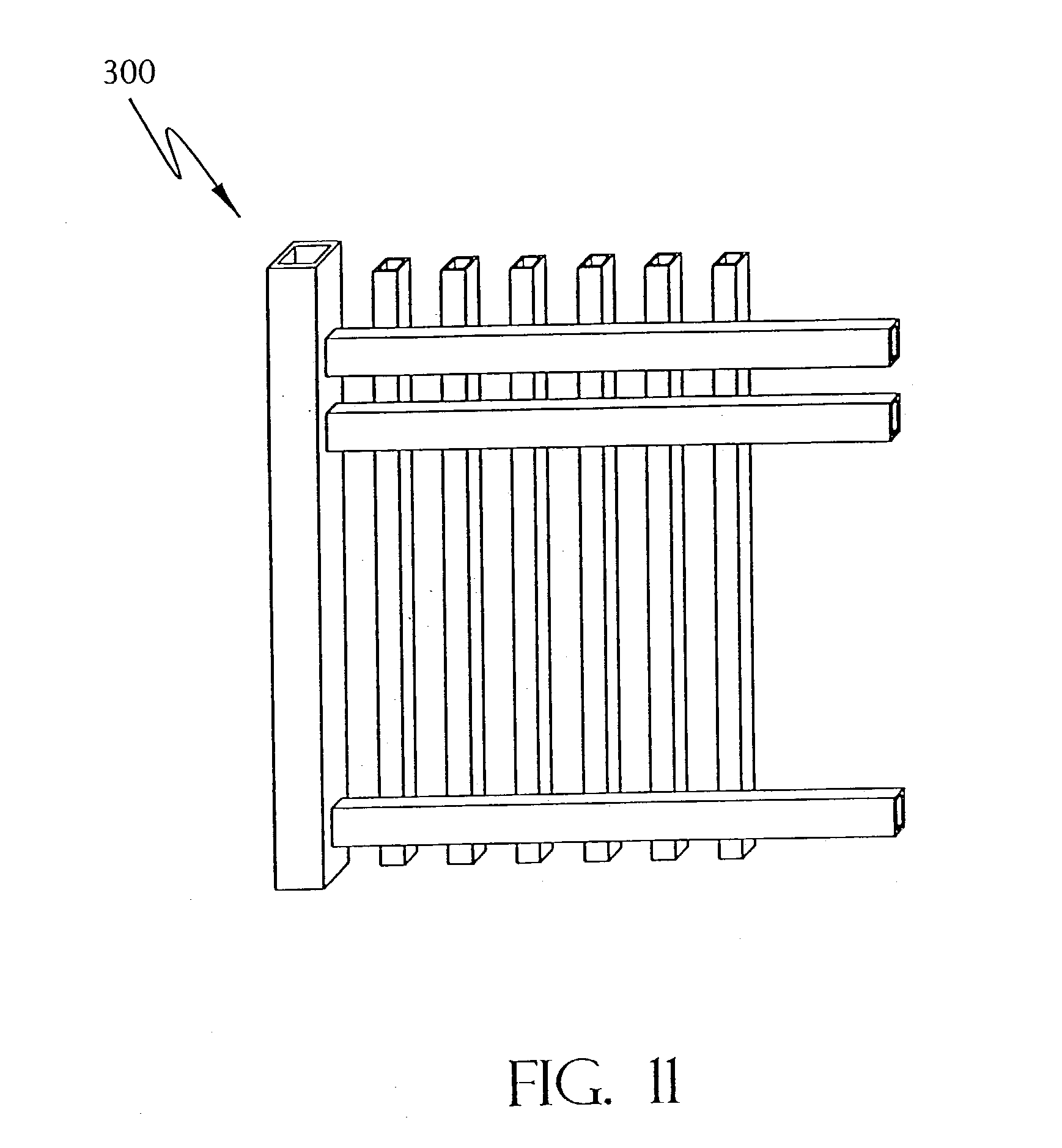
Examples
example b
[0196] Accelerated Concrete Exposure Testing
[0197] In one application of the invention, the base ends of fence posts are embedded in concrete footings to provide for mechanical stability of a fence structure. Common hydraulic cements and concrete compositions are known to be alkaline in nature. Alkaline environments can be corrosive to inorganic glasses such as, for example, the glass fibers that make up a part of the composite building material of the invention. In order to evaluate the chemical stability of the composite in contact with concrete chemistries, an accelerated test was performed.
[0198] Flat strip samples of the composite 0.5".times.6" were cut from a pultruded Prestige.TM. rail, from Bufftech, Buffalo, N.Y., the commercial embodiment of the present invention consisting of Twintex.RTM. consolidated roving and a black polypropylene capstock. The strip samples were placed with the glass fiber side in contact with the concrete surface of a bed of freshly mixed Portland ce...
example c
[0201] A Prestige.TM. fence, substantially like Example B, an aluminum fence, and steel fence were exposed to a motorized weed trimmer in a normal pass, as one would do in edge trimming a lawn on a good weather day. The effect of the impact of the weed trimmer's cutting string on the fencing materials was observed. The coatings on the aluminum and steel fences were scratched significantly by the weed trimmer. The Prestige.TM. fence sample looked substantially the same after exposure to the weed trimmer as it did before contact.
PUM
| Property | Measurement | Unit |
|---|---|---|
| tensile strength | aaaaa | aaaaa |
| tensile strength | aaaaa | aaaaa |
| tensile strength | aaaaa | aaaaa |
Abstract
Description
Claims
Application Information
 Login to View More