

Repeated structure of nanometer thin films with symmetric or asymmetric configuration for spr signal modulation
a technology of symmetric or asymmetric configuration and repeat structure, applied in the direction of material analysis through optical means, instruments, optical elements, etc., can solve the problems of inconvenient use, difficult calibration and measurement with scanning mechanism, etc., and achieve the effect of improving the efficiency of angular interrogation and reducing drawbacks
- Summary
- Abstract
- Description
- Claims
- Application Information
AI Technical Summary
Benefits of technology
Problems solved by technology
Method used
Image

Examples
Embodiment Construction
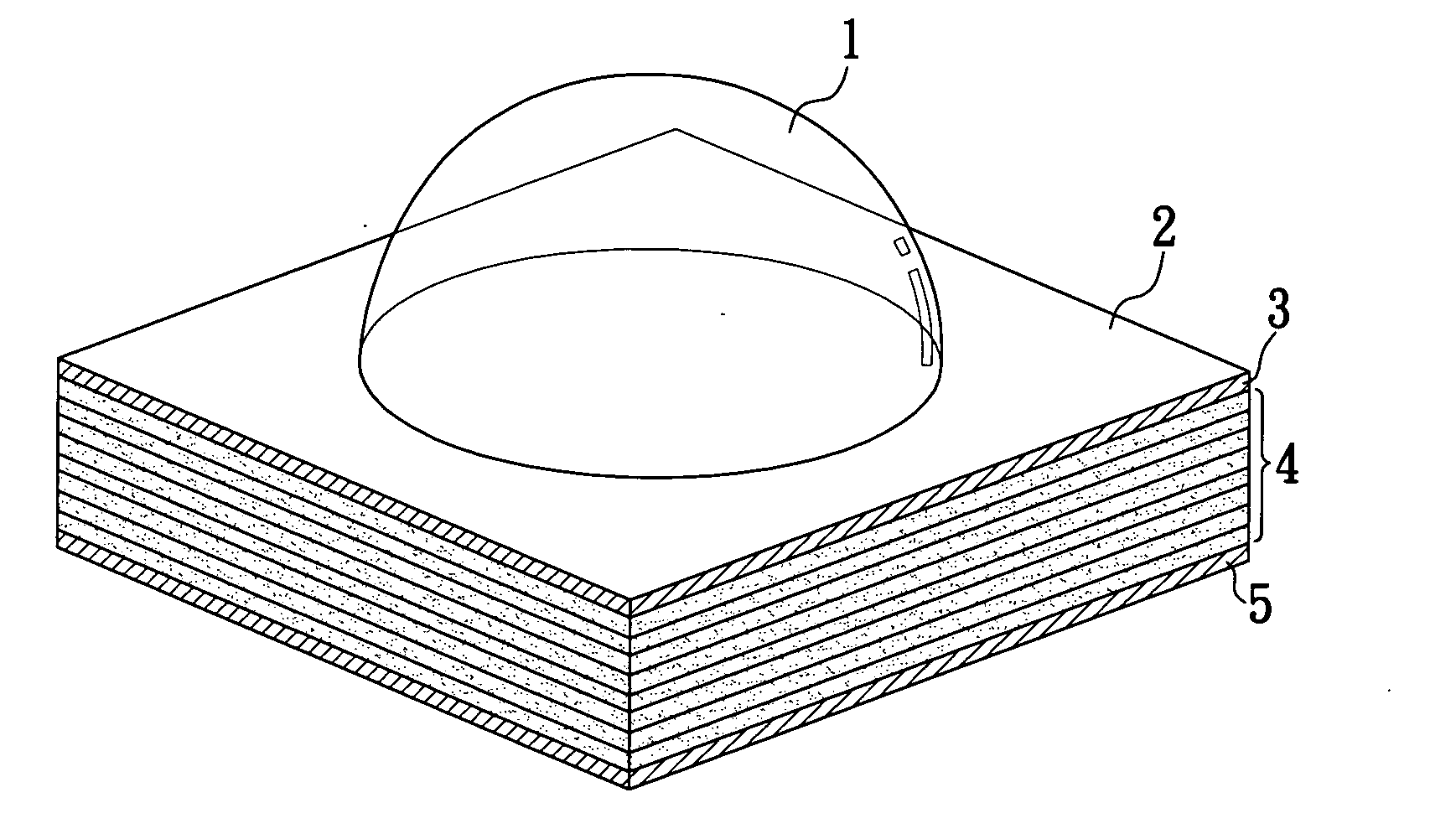
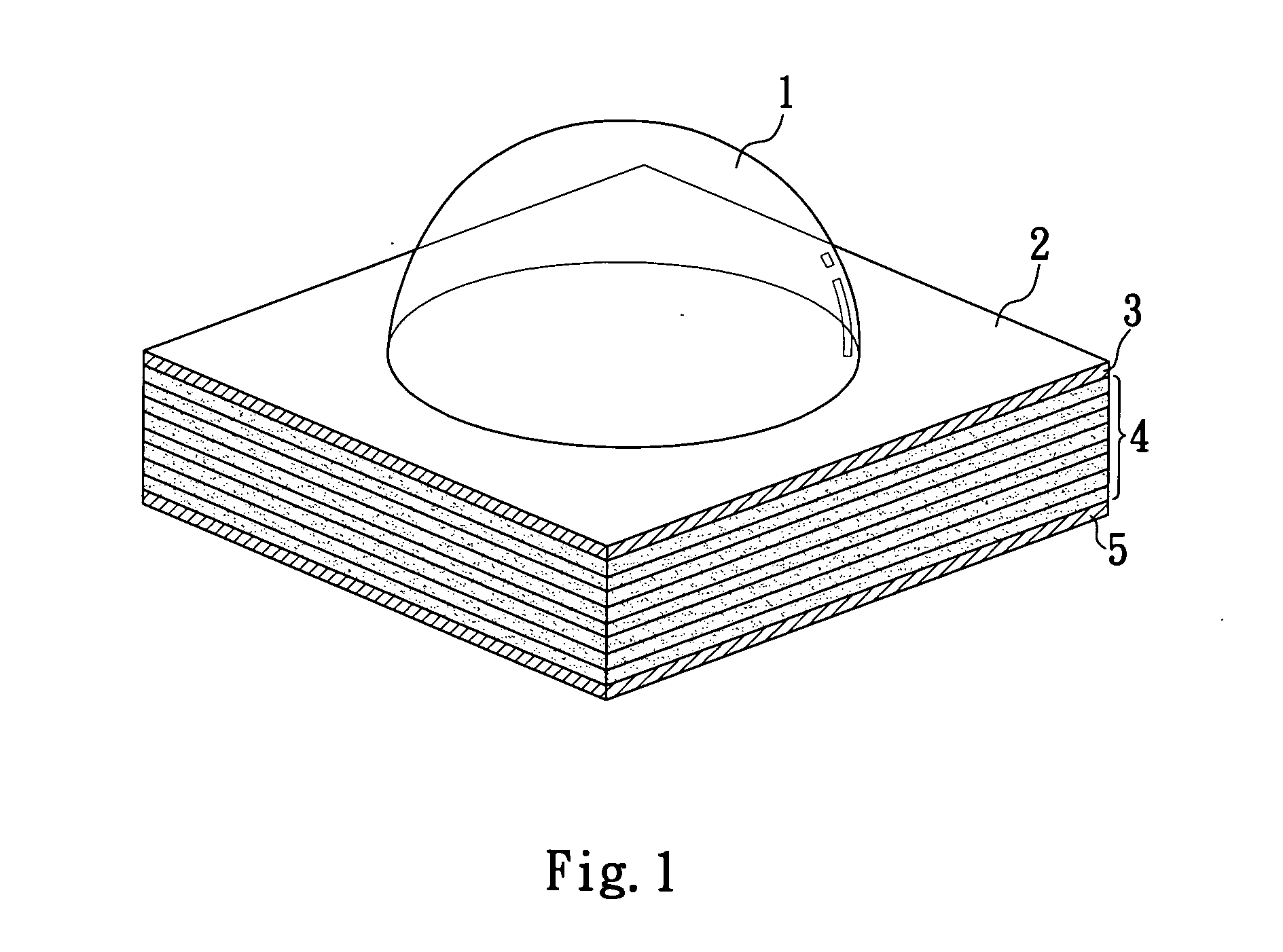
[0024] Embodiments of the present invention will now be described through a symmetric or asymmetric multilayer structure in an active surface plasmon resonance (SPR) chip, with reference to the accompanying figures. Referring first to FIG. 1, a symmetric or asymmetric multilayer structure in an active surface plasmon resonance (SPR) chip comprising: a prism 1, a substrate material 2, a thin gold film (can be other metal film) 3, a nanometer multilayer dielectric thin films 4, and a thin gold film 5.
[0025] The interposed stack of nanometer multilayer thin films is organized by the materials of a high and low refractive index alternately, and the thickness of each layer is set a fraction of wavelength of the incident light, which is about a tens to several hundreds of nanometers. Number of total layers is dependent on the equivalent refractive index as that in a single dielectric layer.
[0026] Material of a high or low refractive index can be viewed as a constituent of a “pair”, and ...
PUM
| Property | Measurement | Unit |
|---|---|---|
| thickness | aaaaa | aaaaa |
| refractive index | aaaaa | aaaaa |
| thickness | aaaaa | aaaaa |
Abstract
Description
Claims
Application Information
 Login to View More