
Compositions and methods for weight management
a composition and weight management technology, applied in the field of compositions affecting metabolism, can solve the problems of inability to incorporate even de-fatted and de-bitterized seeds into the diet of patients or consumers, and the toxicity of chloroform, etc., to facilitate the increase of glucose induced insulin levels
- Summary
- Abstract
- Description
- Claims
- Application Information
AI Technical Summary
Benefits of technology
Problems solved by technology
Method used
Image

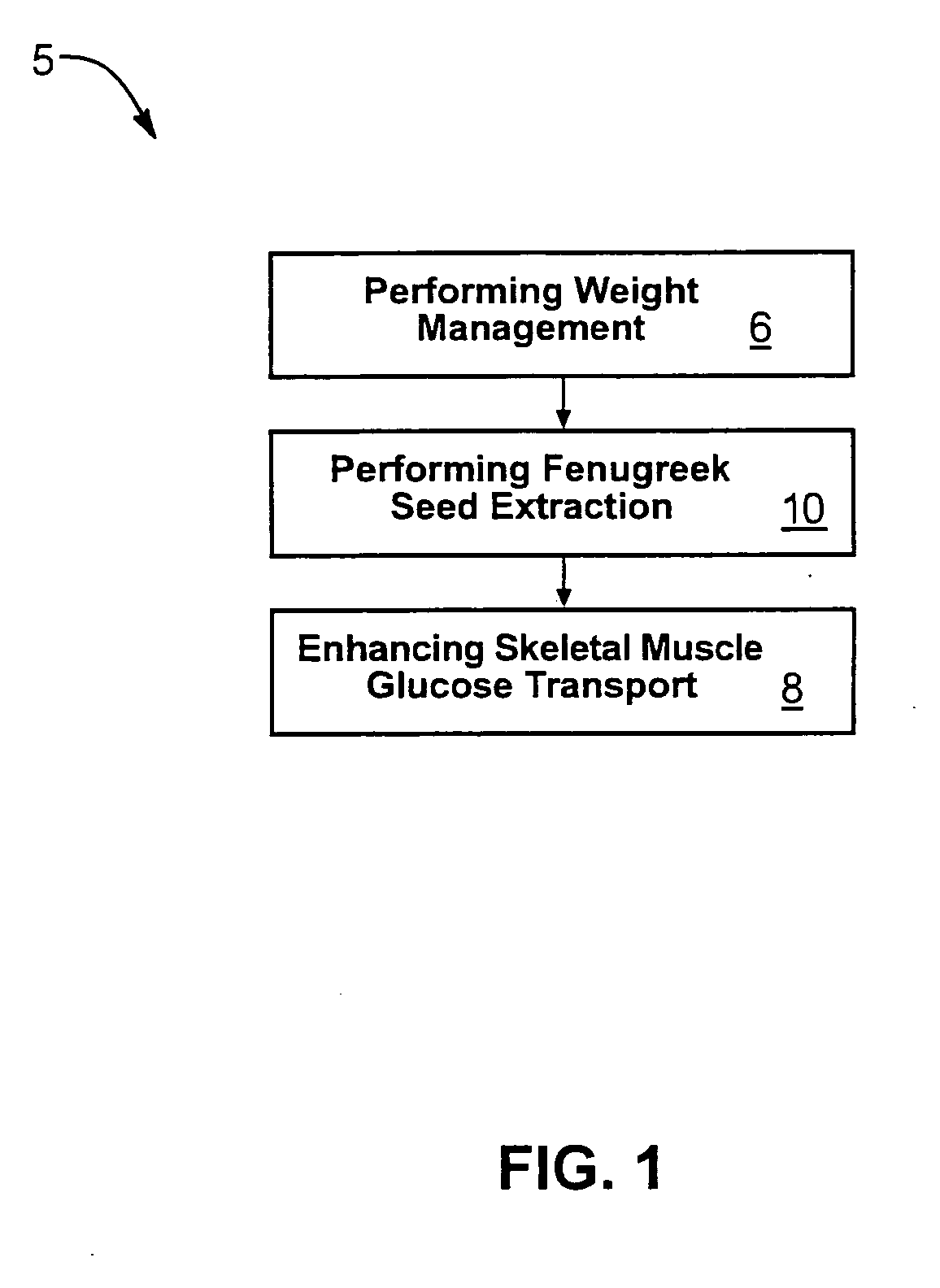
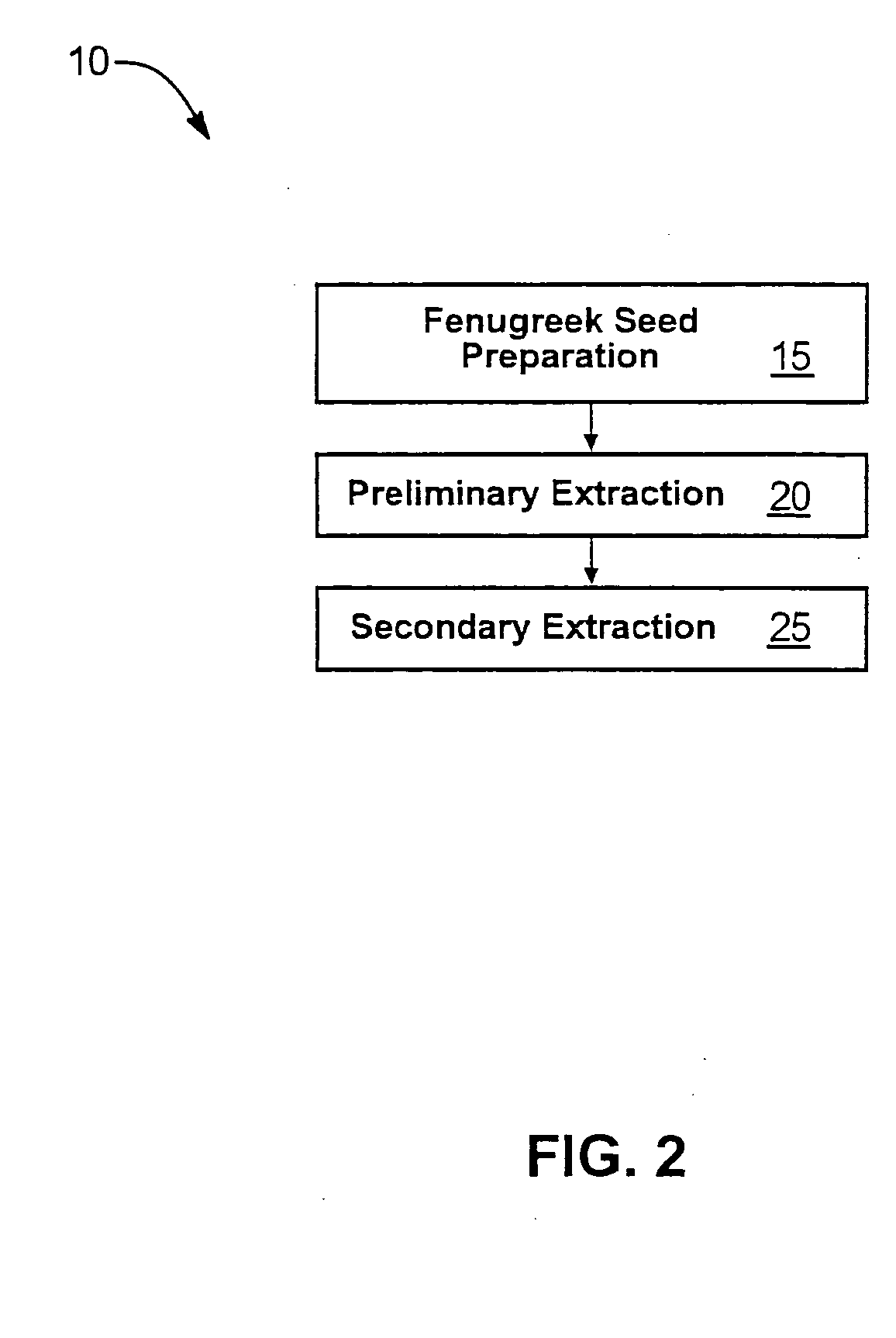
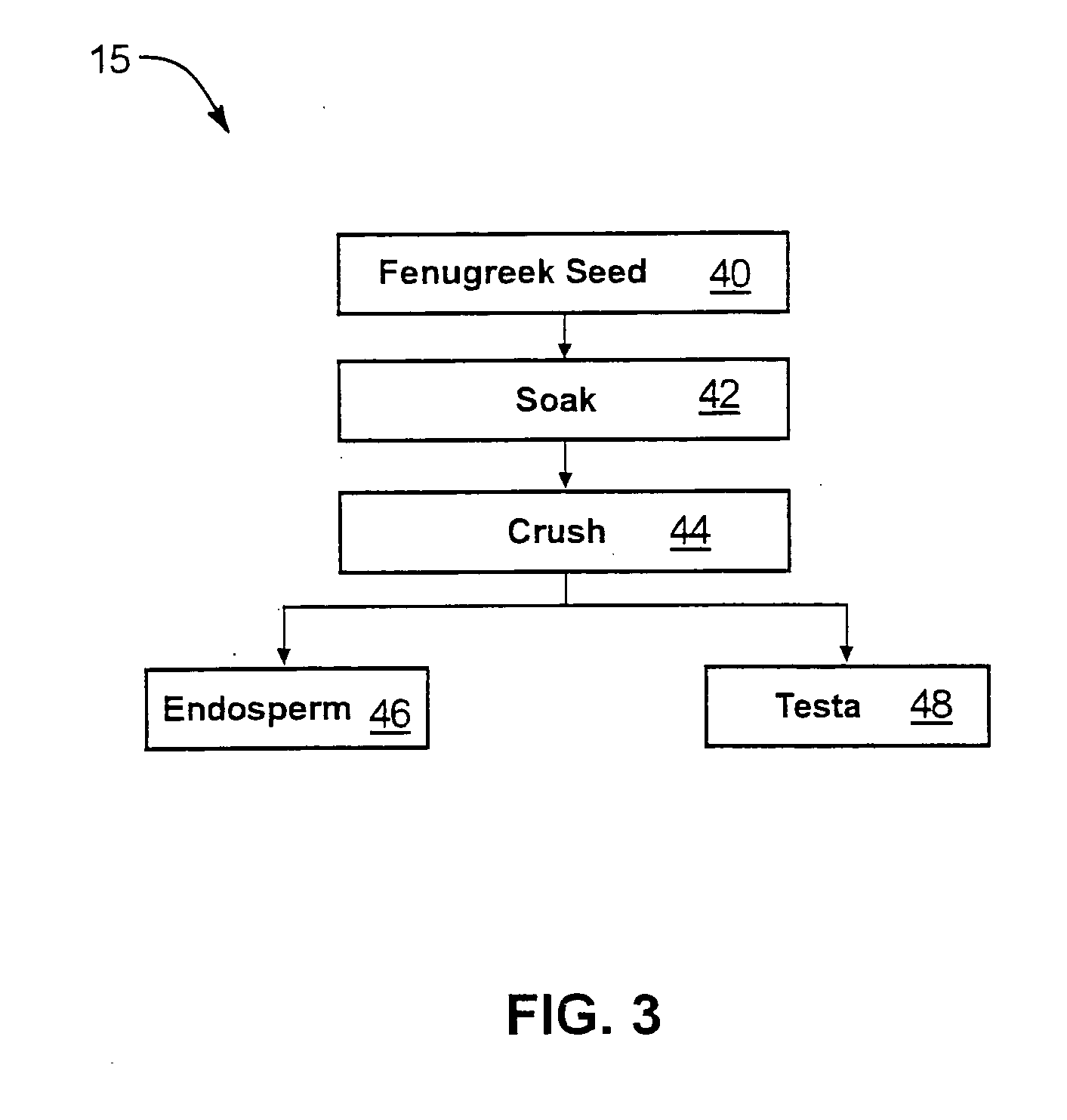
Examples
example i
Syrian Golden Hamster—15 mg / mL
[0103] A unique, high-potency bio-active extract is prepared from fenugreek seeds according to a presently preferred embodiment of a fenugreek seed preparation process 10 of the present invention. More particularly, a concentration of 15 mg 4-hydroxyisoleucine per mL is prepared from the yield of process 10. This concentration is administered to an in vitro cell line: HIT-T15, a Syrian golden hamster pancreatic islet of Langerhans beta cell and evaluated for changes in the concentration of insulin activity over time.
[0104] Referring now to FIG. 7, a procedure for preparing a cell culture and evaluating the bio-activities of fenugreek extract in cultured pancreatic beta cells from a Syrian golden hamster 140 is illustrated. In one presently preferred embodiment of the present invention, a cell culture 142 from HIT-T15 may be obtained and the cells may be subcultured 144 by removing a growth medium and adding about 4 mL of a solution containing about 0....
example ii
Fenugreek Seed Extract in Syrian Golden Hamsters—60 mg / mL
[0106] As previously described in Example I and as illustrated in FIG. 7, a preparatory procedure 140 was used to culture, harvest, and evaluate pancreatic beta cells from a Syrian golden hamster. Referring now to FIG. 9, a schematic graph illustrates the results from this test. Pancreatic beta cells from a Syrian golden hamster were cultured according to the preparatory procedure 140 and evaluated following exposure to a concentration of the bio-active components of a fenugreek seed extract (e.g., Promilin™) at 60 mg 4-hydroxyisoleucine per mL. As shown, greater concentration of bio-active compounds yielded greater stimulated insulin production. As appreciated by those skilled in the art, and as depicted in the illustration, measurements taken of the insulin activity level in a pancreatic beta cell of a Syrian golden hamster over the course of the experiment indicate that the bio-active components do affect the level of insu...
example iii
Non-Debitterized Fenugreek Seed Extract in Humans—1 mg 4-hydroxyisoleucine / kg
[0108] Generally referring now to FIGS. 10-19, tests were conducted with three healthy male human subjects who had no history of diabetes or carbohydrate metabolism dysfunction. The test included two procedures. For the first procedure the subjects fasted overnight. Blood samples were taken from the subjects for glucose and insulin level measurements at time equal to negative 30 minutes, 0 minutes, 15, 30, 60 minutes, 120 minutes, and 180 minutes. At time equal zero, a solution of 75 gram (g) of glucose in 300 mL water was administered to the subjects. The insulin content of each of theblood samples was measured using Radioimmunassay (RIA) at the School of Pharmacy at University of Montana. The results of the blood sample testing is graphically summarized in FIGS. 10-20 as the “placebo portion” data points. As appreciated by those skilled in the art, this type of test is similar to an oral glucose toleranc...
PUM
 Login to View More
 Abstract
Description
Claims
Application Information
 Login to View More