
Semiconductor memory device for improving access time in burst mode
a memory device and memory chip technology, applied in static storage, digital storage, instruments, etc., can solve the problems of giving the user discomfort, and unable to secure the time margin, so as to achieve the effect of improving the access time and avoiding increasing the chip area and power consumption
- Summary
- Abstract
- Description
- Claims
- Application Information
AI Technical Summary
Benefits of technology
Problems solved by technology
Method used
Image

Examples
second embodiment
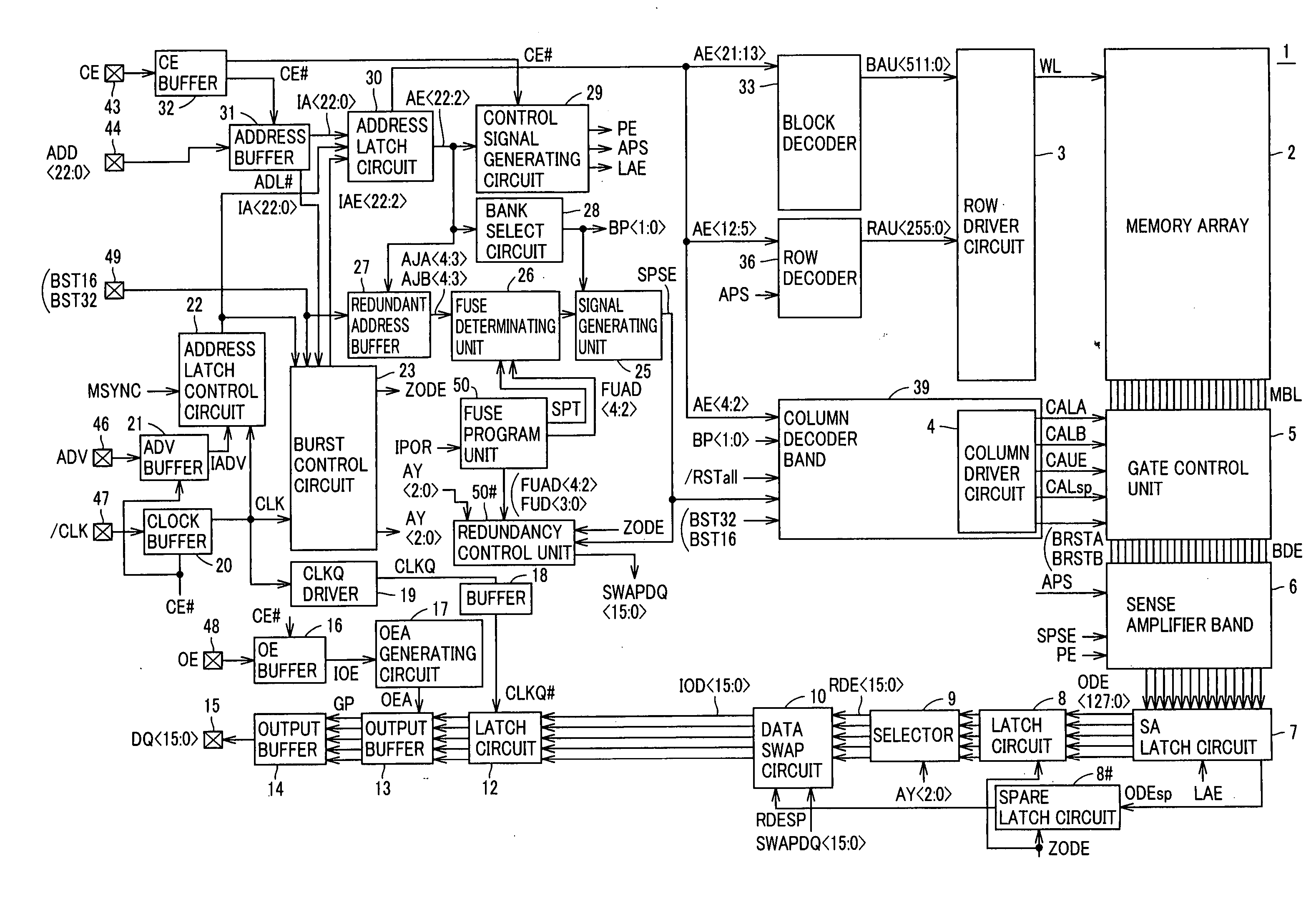
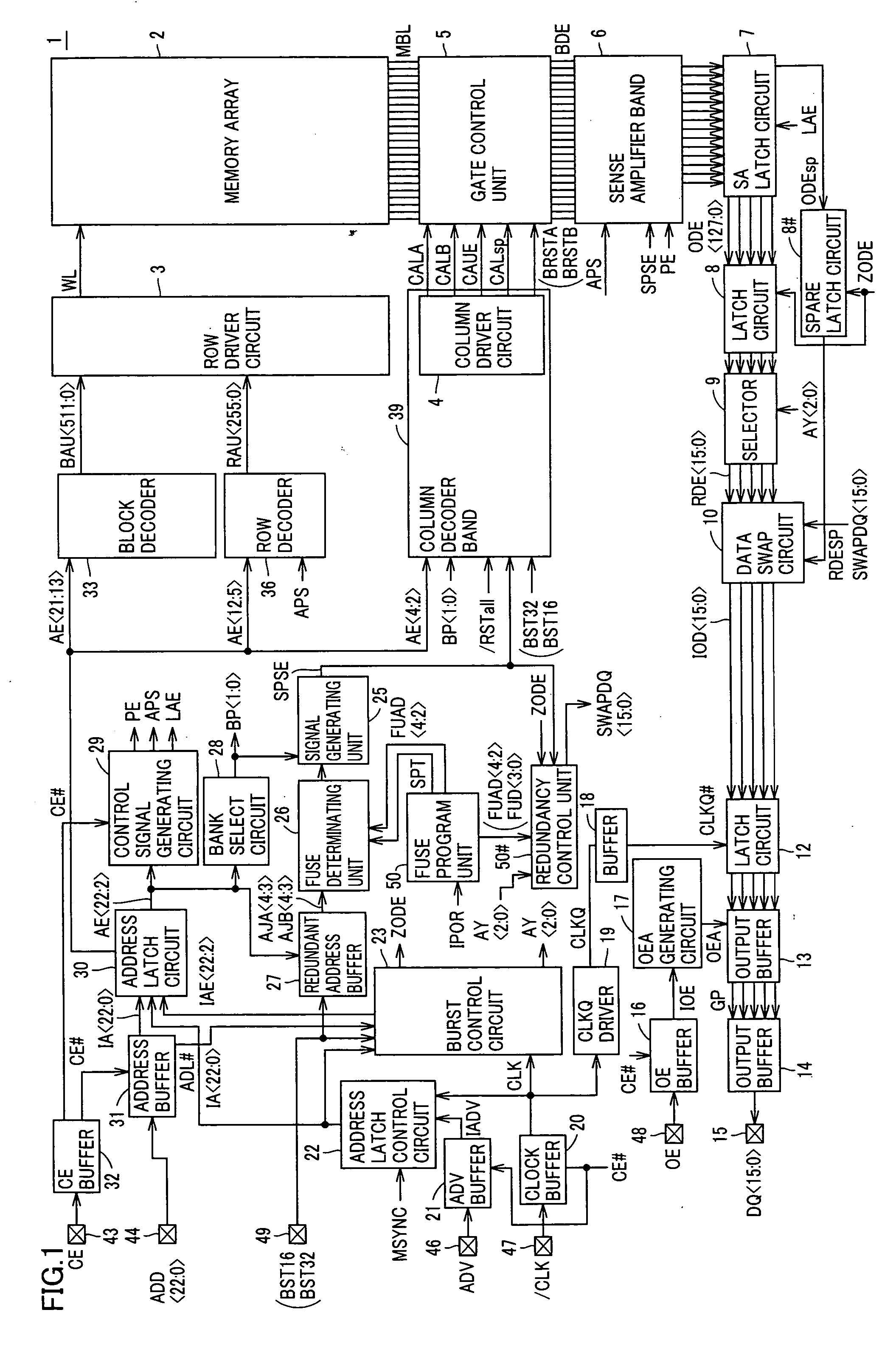
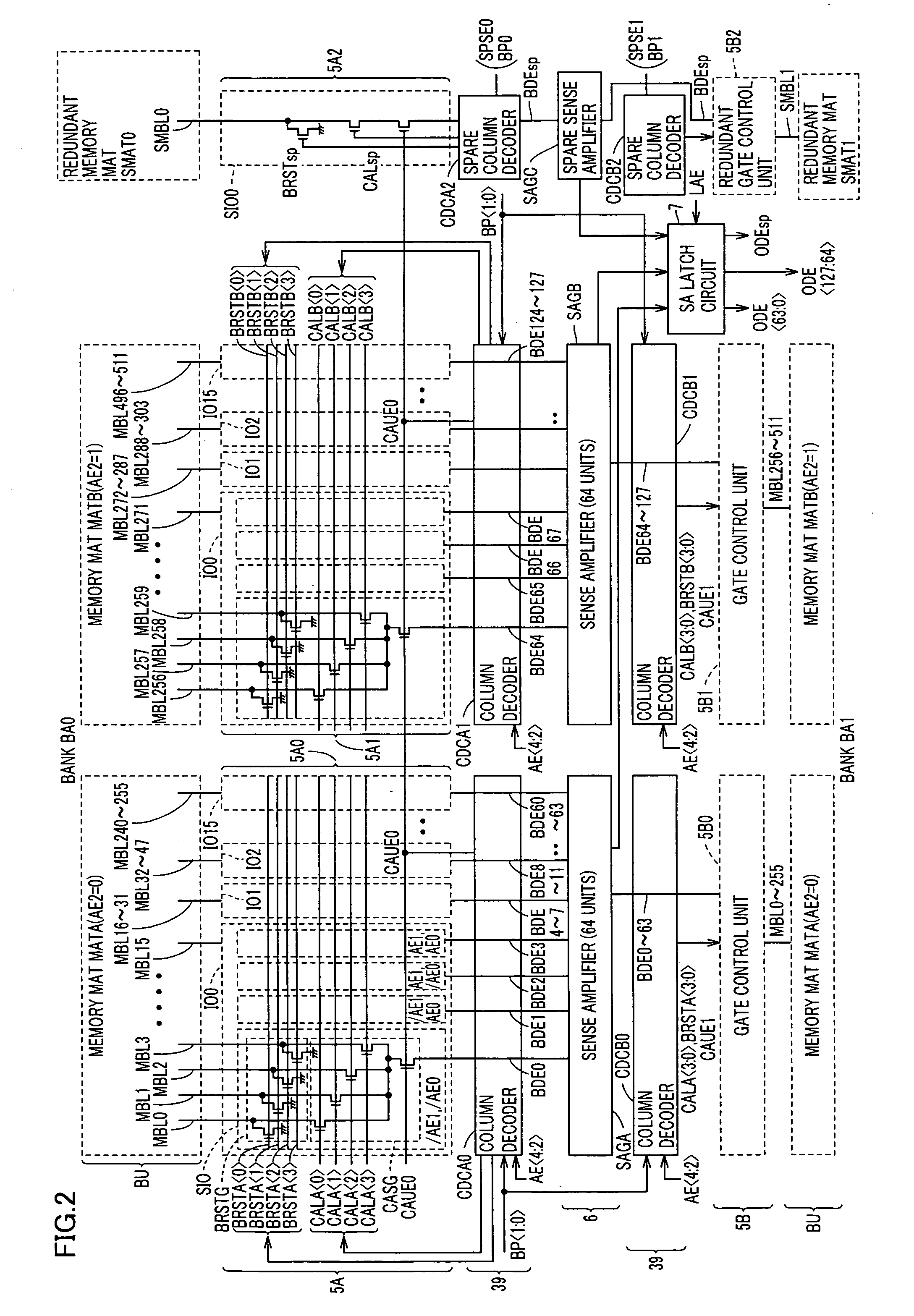
[0158] The second embodiment refers to a redundant configuration in the memory array described with reference to the first embodiment.
[0159] Referring to FIG. 16, the address conversion similar to the one employed for the column decoder CDCA0 is required for this redundant address buffer 27.
[0160] The address conversion for redundancy determination is carried out based on the input of internal address AE. Specifically, AND circuit AD10, exclusive OR circuits ER2, ER3 make up an address conversion circuit. The operation is similar to the one described above for column decoder CDCA0. In the case where internal address AE2 is “1”, the address is converted and internal address AJA is generated. In the case where internal address AE2 is “0”, on the other hand, AJB is generated. Specifically, internal addresses AJA and AJB for determination are generated for memory mat MATA with internal address AE2 of “0” and memory mat MATB with internal address AE2 of “1”, respectively.
[0161] Referr...
third embodiment
[0195] In the word line select operation in APS (Automatic Power Saving) mode, word line WL, once activated, is deactivated after the data of the sense amplifier is established a predetermined time later. Then, the same word line WL, if selected again in burst mode, is required to be reactivated, resulting in great current consumption for charge and discharge operation. According to the third embodiment, the operation of canceling the APS mode is carried out during the burst mode to reduce power consumption thereby to maintain the state in which word line WL is selected.
[0196] Referring to FIG. 26, memory device 1# according to the third embodiment is different in the provision of APSBST signal generating unit 11. The other points are the same as those described for memory device 1 and therefore not described in detail again.
[0197] APSBST signal generating unit 11 outputs control signal APSBST to row decoder 36 based on the input of control signal APS.
[0198] Referring to FIG. 27,...
PUM
 Login to View More
 Abstract
Description
Claims
Application Information
 Login to View More