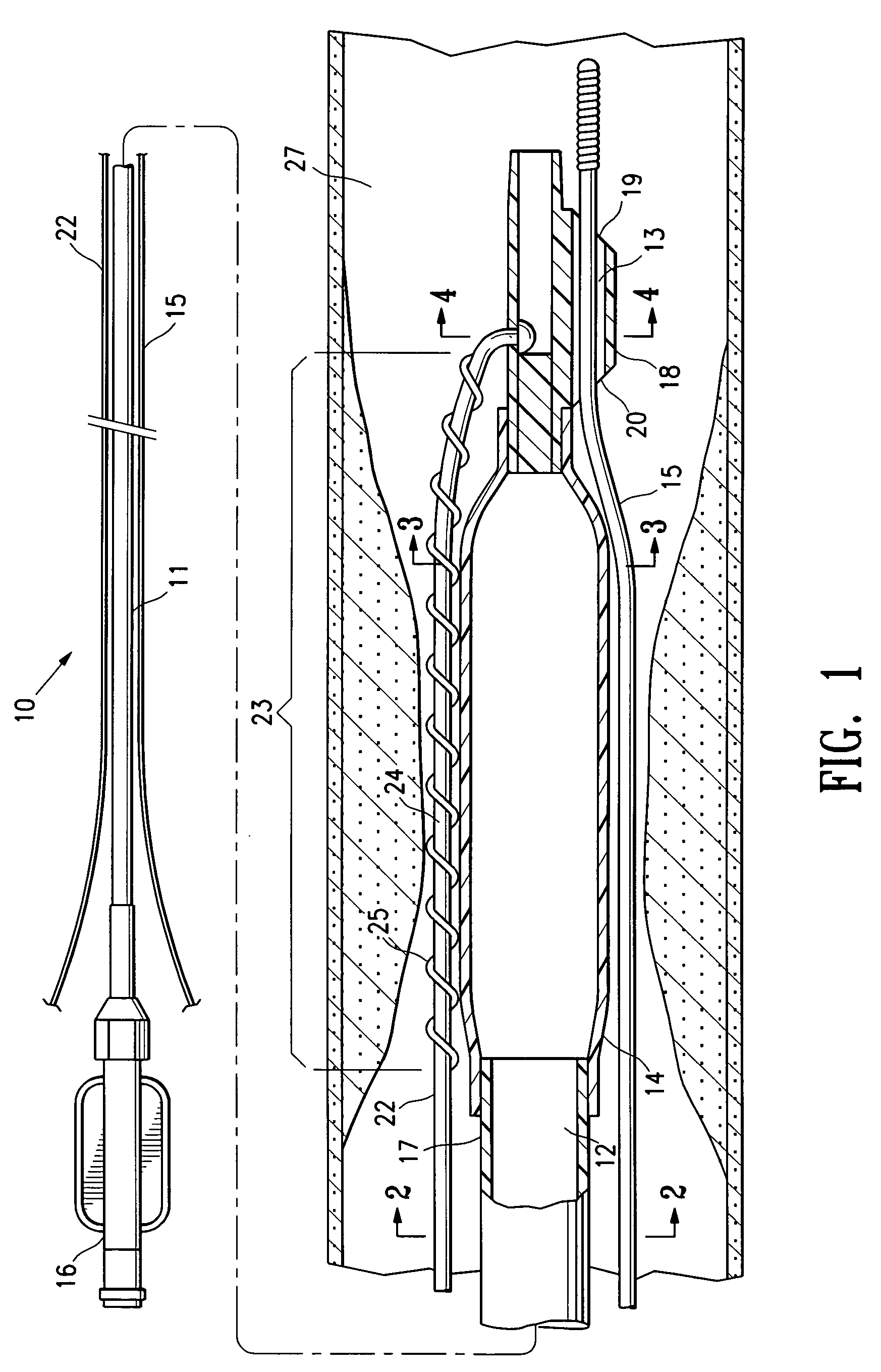
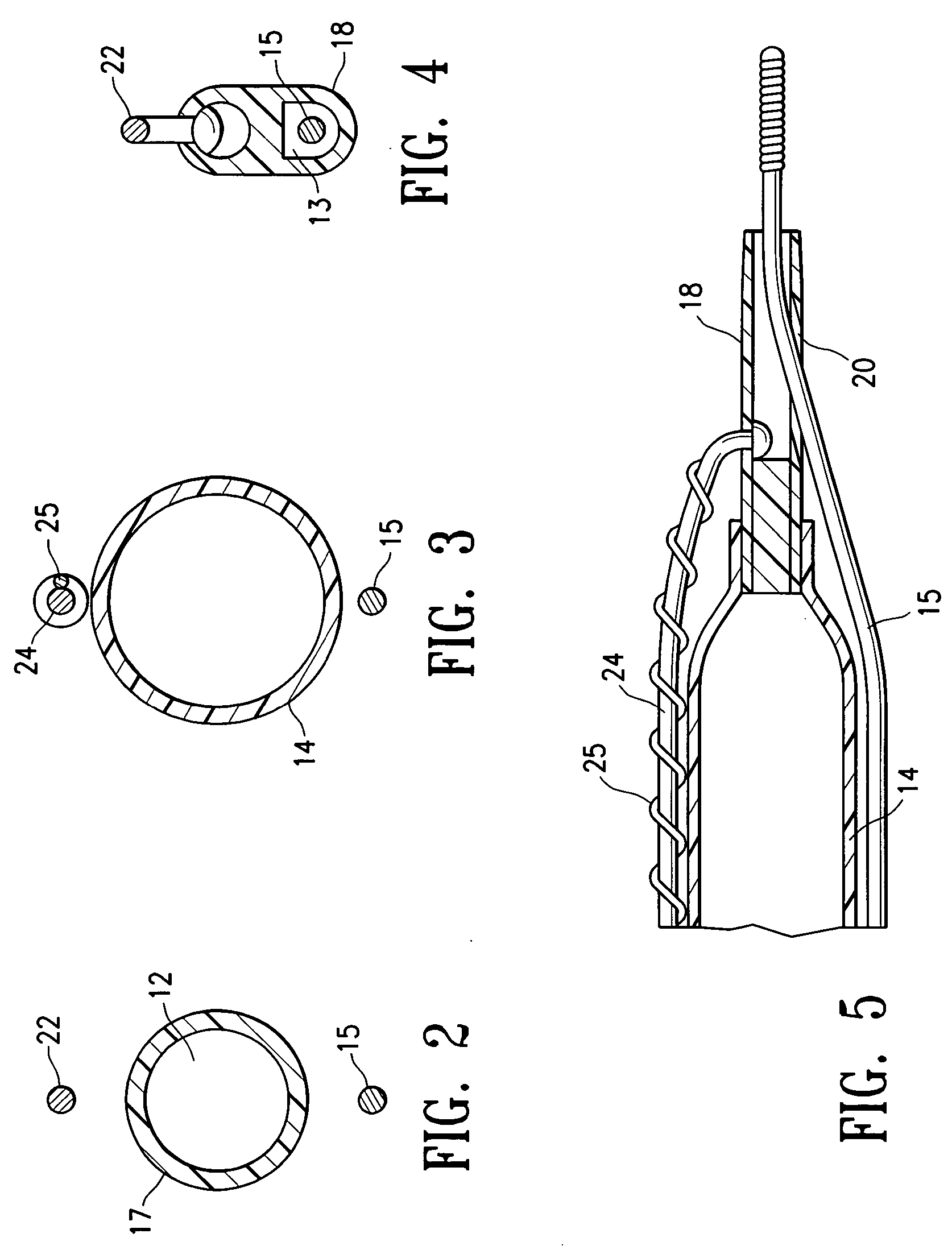
[0005] The invention is directed to a
balloon catheter having at least one advancement wire with a distal end section secured to a distal tip section of the catheter, and with a textured section extending along the outer surface of at least a portion of an
inflatable section of the catheter balloon. The textured section of the advancement wire preferably improves the ability of the balloon to remain in position in the patient's body lumen during inflation of the balloon to perform a
medical procedure such as balloon angioplasty or
stent touch-up.
[0008] With the advancement wire extending external to the catheter balloon, the textured section is exposed along the outer surface of the balloon, to thereby enhance the frictional engagement of the balloon against the vessel wall during inflation of the balloon to dilate a
stenosis. As a result, any tendency of the balloon to slip out of position in the patient's body lumen is prevented or inhibited by the catheter of the invention. Additionally, the textured section provides improved control over the
dissection of a
stenosis as the balloon inflates against the
stenosis. Specifically, the textured section provides focal stresses as it cuts into the stenosis, thereby controlling the resulting
dissection planes. However, unlike a
cutting balloon having a blade along the outer surface of the balloon, the texture section in a presently preferred embodiment has a rounded outer surface which avoids substantial areas of injury to the vessel as the catheter is positioned therein. Additionally, the textured section provides regions of high and
low stress which in one embodiment limits vessel damage to only the
high stress areas.
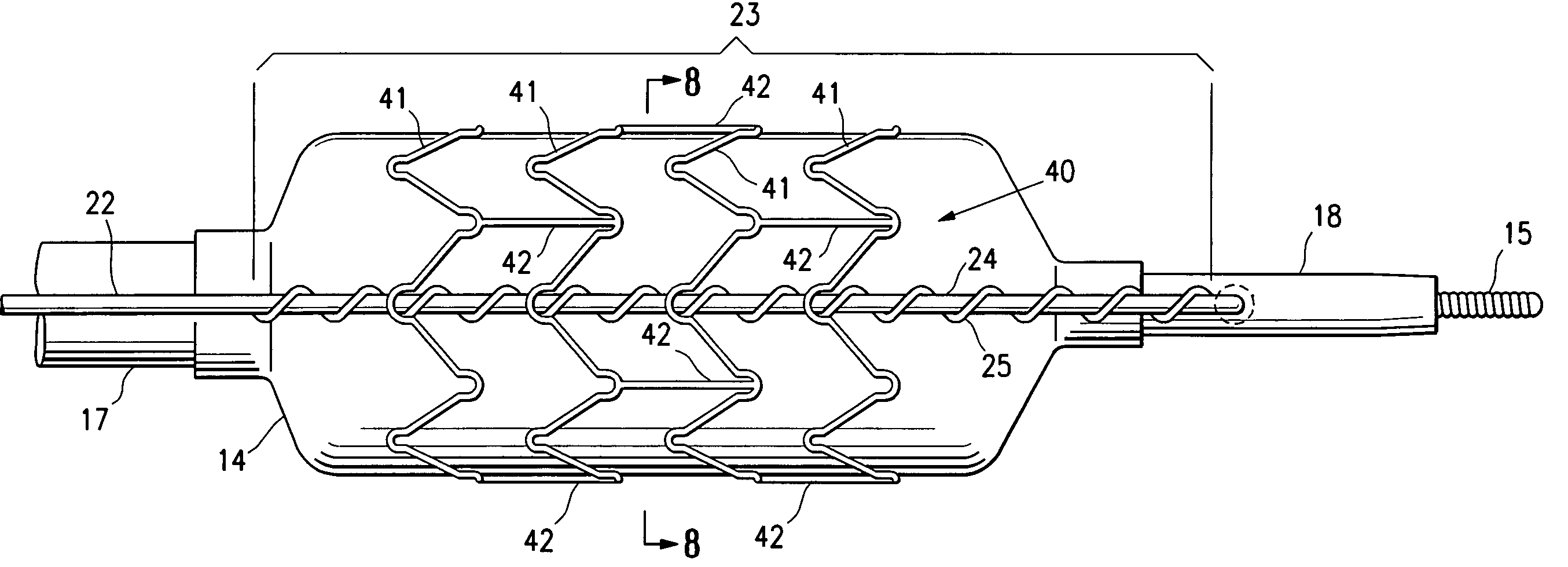
[0009] In one embodiment in which the balloon is inflated within a previously expanded
stent, the textured section is configured to mesh with the stent. Specifically, the longitudinally spaced apart projections or peaks of the textured section have a spacing therebetween which is configured to accommodate the stent struts. For example, with a conventional
stent design comprising a series of connected rings, the stent strut forming a ring fits within the longitudinal space between adjacent projections or peaks of the textured section. Thus, during dilatation of a stenosed region within a previously implanted stent (typically referred to as “in-
stent restenosis”), or during a stent touch-up in which the balloon further expands a partially expanded stent in the patient's body lumen, the
balloon catheter of the invention does not slip longitudinally out of position during inflation of the balloon, due to the textured section of the advancement wire. It is important to match the length of the inflated balloon to the length of the stent in such procedures, to avoid unintended injury to the patient's vessel which can result when sections of the balloon over-inflate against the vessel wall. As a result, the
balloon catheter of the invention prevents or inhibits such injury by inhibiting an otherwise well matched balloon from longitudinally slipping out of position within the stent during inflation of the balloon.
[0011] In the embodiment in which the textured section is formed by a wound wire member, characteristics such as the
pitch of the wound wire can be easily selected and manufactured to mesh with any of a variety of commercially available stents. The stiffness resulting from the wound wire will increase as the
pitch of the wound wire decreases. Consequently, in one embodiment in which the
pitch of the wound wire is relatively low, the wound wire is preferably formed of a relatively flexible material such as a
polymer or a superelastic material such as
NiTi alloy (Nitinol), to mitigate the increased stiffness that would otherwise result from the low pitch wound wire formed of a less flexible material such as stainless steel.



 Login to View More
  Login to View More