
Positioning system and method of orienting an object using same
- Summary
- Abstract
- Description
- Claims
- Application Information
AI Technical Summary
Benefits of technology
Problems solved by technology
Method used
Image

Examples
Embodiment Construction
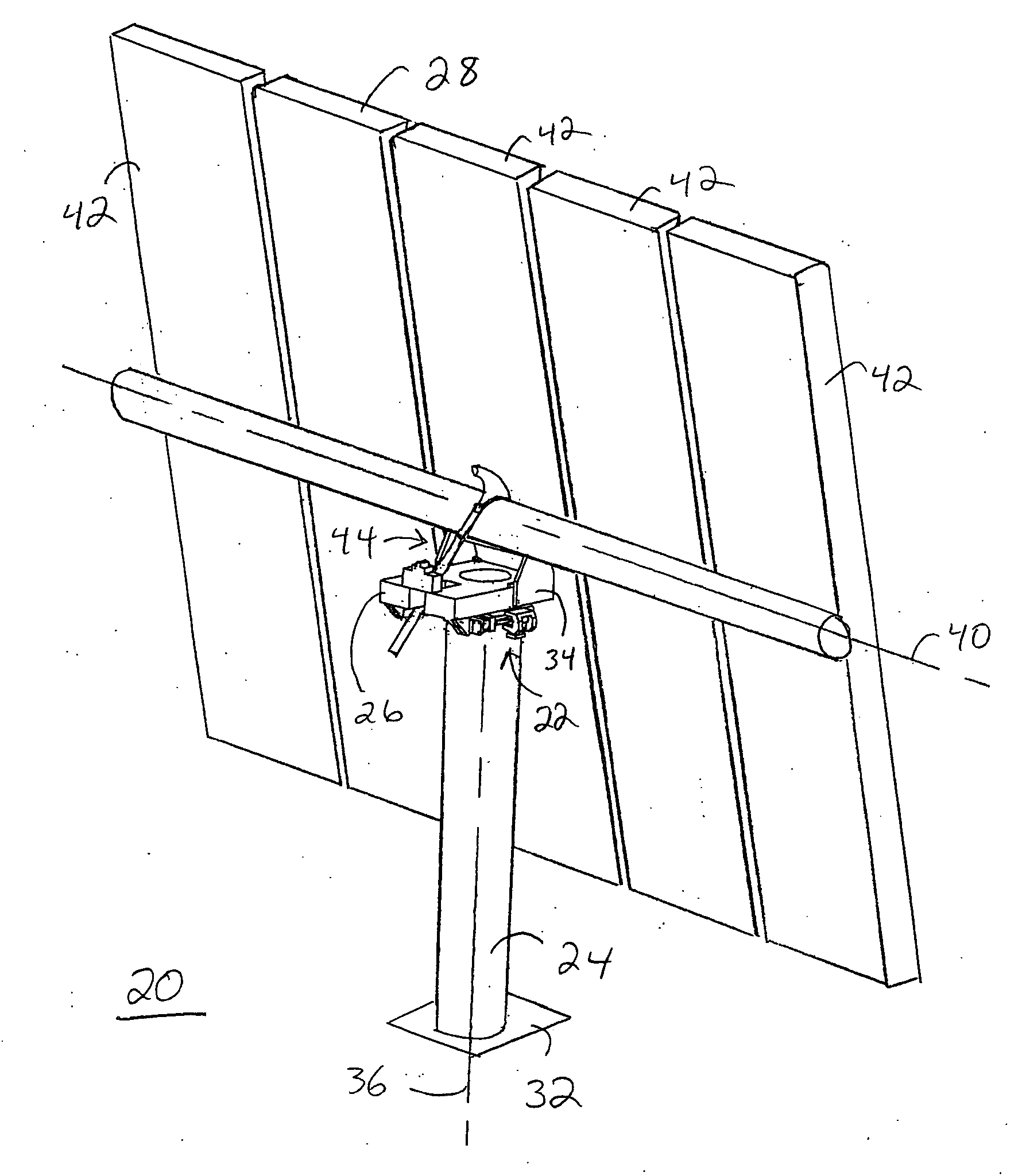
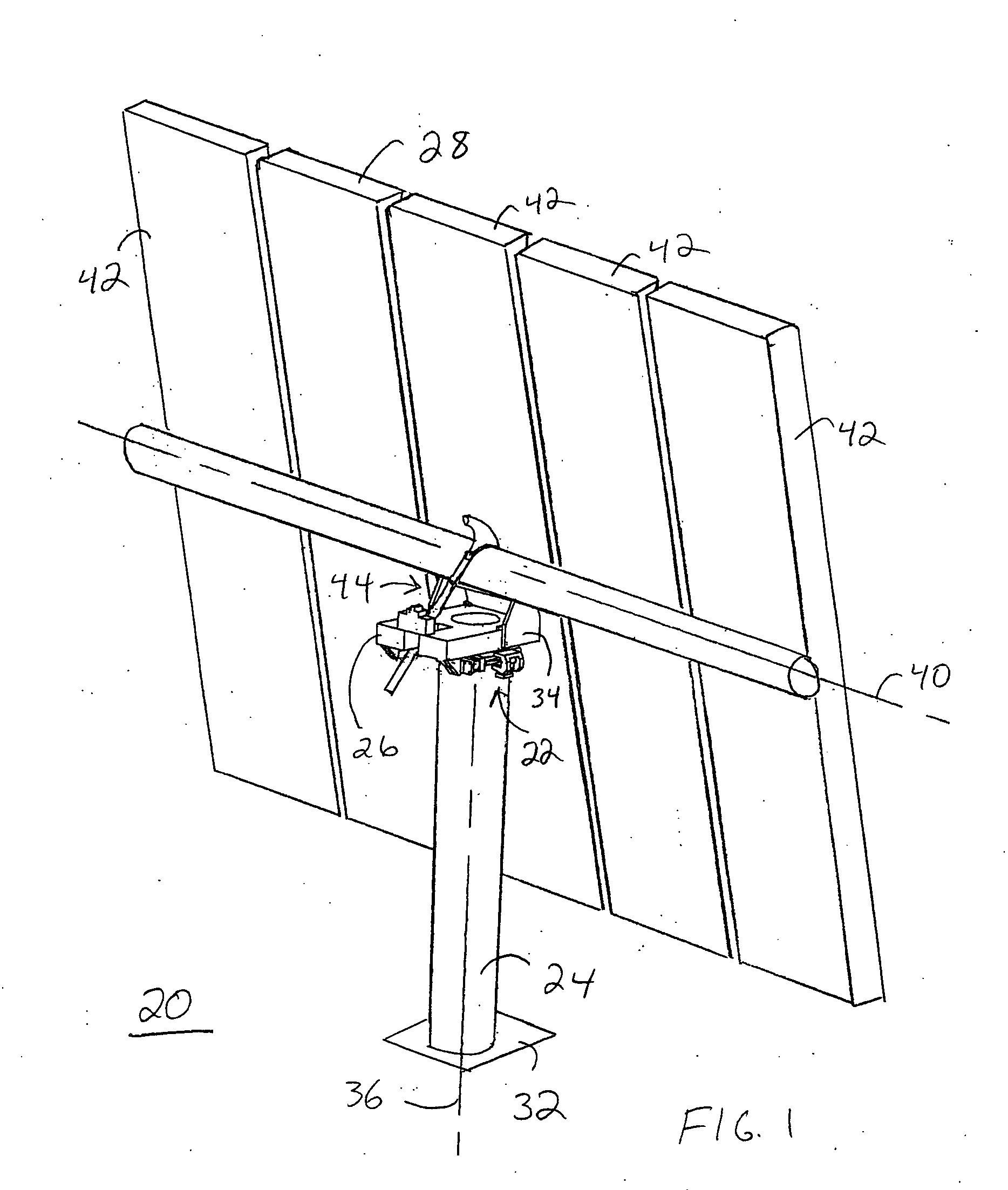
[0030] The present invention includes a positioning system and methodology for utilizing the positioning system to precisely orient an object relative to a base to which the object is rotatably coupled. In a preferred embodiment, the positioning system orients the object in azimuth. The object may be a device that is intended to face a given target in the celestial hemisphere during normal operations. Such devices include, but are not limited to, telescopes, radar systems, directional antennas, solar collectors, and other devices that track from above. Moreover, the object may be a large object, such as a crane. The term “large” refers to an object having a surface that exhibits an area of at least one hundred square meters. The term “large” can also refer to a heavy object, or an object subjected to heavy or variable loads, that may or may not have an area of at least one hundred square meters.
[0031] For clarity of illustration, the positioning device and methodology will be descr...
PUM
 Login to View More
 Abstract
Description
Claims
Application Information
 Login to View More