
Digital logic test method to systematically approach functional coverage completely and related apparatus and system
a digital logic and test method technology, applied in the field of digital logic test methods, can solve problems such as testing bottlenecks, digital logic test and verification present major hurdles to continued progress, and explosive advancement of electronics technologies
- Summary
- Abstract
- Description
- Claims
- Application Information
AI Technical Summary
Benefits of technology
Problems solved by technology
Method used
Image

Examples
Embodiment Construction
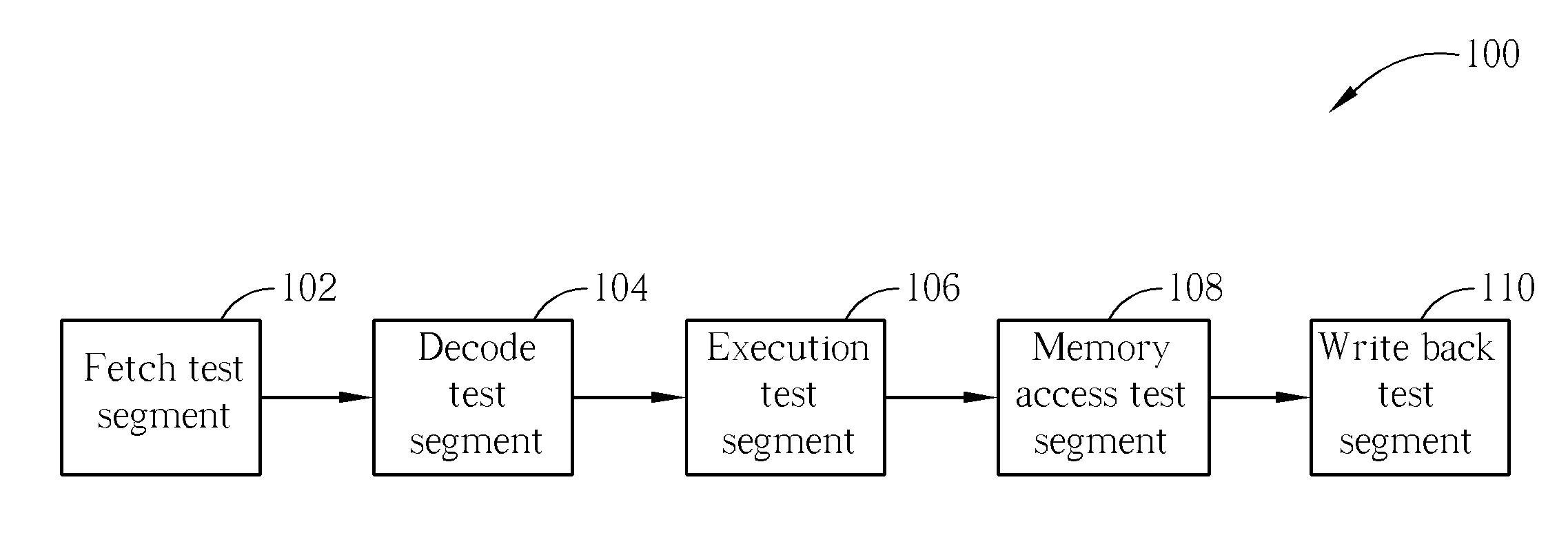
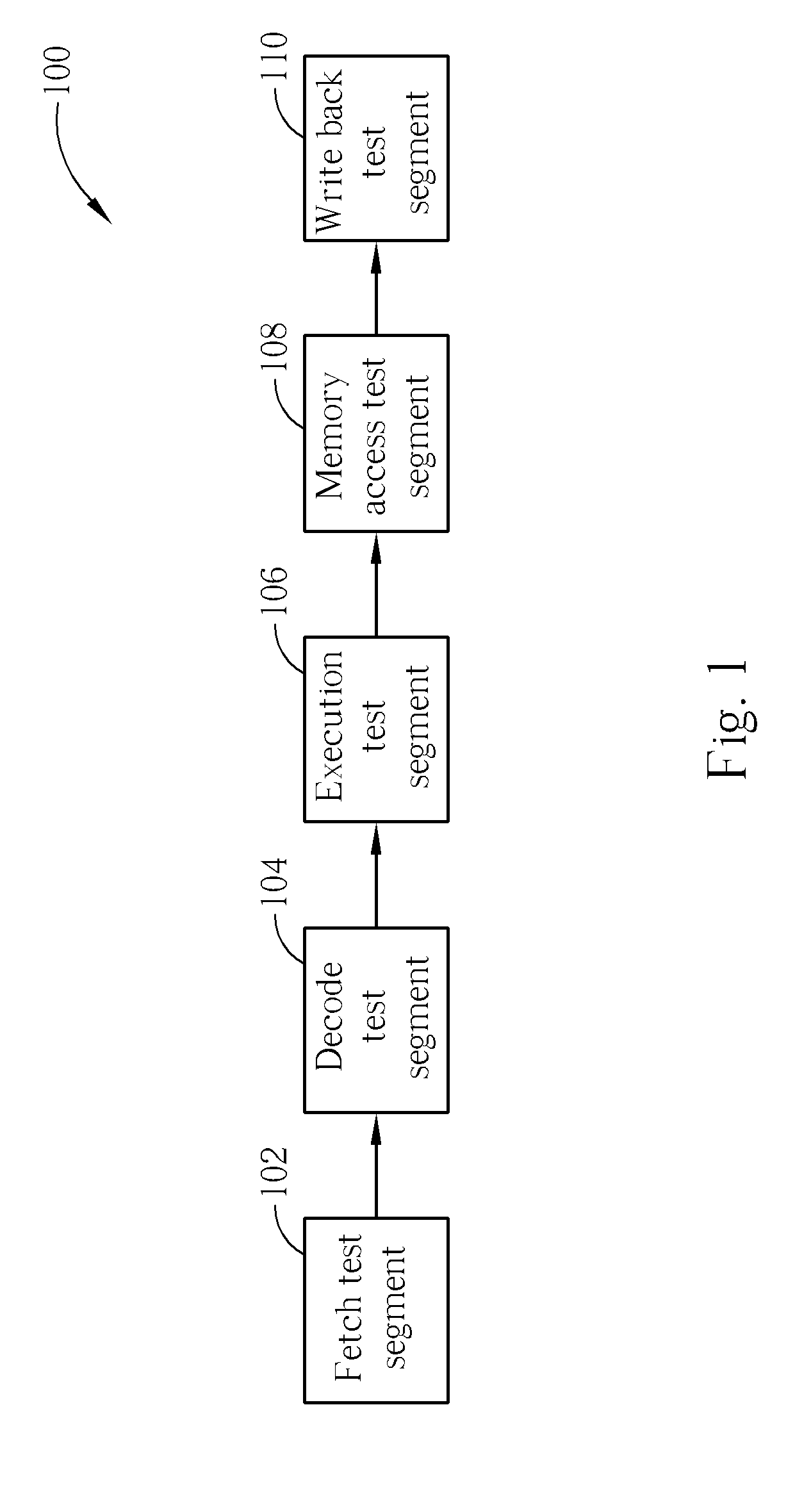
[0024] In order to improve the efficiency of executing instructions, a modern processor, one of the most complicated integrated circuit chips, is designed to adopt a pipeline-structured multiple instruction stream data stream system (MISD), and is therefore capable of executing a plurality of instructions during an identical period. In general, the pipeline-structured processor divides an instruction cycle into five sequentially ordered operation segments having corresponding characteristics different from each other, that is, a fetch operation segment, a decode operation segment, an execute operation segment, a memory access operation segment, and a write back operation segment. (or a fetch operation segment, a decode operation segment, an operand read operation segment, an execute operation segment, and a write back operation segment, or a fetch operation segment, an operand read operation segment, an execute operation segment, a memory access operation segment, and an operand sto...
PUM
 Login to View More
 Abstract
Description
Claims
Application Information
 Login to View More