

Dual resistance heater for phase change devices and manufacturing method thereof
- Summary
- Abstract
- Description
- Claims
- Application Information
AI Technical Summary
Benefits of technology
Problems solved by technology
Method used
Image

Examples
Embodiment Construction
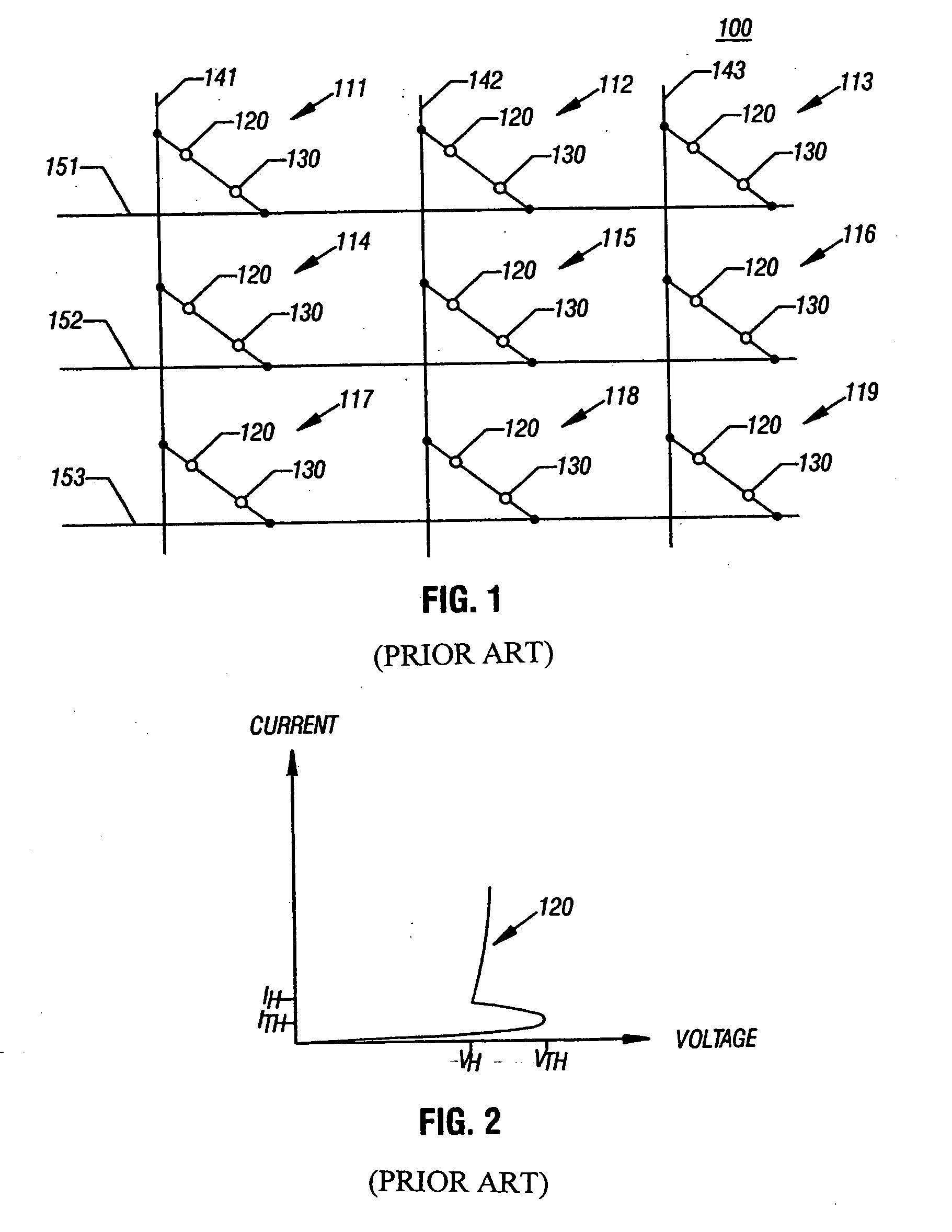
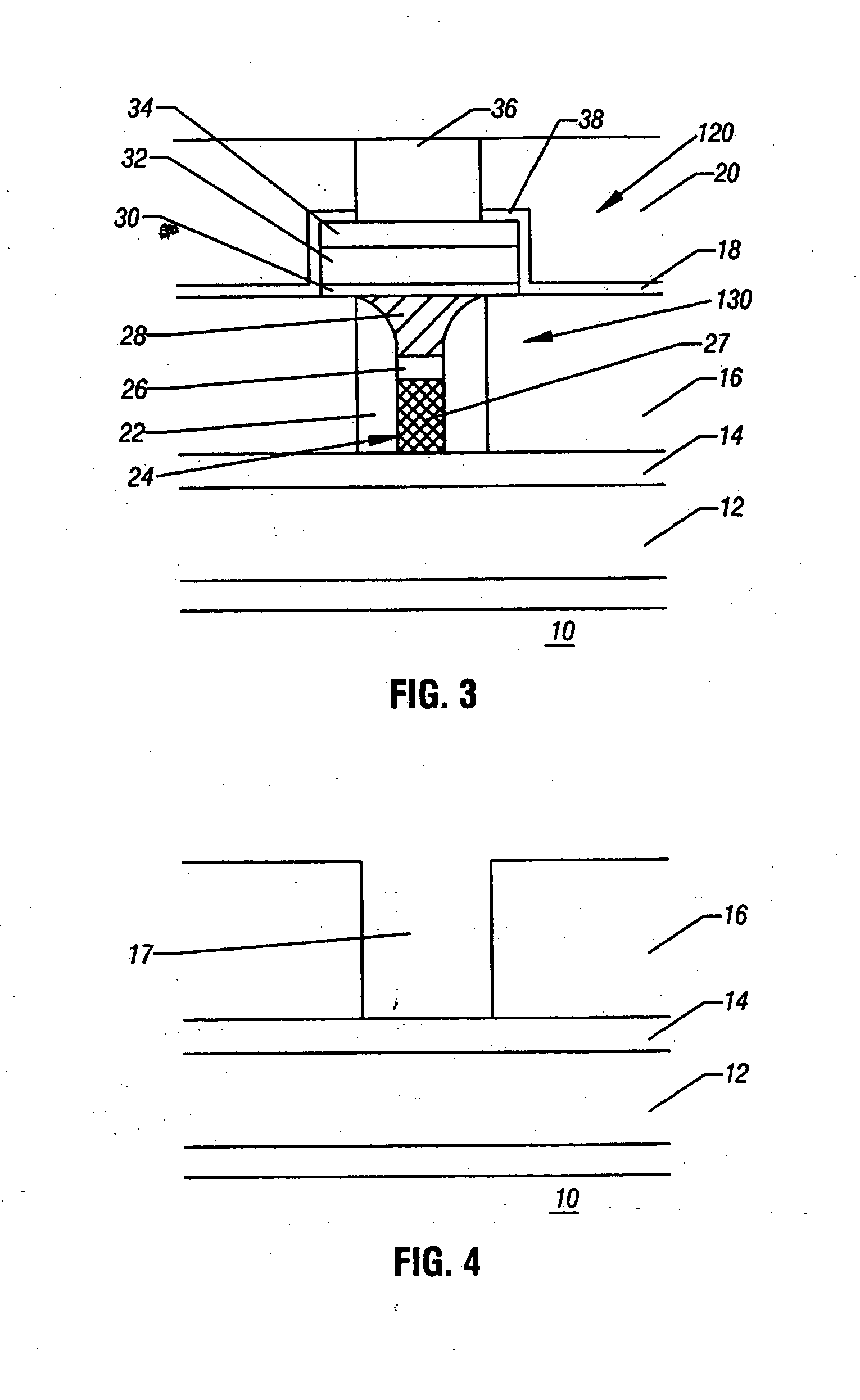
[0026] Referring to FIG. 3, a phase change memory cell, such as a cell 111-119 in FIG. 1, is formed in a substrate 10. Over the substrate 10 various interconnections and transistor features are formed. An interlayer dielectric 12 separates those features from the features provided above the interlayer dielectric 12. A conductor 14 extends above the interlayer dielectric 12 and act as a row line 151-153 (FIG. 1). At the top, a conductor 36 extends generally transversely to the electrode 14 and acts as a column line 141-143 (FIG. 1).
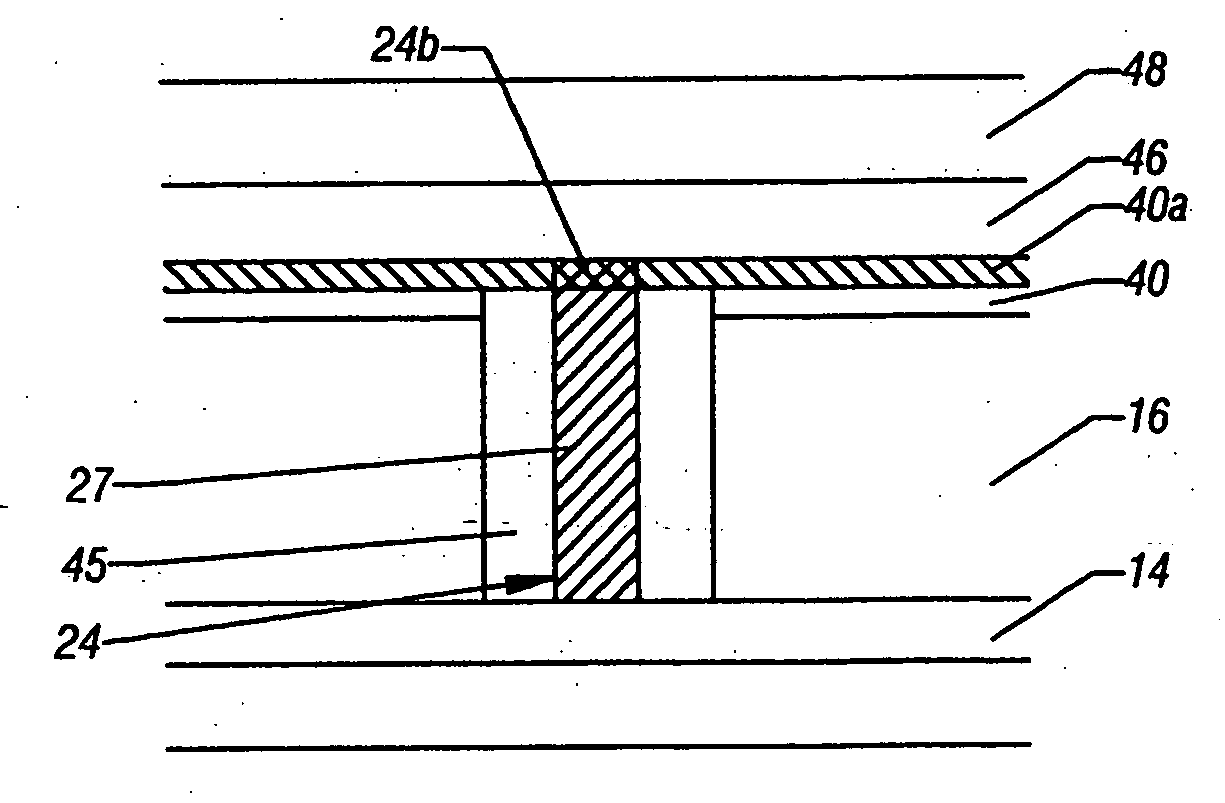
[0027] A dielectric layer 16 has a pore formed therein and the pore accommodates a spacer 22, a lance heater 24, and a phase change memory material 28 which, together with the heater 24, form a phase change memory element 130 (FIG. 1). A region 26 of the heater 24 has a higher resistance than the region 27. Thus, the heater 24 is a dual resistance heater made up of the region 26 and the region 27, each region having a different resistance, although both r...
PUM
| Property | Measurement | Unit |
|---|---|---|
| Concentration | aaaaa | aaaaa |
| Electrical resistance | aaaaa | aaaaa |
Abstract
Description
Claims
Application Information
 Login to View More