Control of an electric machine

US20100251512A1Active Publication Date: 2010-10-07DYSON TECH LTD
67 Cites 42 Cited by

Patent Information

Authority / Receiving Office
US · United States
Current Assignee / Owner
Publication Date
2010-10-07

Smart Images

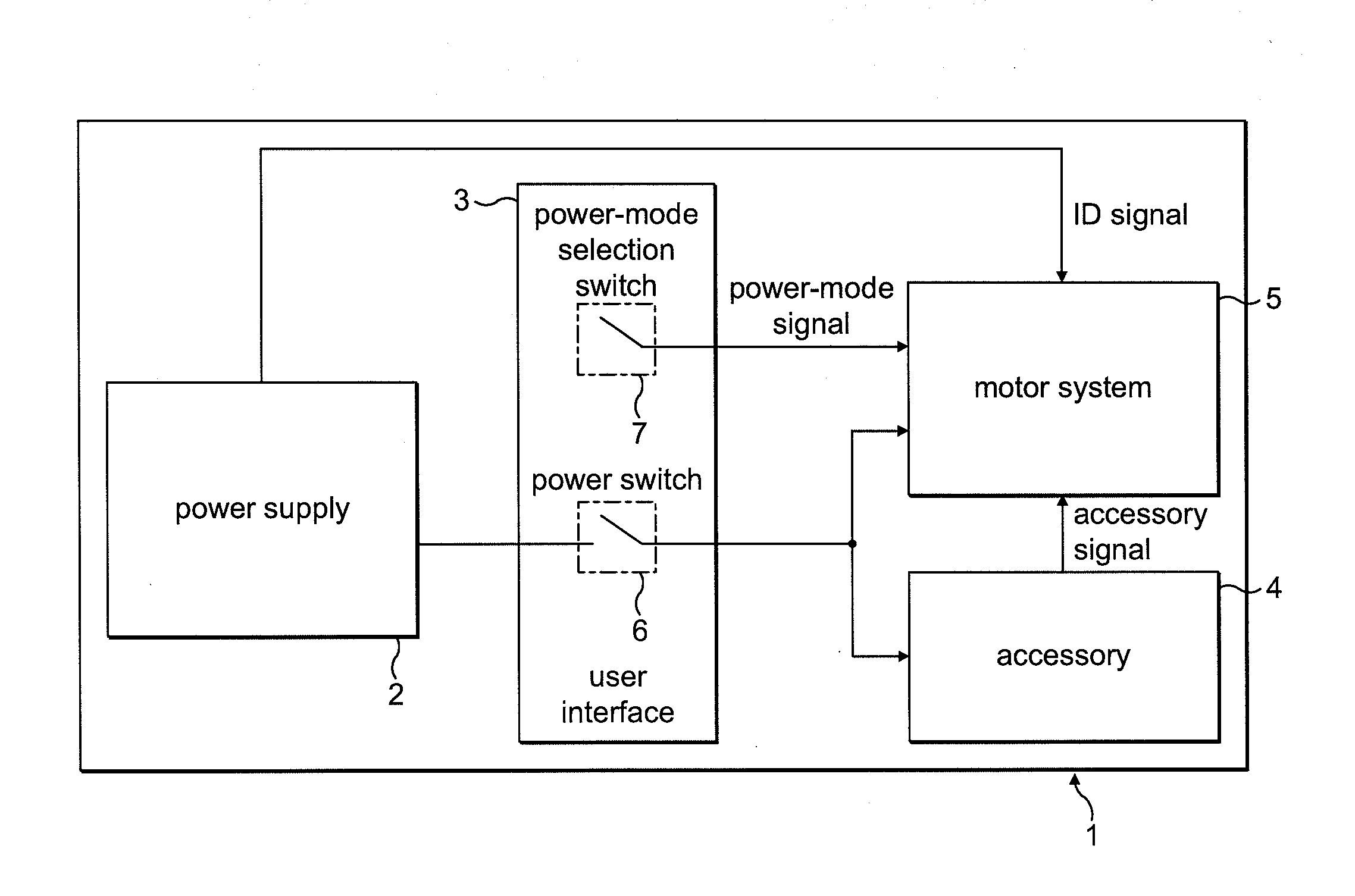
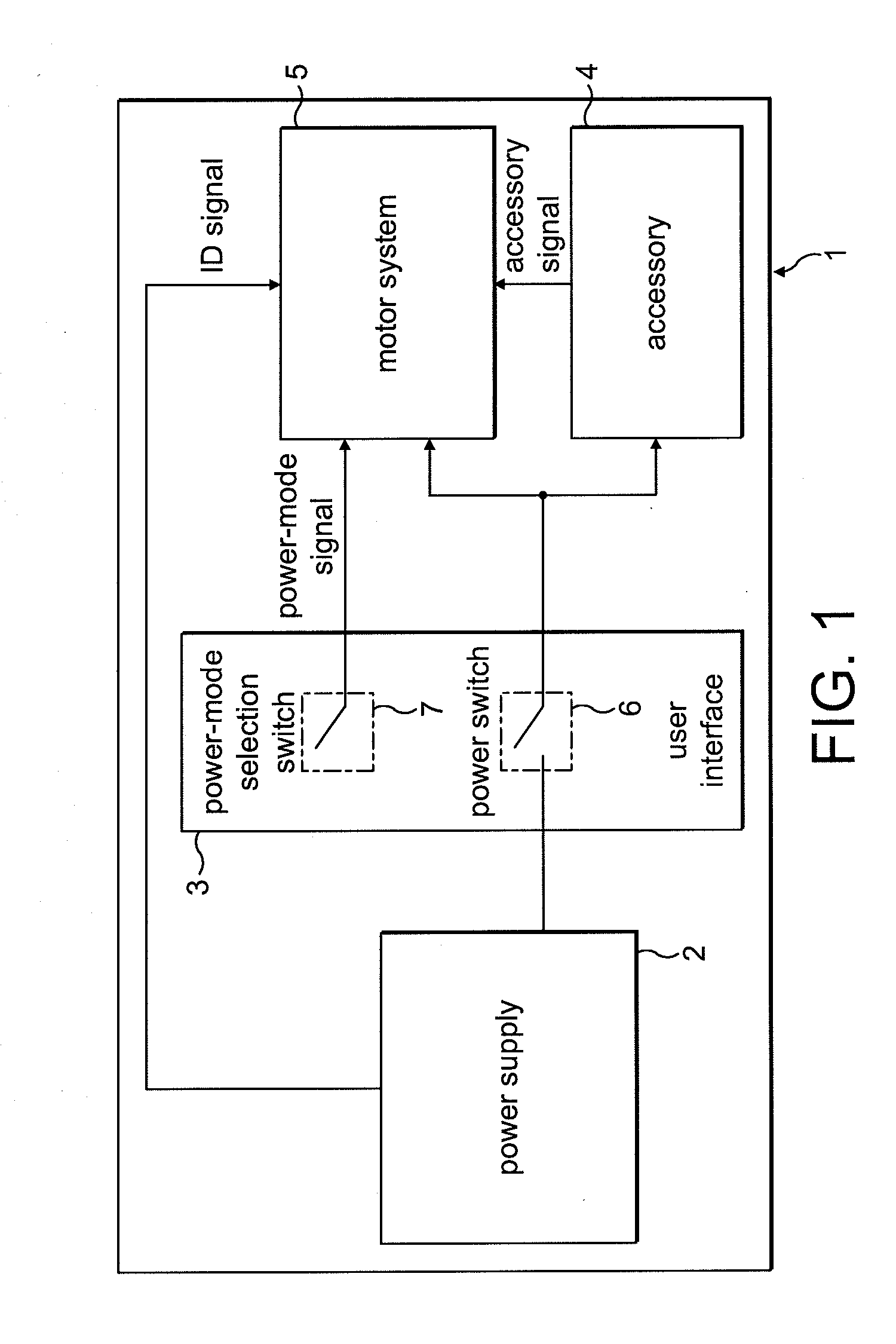
  • Figure 1
    Figure 1
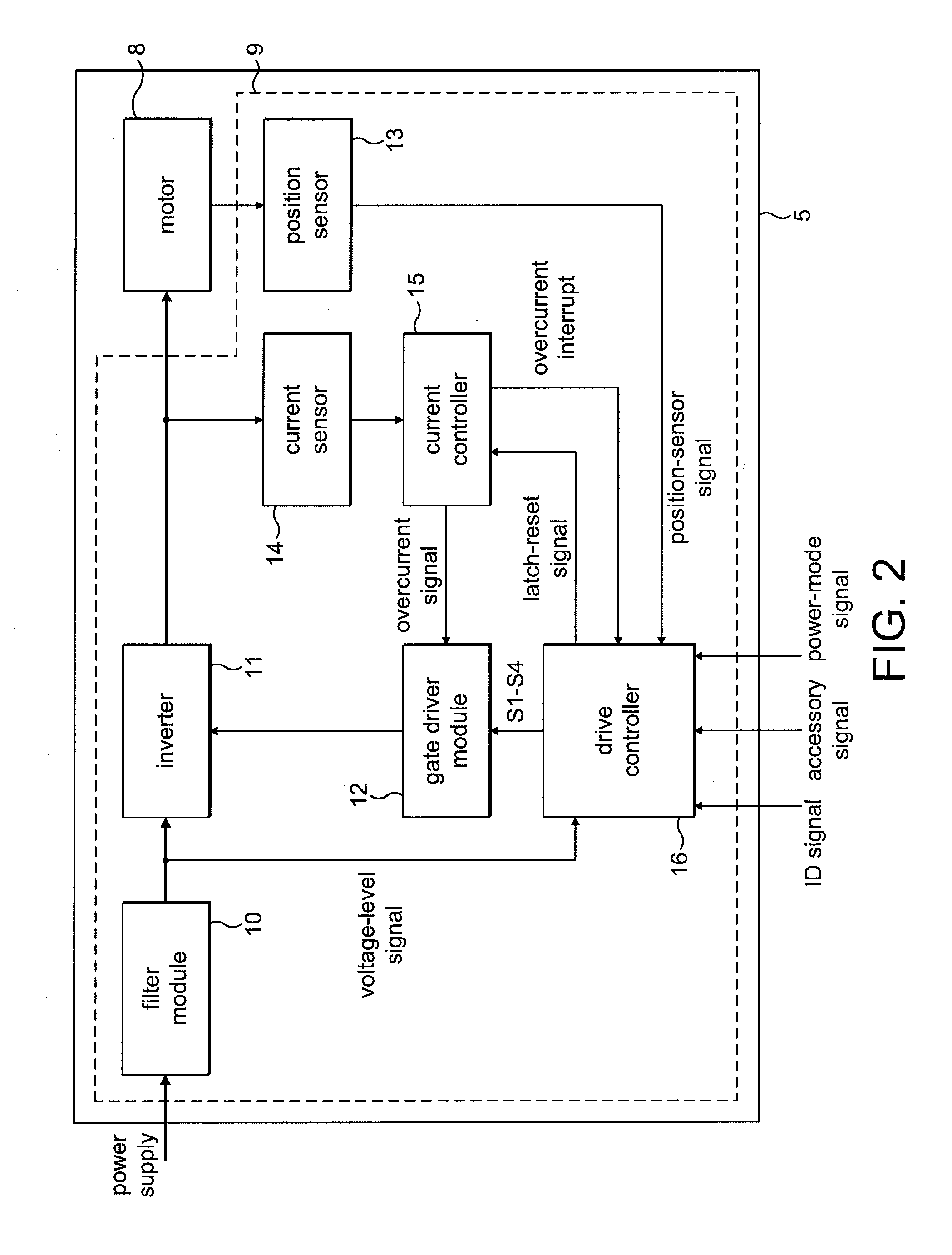
  • Figure 2
    Figure 2
  • Figure 3
    Figure 3
Patent Text Reader

Abstract

A method of controlling an electric machine that includes exciting a winding of the electric machine in synchrony with zero-crossings of back emf when operating over a first speed range. The method then includes exciting the winding in advance of the zero-crossings by a fixed period of time when operating over a second speed range, and exciting the winding in advance of the zero-crossings by a period of time that varies with speed when operating over a third speed range. Additionally, a control system for an electric machine, and a product incorporating the control system and electric machine.
Need to check novelty before this filing date? Find Prior Art

Description

REFERENCE TO RELATED APPLICATIONS

[0001] This application claims the priority of United Kingdom Application No. 0905887.6, filed Apr. 4, 2009, the entire contents of which are incorporated herein by reference.FIELD OF THE INVENTION

[0002] The present invention relates to control of an electric machine.BACKGROUND OF THE INVENTION

[0003] As the permanent-magnet rotor of an electric machine rotates, it induces a back emf in a winding of the electric machine. As the rotor accelerates, the magnitude of the back emf increases. It therefore becomes increasingly difficult to drive current, and thus power, into the electric machine. As a result, control over the power of the electric machine becomes increasingly difficult.SUMMARY OF THE INVENTION

[0004] In a first aspect, the present invention provides a method of controlling an electric machine comprising: exciting a winding of the electric machine in synchrony with zero-crossings of back emf in the winding when the electric machine operates over a...

Examples

Embodiment Construction

[0035]The product 1 of FIG. 1 comprises a power supply 2, a user interface 3, an accessory 4, and a motor system 5.

[0036]The power supply 2 comprises a battery pack that supplies a DC voltage to both the accessory 4 and the motor system 5. The power supply 2 is removable from the product 1 such that the product 1 may be used with different battery packs. For the purposes of the present description, the power supply 2 is either a 4-cell battery pack providing a 16.4 V DC supply or 6-cell battery pack providing a 24.6 V DC supply. In addition to providing a supply voltage, the power supply outputs an identification signal that is unique to the type of battery pack. The ID signal takes the form of a square-wave signal having a frequency that varies according to the type of battery pack. In the present example, the 4-cell battery pack outputs an ID signal having a frequency of 25 Hz (20 ms pulse length), while the 6-cell battery pack outputs an ID signal having a frequency of 50 Hz (10 ...