

Manufacturing method of an organic electroluminescence device
a manufacturing method and electroluminescence technology, applied in semiconductor devices, solid-state devices, coatings, etc., can solve the problems of difficult to form a pattern with high accuracy, difficult to divide into three colors of rgb, and poor pattern accuracy, so as to achieve high production efficiency and high accuracy
- Summary
- Abstract
- Description
- Claims
- Application Information
AI Technical Summary
Benefits of technology
Problems solved by technology
Method used
Image

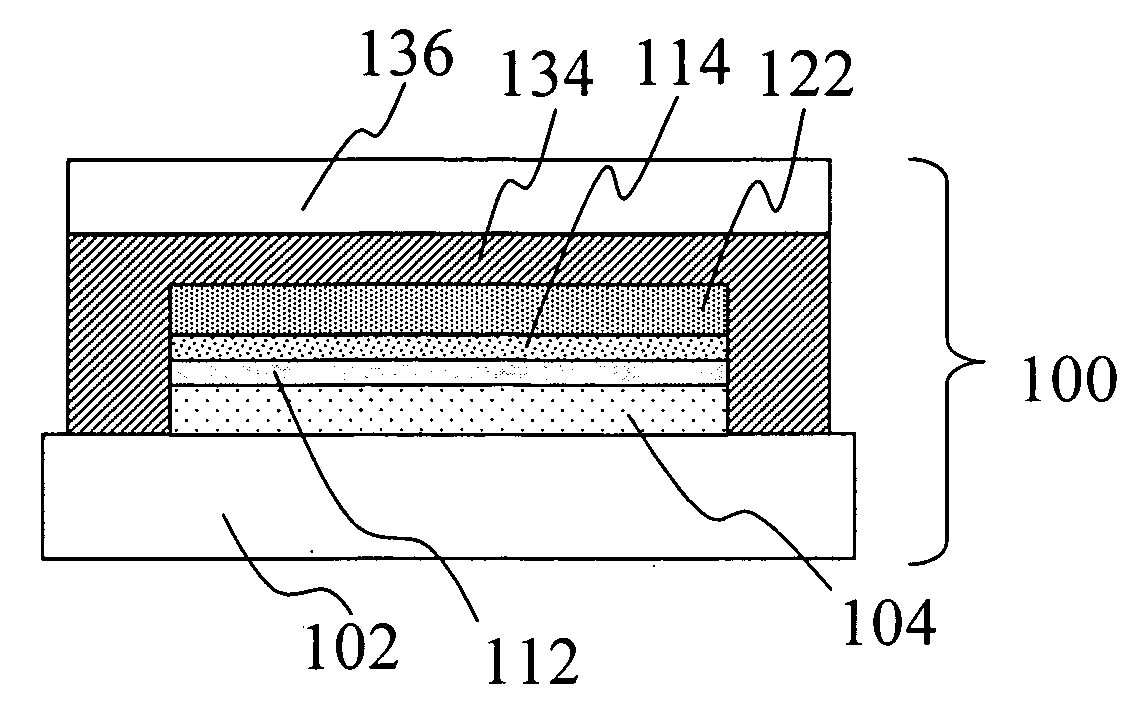
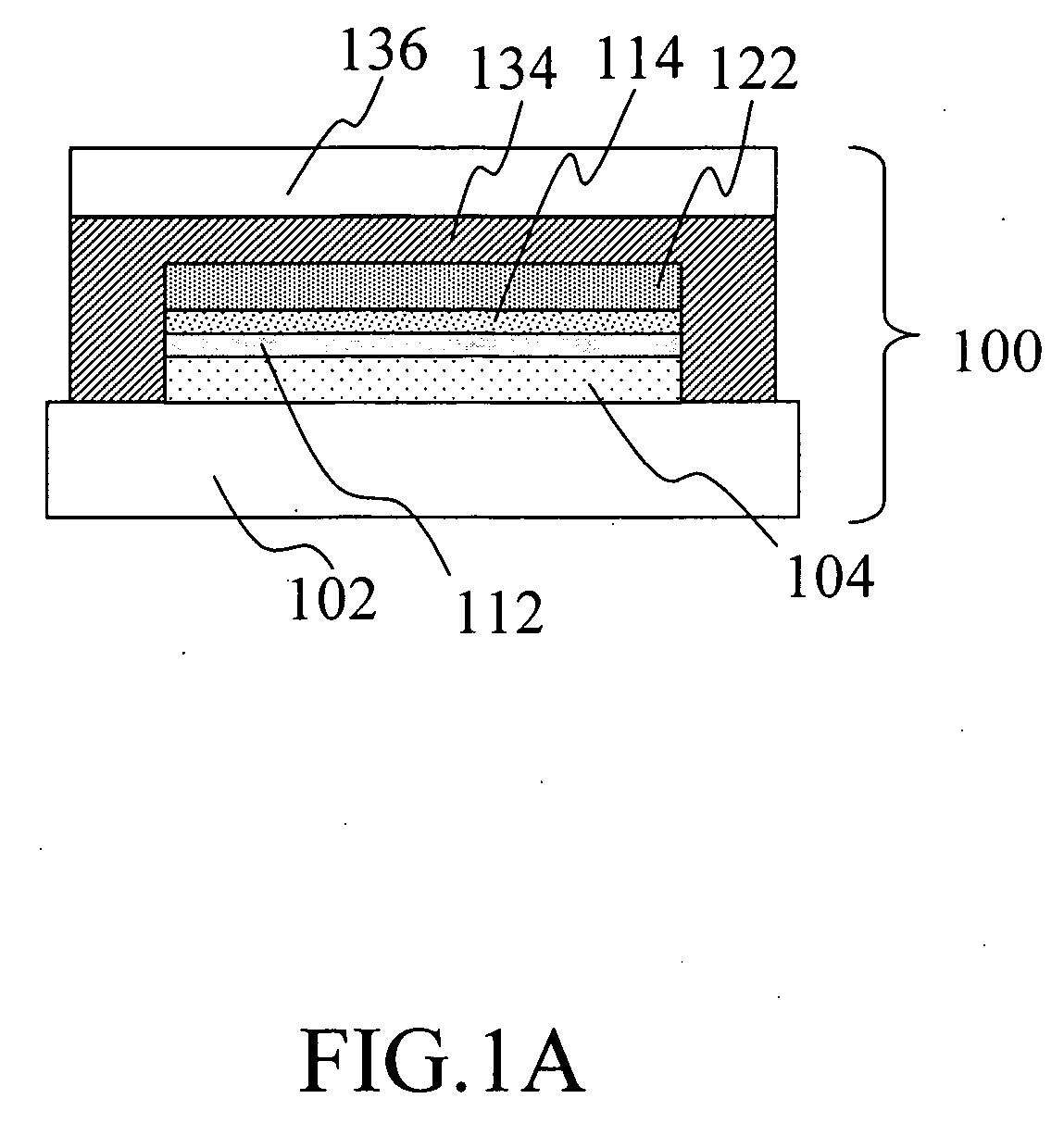
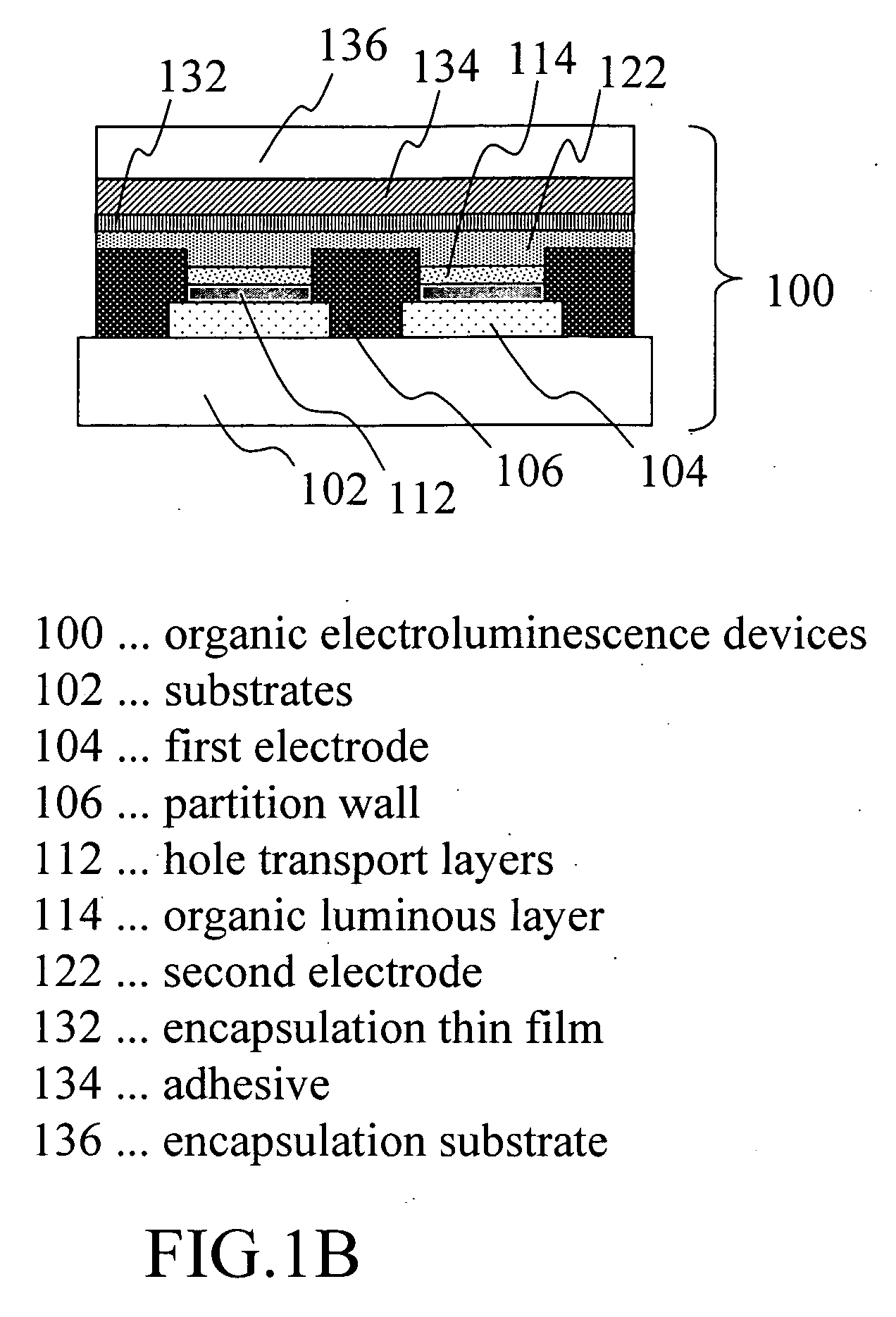
Examples
example 1
[0133] Thin film of an indium-tin oxide (ITO) which was first electrode was formed to a glass substrate. The first electrode was configuration of stripe. Length of stripe was 33 mm. Line width of stripe was 126 μm. There were 192 stripes, and line space was 40 μm. This was a size of a passive matrix type display unit of diagonal 1.8 inches.
[0134] Subsequently coating liquid was applied to the glass substrate by a spin coating, which formed stripe-shaped first electrode. And the unnecessary region which was not necessary for a luminescent was wiped, and it was removed. And drying by heating was done, and, in this way, a hole transport layer was formed. The coating liquid was the coating fluid which dissolved 3,4-polyethylenedioxithiophene (PEDOT) as a hole transport material in pure water. The substrate that organic luminous layer would be printed was prepared in this way.
[0135] For organic luminescent ink, the liquor which dissolved the polyphenylene vinylene derivative which was ...
PUM
| Property | Measurement | Unit |
|---|---|---|
| Height | aaaaa | aaaaa |
| Height | aaaaa | aaaaa |
| Length | aaaaa | aaaaa |
Abstract
Description
Claims
Application Information
 Login to View More