

Digital Controller Based Power Factor Correction Circuit
a technology of power factor and digital controller, applied in pulse generators, pulse techniques, instruments, etc., can solve the problems of power factor lowering, power waste, and power factor wasting
- Summary
- Abstract
- Description
- Claims
- Application Information
AI Technical Summary
Problems solved by technology
Method used
Image

Examples
Embodiment Construction
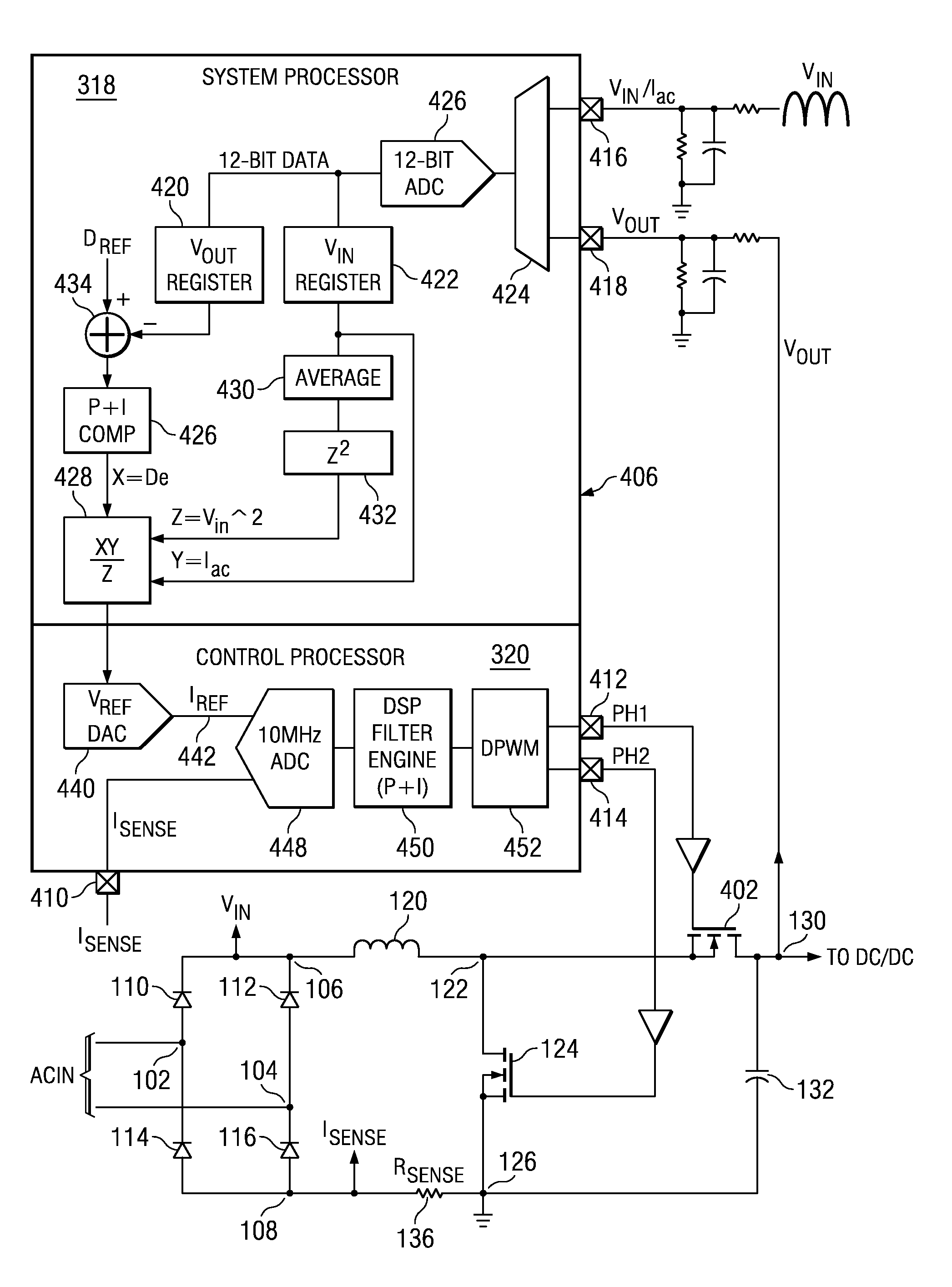
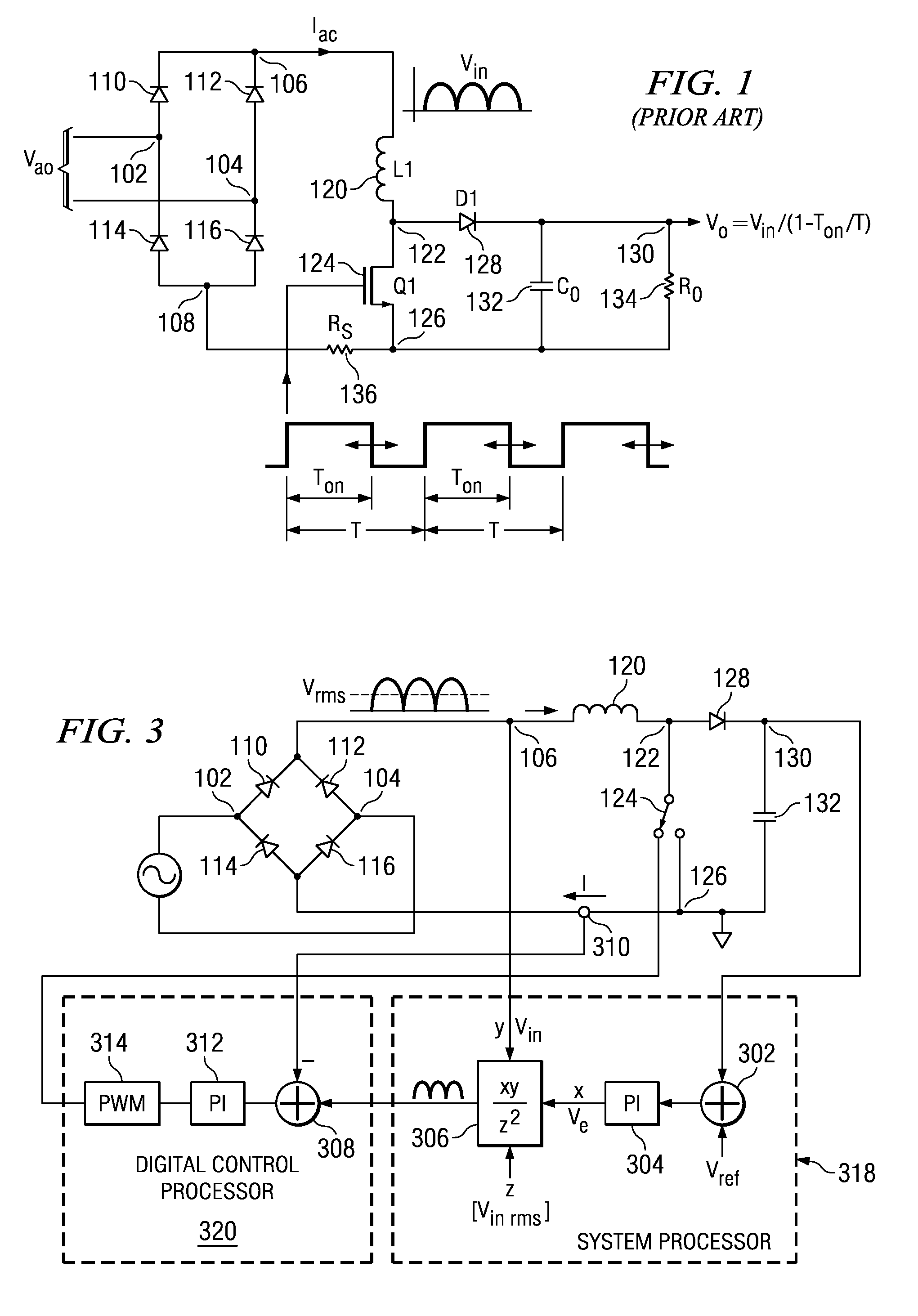
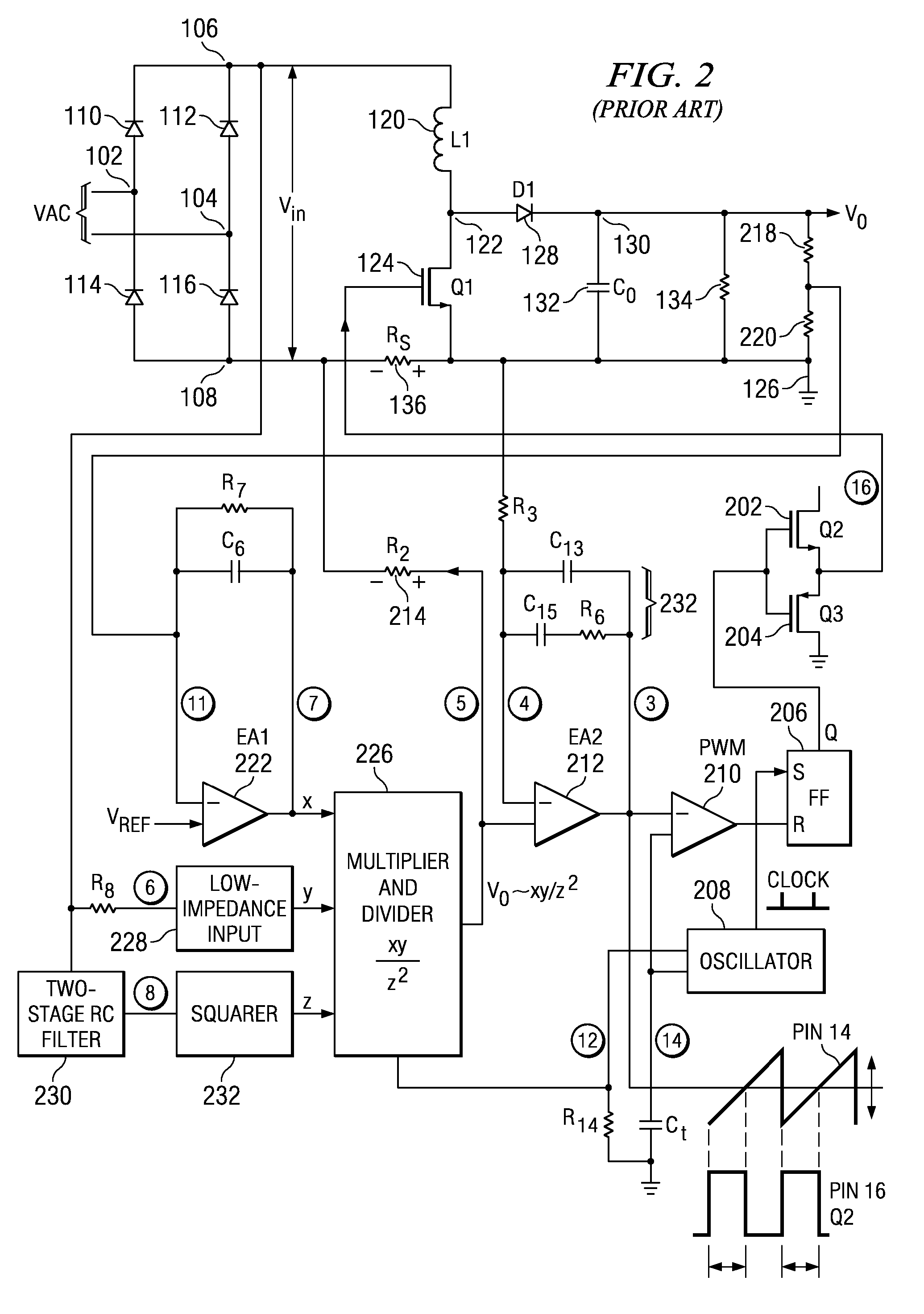
[0022] Referring now to FIG. 1, there is illustrated a prior art boost regulator with power factor correction (PFC). A full wave rectifier is provided between two input nodes 102 and 104 that receive an AC voltage and provide a rectified voltage between two nodes 106 and 108, node 106 being the VIN voltage which has a current Iac associated therewith. A first diode 110 is connected between node 102 to node 106 and a second diode 112 is connected between node 104 and 106, diodes 102 and 112 having the cathodes thereof connected to node 106. Similarly, a diode 114 is connected between node 102 and node 108 and a diode 116 is connected between node 104 and 108, the cathodes of diodes 114 and 116 connected to respective nodes 102 and 104. The voltage at node 106 is a rectified voltage that has an input zero crossing. These are half sinusoids that are then operable to drive a continuous-mode boost converter. This converter is comprised of an inductor 120 connected between node 106 and a ...
PUM
 Login to View More
 Abstract
Description
Claims
Application Information
 Login to View More