

Large field of view modulating retro reflector (MRR) for free space optical communication
a technology of free space optical communication and large field of view, which is applied in the direction of fibre transmission, multi-station single light source, electrical apparatus, etc., can solve the problems of reducing the applicability of mobile communication systems, reducing the initial alignment of communication links or potentially maintaining connectivity in mobile communication environments, and hardware may not be sufficiently rugged for a mobile environmen
- Summary
- Abstract
- Description
- Claims
- Application Information
AI Technical Summary
Benefits of technology
Problems solved by technology
Method used
Image

Examples
Embodiment Construction
[0019] A Modulating Retro-Reflector for use in optical communication systems can be configured to have a wide Field Of View (FOV). A large FOV modulating retro-reflector can be used to provide substantially angle independence reception of directional laser beams. A transponder / tag utilizes fewer wide FOV modulating retro-reflectors to support a predetermined coverage. Each of the modulating retro-reflectors can be configured to include a solid Comer Cube Reflector (CCR) manufactured of a high index of refraction material. Such high index of refraction material refers to an index of refraction greater than about 1.5 at the operating wavelength. However, the high index of refraction may be greater than about 1.75, 2.0, 2.25, 2.5, 2.75, 3.0, 3.25, 3.5, or some other index of refraction value.
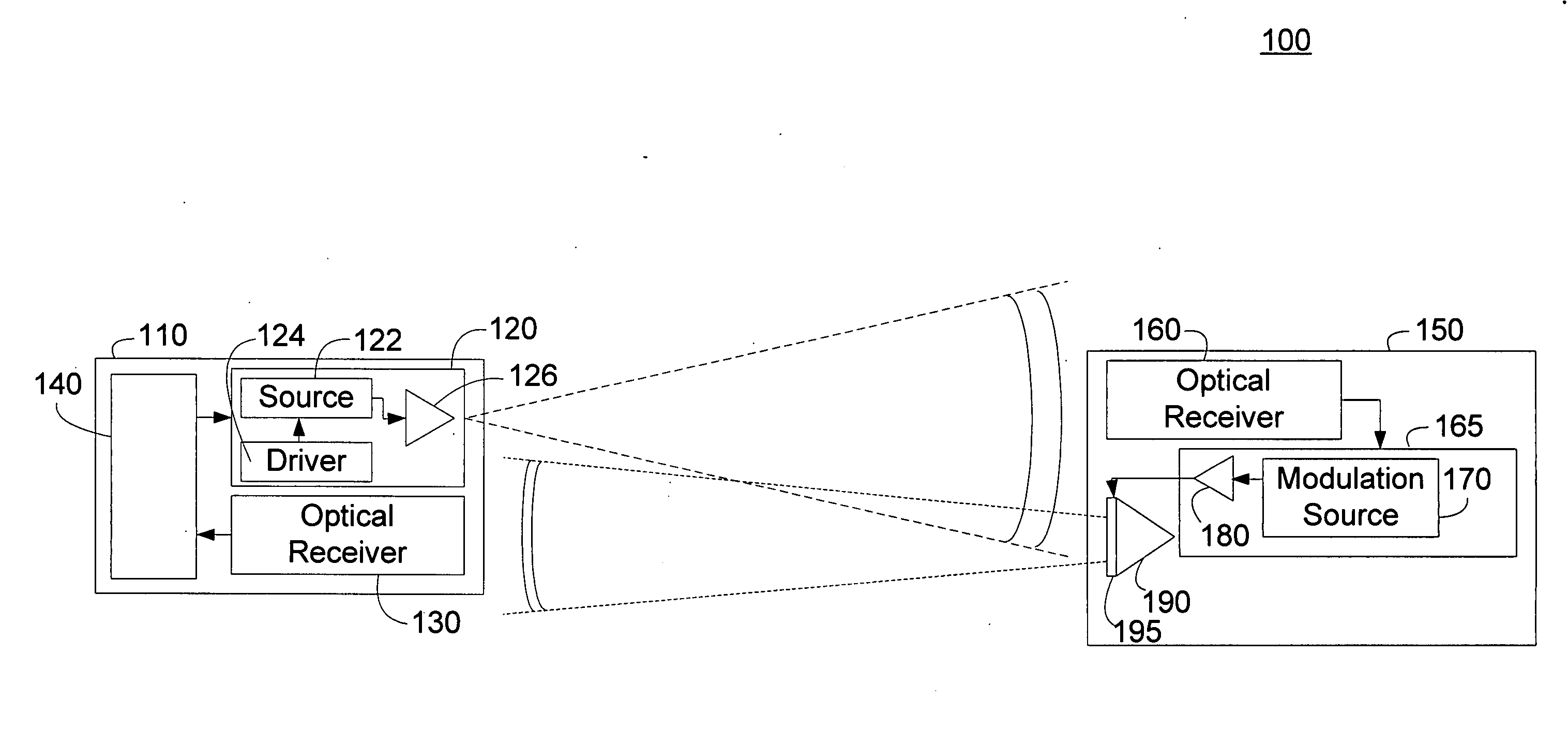
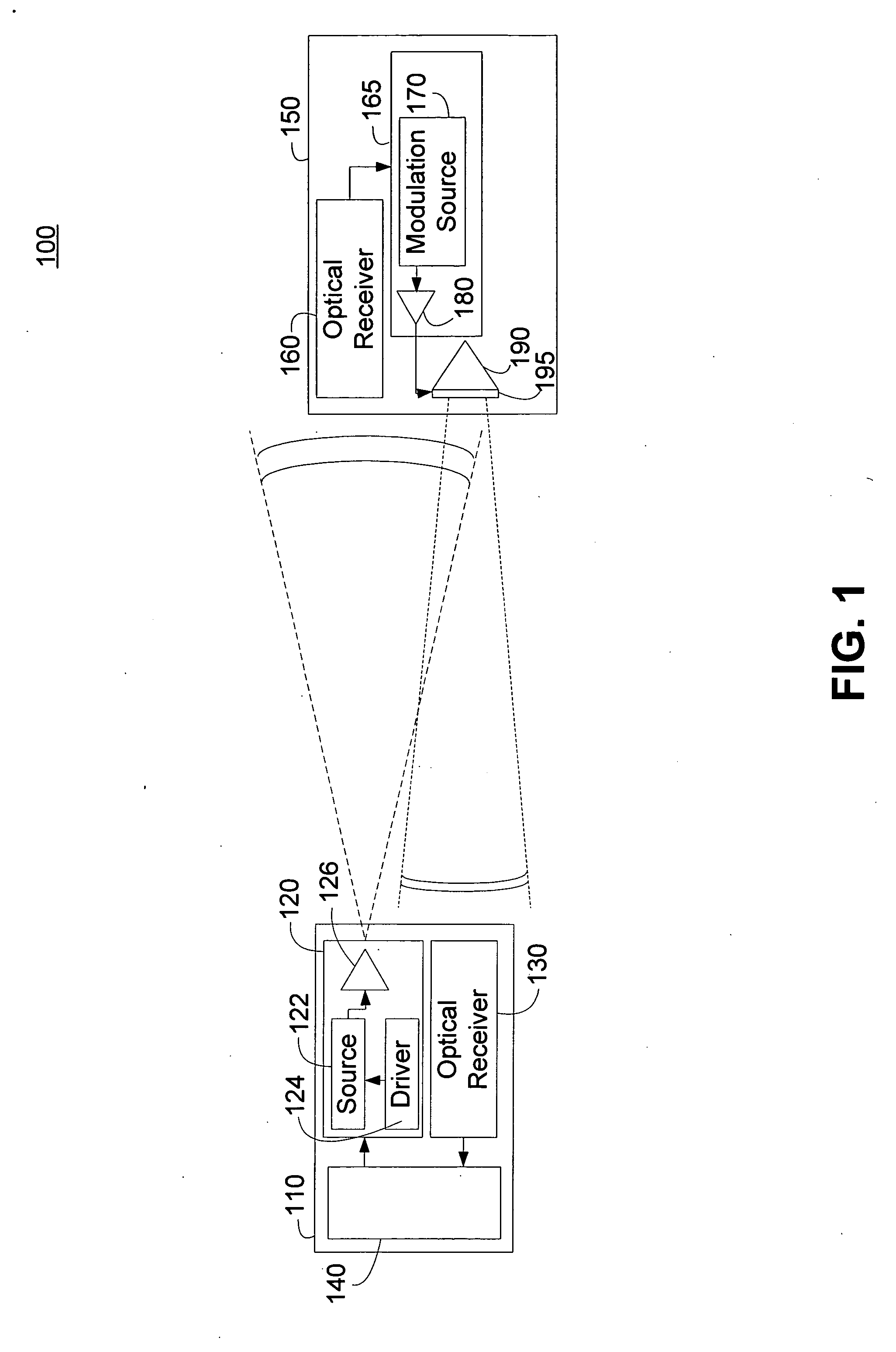
[0020]FIG. 1 is a simplified functional block diagram of an embodiment of a free space optical system 100 that can utilize the disclosed optical source and method of generating a modulated carrier...
PUM
 Login to View More
 Abstract
Description
Claims
Application Information
 Login to View More