
Semiconductor device having IGBT and diode
a technology of igbt and diode, which is applied in the direction of diodes, semiconductor devices, electrical apparatus, etc., can solve the problems of difficult improvement of diode performance, low recovery performance, and deterioration of igbt cell performance, so as to reduce recovery loss in the device, the surge resistance is sufficient, and the igbt performance is sufficien
- Summary
- Abstract
- Description
- Claims
- Application Information
AI Technical Summary
Benefits of technology
Problems solved by technology
Method used
Image

Examples
first embodiment
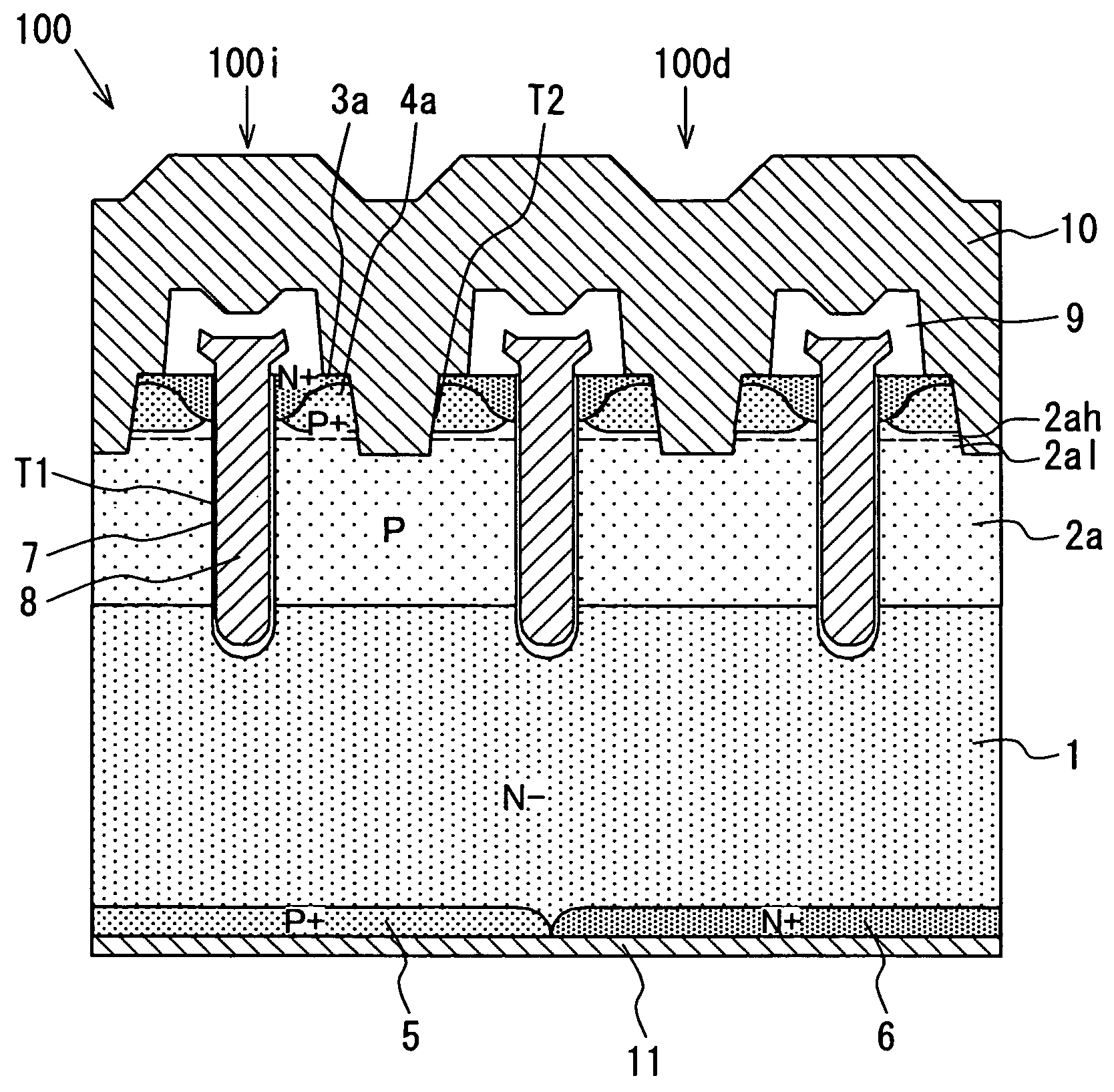
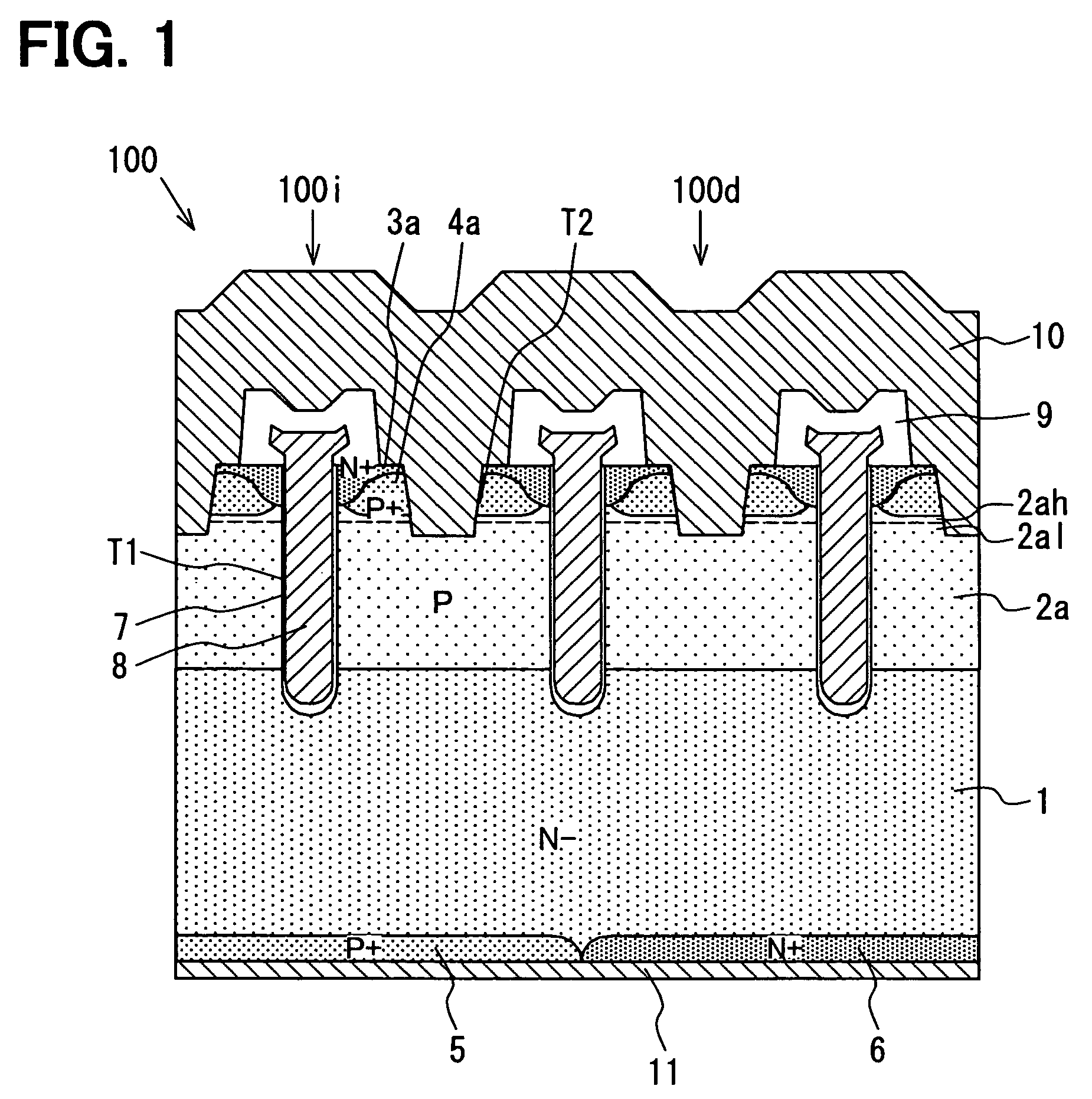
[0037]FIG. 1 shows a semiconductor device 100 according to a preferred embodiment. The device 100 includes an IGBT cell 100i and a diode cell 100d, which are formed in a same semiconductor substrate 1. The device 100 includes a N− conductive type semiconductor substrate 1 having a principal surface and a backside surface. A P conductive type layer 2a is formed on the principal surface of the substrate 1, and an impurity concentration of the P conductive type region 2a is gradually reduced from a surface portion to an inner portion. A principal surface side N+ conductive type region 3a (i.e., a principal N region) having a high impurity concentration and a principal surface side P+ conductive type region 4a (i.e., principal P region) having a high impurity concentration are formed on the surface portion of the P conductive type region 2a. The principal P region 4a is formed by a diffusion method such that the principal P region 4a does not reach the PN junction between the P conducti...
PUM
 Login to View More
 Abstract
Description
Claims
Application Information
 Login to View More