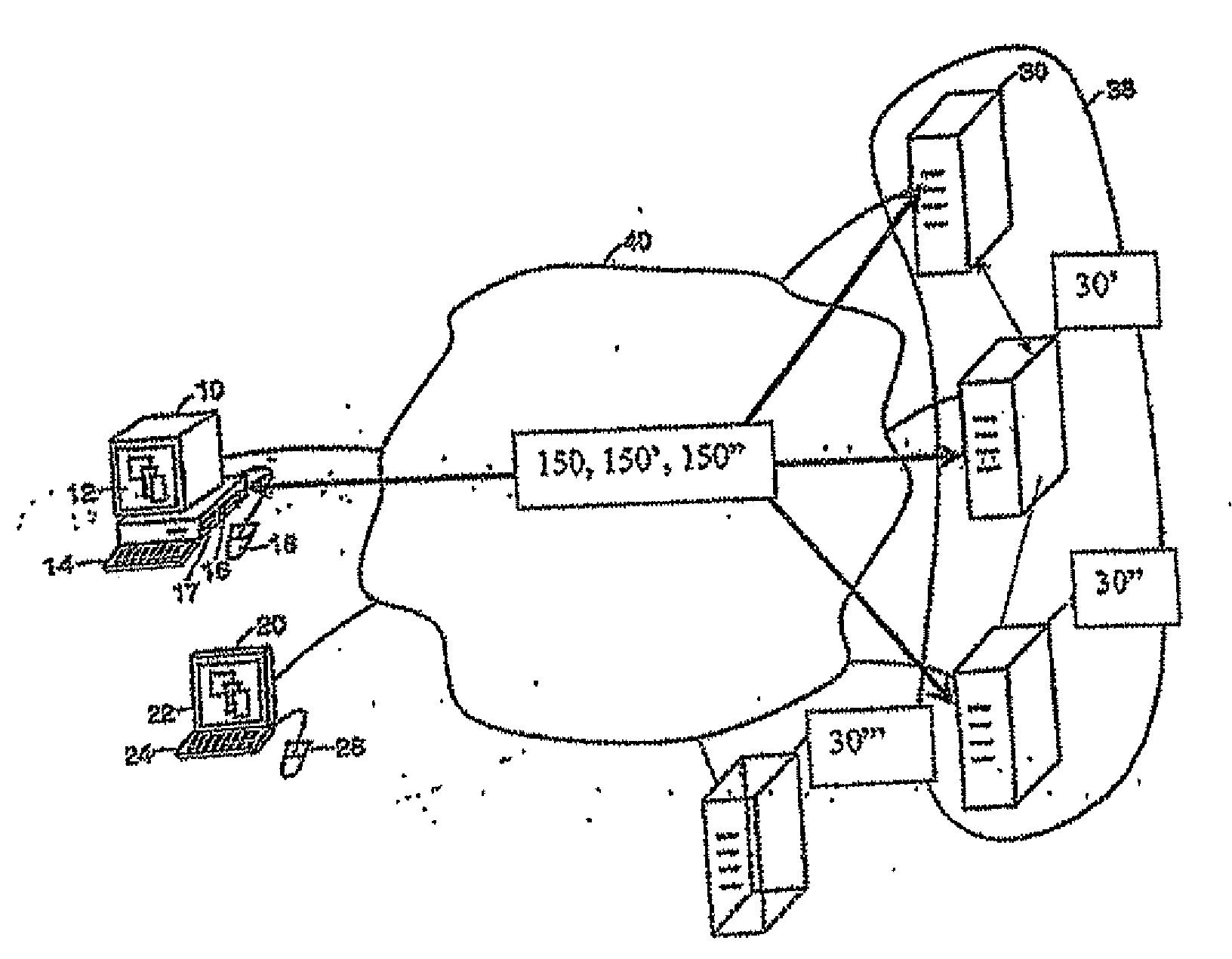
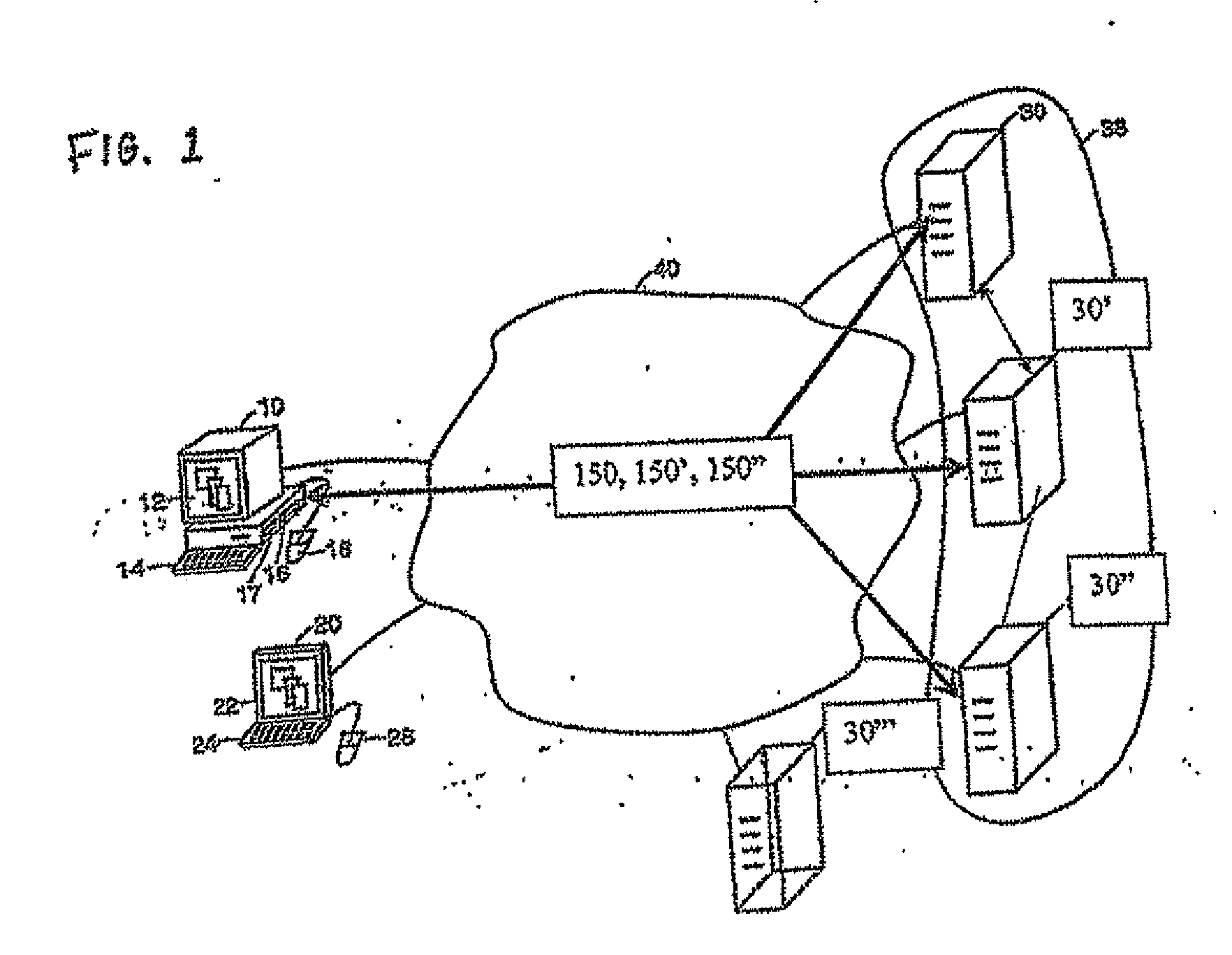
[0004]In one aspect, problems of current desktop deployment strategies are addressed. An array of inexpensive physical machines may be partitioned into multiple virtual machines, creating a virtual PC for each user. The physical machines may be servers such as rack-
mount servers, blade servers, or stand-alone servers. The physical machines may also be workstations or
workstation blades or personal computers. A policy-based dynamic deployment
system provisions the virtual machines and associates the virtual machine with an execution machine (i.e., a physical machine) and a user. Centralized hosting provides the manageability of server-based computing while the dedicated environment provides the flexibility and compatibility with applications that a desktop PC enables. However, the
system has a much lower
total cost of ownership because the
system is implemented in
software, rather than being dependent on hardware, the system has a much lower
total cost of ownership.
[0005]In another aspect, the hardware lifecycle may be extended by increasing the amount of hardware resources assigned to virtual machines as computational demands increase over time. Additionally, the use of
virtualization eases the difficulty in dealing with multiple OS images.
[0009]Each user is provided a separate virtual machine environment, which provides increased flexibility in that each user may run any version or configuration of an
operating system independently of other users and also allows users to run potentially dangerous or destabilizing applications with little risk of affecting other users. This is particularly useful for developers / testers /
information technology personnel who frequently need to re-install and modify the
operating system and run potentially destabilizing applications.
[0010]Since sharing computing resources and CPU scheduling occurs outside of the virtual machine environment, users can run computing-resource intensive resources with no risk of affecting other users. Virtual machines also provide increased security isolation between users. Because each user is running a separate copy of the OS, there is much less chance of security breaches and
virus infections over the between-users boundaries than in the shared OS case.
[0011]A solution is also provided for problems that arise from a situation where, in a hardware-based system of machines, the hardware is mixed, whether due to an initial
purchasing decision or due to the acquisition of different types of physical machines over time. Even if initially all of the hardware was uniform,
purchasing additional hardware to replace failing modules and increasing the capacity typically leads to non-uniform hardware throughout a machine farm. Even if all hardware is purchased from the same vendor, it is likely that the hardware purchased later will use different chipsets and components, and will require different drivers. Non-uniform hardware has traditionally translated into the need to maintain multiple versions of the operating system images (which means higher costs) and limits flexibility of moving users between machines—because the operating
system image may be incompatible—which also translates into higher cost. Virtual machines allow efficient use of the same operating
system image even in a hardware farm that includes heterogeneous machines. The use of the same operating
system image helps to significantly reduce the management cost.
[0012]Adding
remote display capability (e.g.
presentation layer protocols, such as ICA, RDP, or X11) to
virtualization techniques allows
virtualization to be used for
interactive computing. Hosting multiple virtual machines on an execution machine allows better utilization of the available
physical computing resources (e.g.: space, power,
processing power,
processing capacity, RAM, bandwidth, etc.) thereby lowering costs. The use of virtualization also allows hardware to be updated and maintained independently of OS version and specific device drivers hosted in the operating systems or virtual machines. Additionally, virtual machines enhance system security by isolating computing environments from each other.


 Login to View More
  Login to View More