
Dynamically controlled power reduction method and circuit for a graphics processor
a graphics processor and dynamic control technology, applied in the direction of digital computer details, liquid/fluent solid measurement, instruments, etc., can solve the problems of reducing the use value of existing power techniques, waste of continuous high speed rendering in the absence of user interaction, and affecting the speed of graphics processor clock speed, etc., to achieve the effect of reducing the time, reducing the clock speed
- Summary
- Abstract
- Description
- Claims
- Application Information
AI Technical Summary
Benefits of technology
Problems solved by technology
Method used
Image

Examples
Embodiment Construction
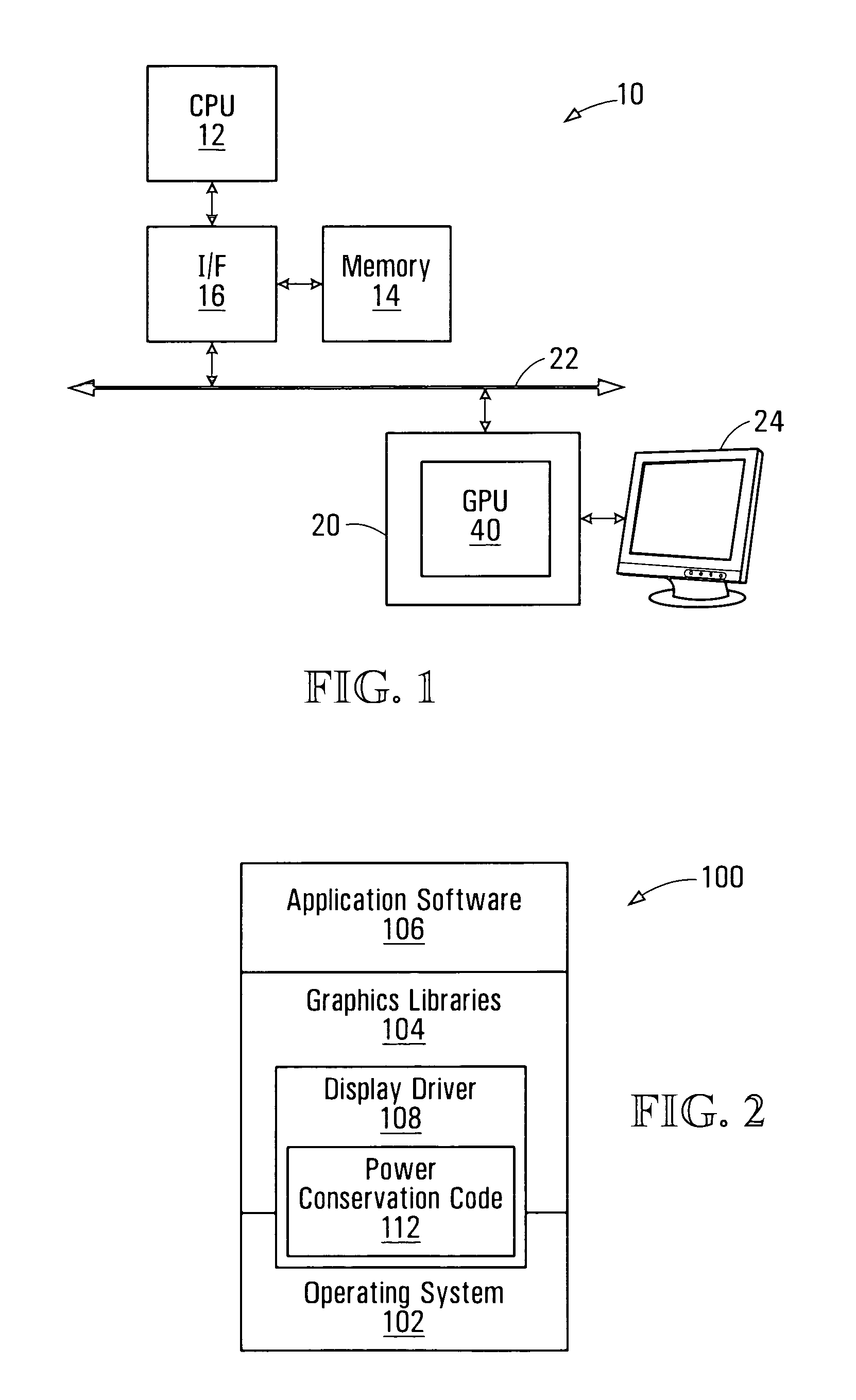
[0022]FIG. 1 is a simplified schematic block diagram of a computing device exemplary of an embodiment of the present invention. Computing device 10 is based on a conventional Intel x86 architecture. However, as will become apparent, the present invention may easily be embodied in computing devices having any suitable architecture. Example computing devices could for example, be based on a PowerPC, RISC or other architecture. Similarly, a computing device embodying the present invention may take the form of a mobile device, such as a laptop, portable telephone, personal digital assistant (PDA), portable video player, or the like.
[0023] Example computing device 10 includes a host processor 12, interconnected to system memory 14 and peripherals through integrated interface circuit 16. In example computing device 10, host processor 12 is a conventional central processing unit and may for example be a microprocessor compatible with the INTEL™x86 family of microprocessors.
[0024] Integra...
PUM
 Login to View More
 Abstract
Description
Claims
Application Information
 Login to View More