
Apparatus and method for implantation of a bifurcated endovascular prosthesis
a technology of endovascular prosthesis and applicator, which is applied in the field of applicator and method for implantation of bifurcated endovascular prosthesis, can solve the problems of consuming and unpredictable requirements, and achieve the effect of precise graft positioning, short and simple process, and revealing novelty and utility of the disclosed devi
- Summary
- Abstract
- Description
- Claims
- Application Information
AI Technical Summary
Benefits of technology
Problems solved by technology
Method used
Image

Examples
Embodiment Construction
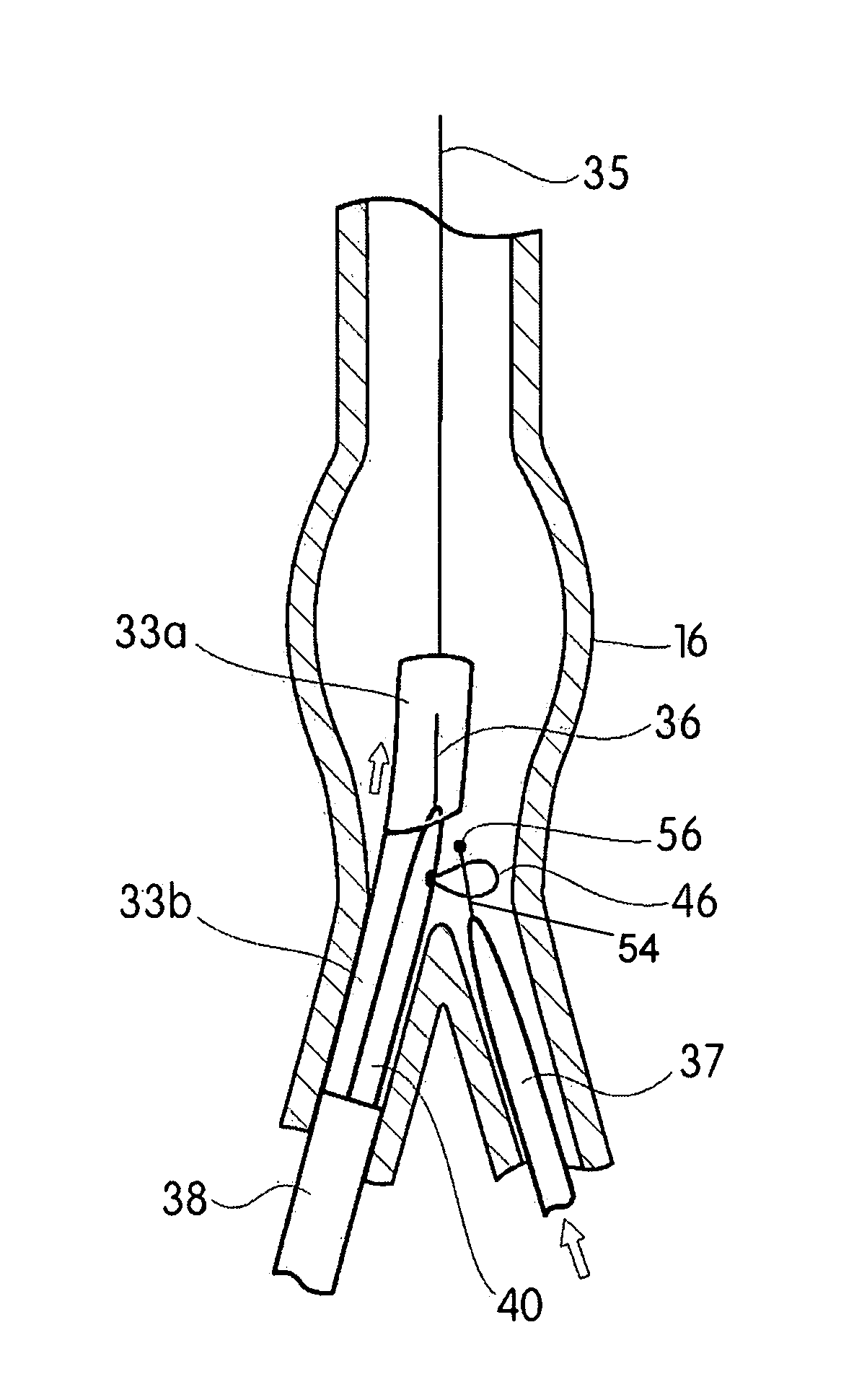
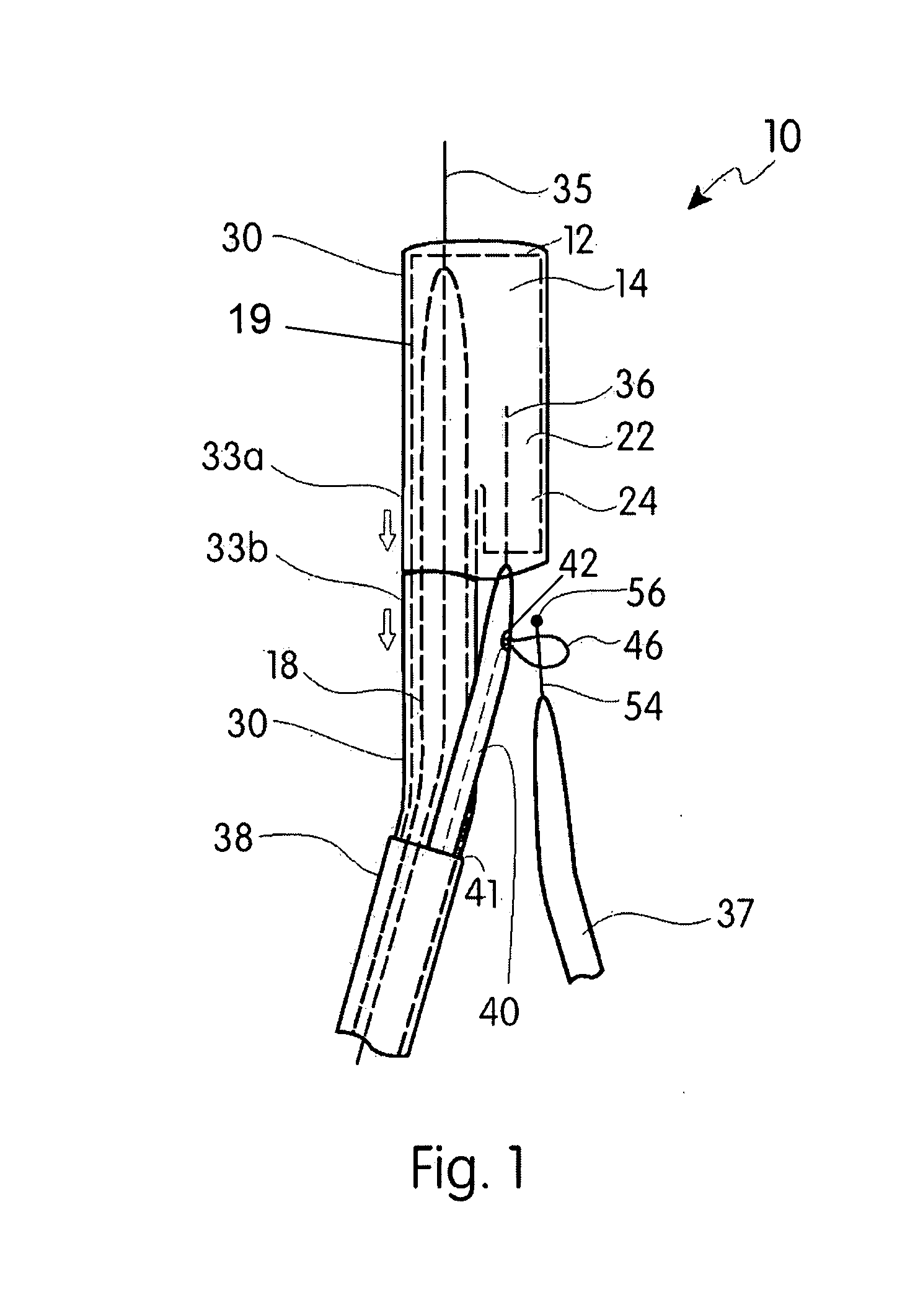
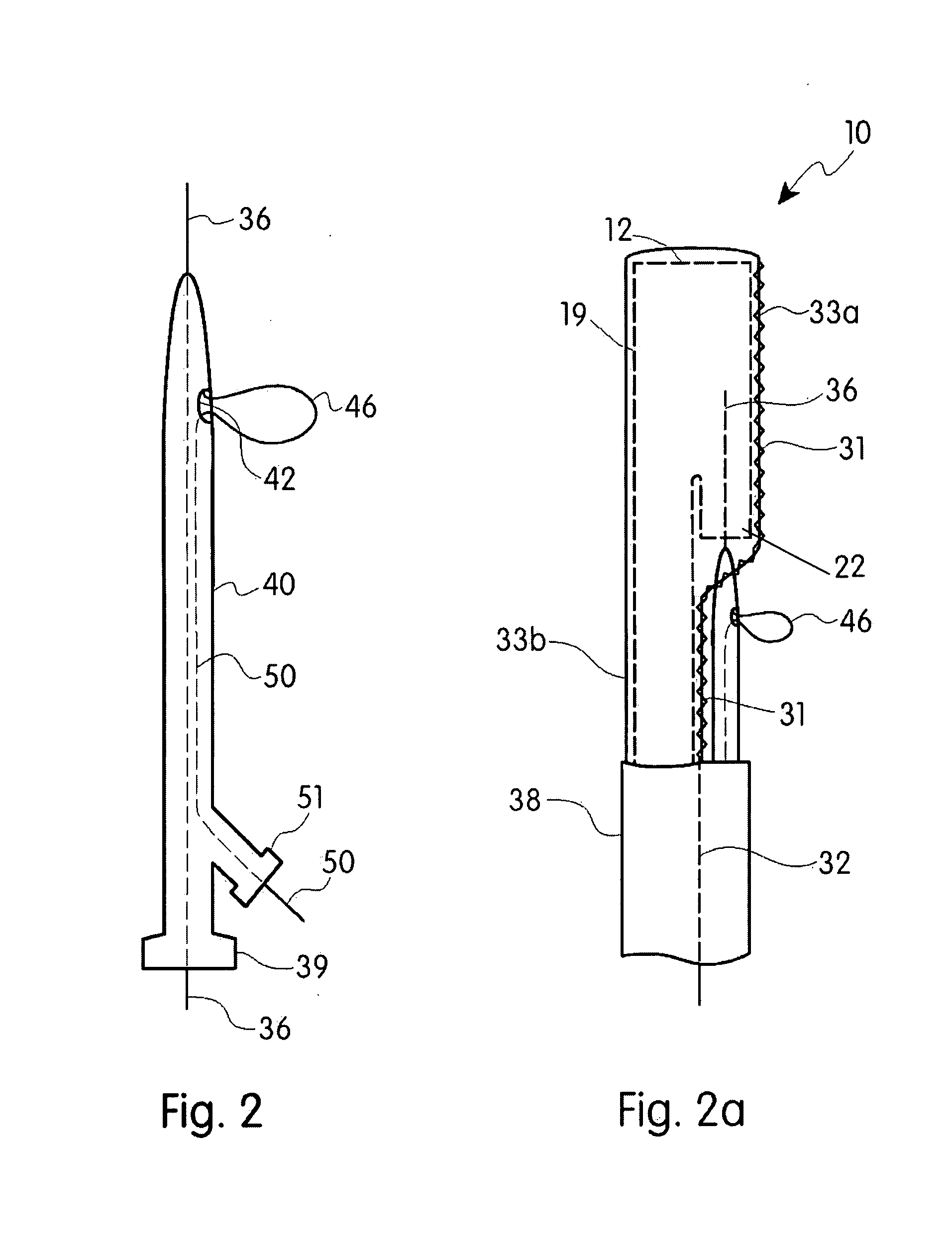
[0063]Referring now to the drawings in FIGS. 1-10, wherein similar parts are identified by like reference numerals, the device 10 is depicted in FIG. 1 which illustrates the components of the bifurcating prosthesis 12 engaged to the distal end of a delivery catheter 38. A trunk portion 14 is shown having a diameter adapted to engage within the walls of the aorta 16 shown in FIGS. 4-6. The trunk portion 14 is in communication with two smaller conduits extending from a lower end of the trunk 14, communicating with the larger open aperture at the upper end of the trunk 14. An ipsilateral or first leg 18 shown in FIG. 1 and FIGS. 4-10, has a diameter and a length adapted to extend into an engaged position communicating between the trunk 14 and one of the iliac arteries. The other shorter conduit shown in FIGS. 1 and 2a, is a cuff 22 portion extending from the lower end of the trunk 14 portion. As shown in other figures such as FIG. 10, the distal end 24 of the cuff 22 is adapted for eng...
PUM
 Login to View More
 Abstract
Description
Claims
Application Information
 Login to View More