Fuel additives to maintain optimum injector performance

a technology of fuel additives and injectors, applied in the direction of fuel additives, liquid carbonaceous fuels, petroleum industry, etc., can solve the problems of unsatisfactory fuel economy, unfavorable surface cleaning, and inability to effectively clean up, so as to achieve maximum fuel economy, power and driveability, and reduce emissions.

US20090282731A1Active Publication Date: 2009-11-19AFTON CHEMICAL
32 Cites 91 Cited by

Patent Information

Authority / Receiving Office
US · United States
Current Assignee / Owner
Publication Date
2009-11-19

Smart Images

  • Figure 1
    Figure 1
  • Figure 2
    Figure 2
  • Figure 3
    Figure 3
Patent Text Reader

Abstract

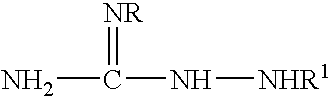
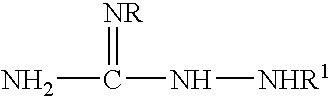
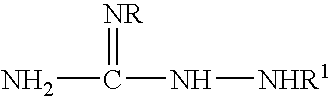
A diesel fuel, diesel fuel additive concentrate and method for improving the performance of fuel injectors for a diesel engine are provided. The diesel fuel includes a major amount of middle distillate fuel; and a reaction product of a hydrocarbyl substituted dicarboxylic acid or anhydride and an amine compound or salt. The amine compound has the formulawherein R is selected from the group consisting of a hydrogen and a hydrocarbyl group containing from about 1 to about 15 carbon atoms, and R1 is selected from the group consisting of hydrogen and a hydrocarbyl group containing from about 1 to about 20 carbon atoms. The reaction product contains at least one amino triazole group and is present in the fuel in an amount sufficient to improve the performance of diesel fuel injectors.
Need to check novelty before this filing date? Find Prior Art

Description

RELATED APPLICATIONS

[0001] This application is a continuation-in-part of application Ser. No. 12 / 119,788, filed May 13, 2008, now pending.TECHNICAL FIELD

[0002] The disclosure is directed to certain diesel fuel additives and to diesel fuels and diesel fuel additive concentrates that include the additive. In particular the disclosure is directed a diesel fuel additive that is effective to enhance the performance of fuel injectors for diesel engines.BACKGROUND AND SUMMARY

[0003] It has long been desired to maximize fuel economy, power and driveability in diesel fuel powered vehicles while enhancing acceleration, reducing emissions, and preventing hesitation. While it is known to enhance gasoline powered engine performance by employing dispersants to keep valves and fuel injectors clean, such gasoline dispersants are not necessarily effective in diesel fuel applications. The reasons for this unpredictability lie in the many differences between how diesel engines and gasoline engines operate...

Examples

example 1

[0040]A 950 molecular weight polybutenyl succinic anhydride was heated to 95° C. An oil slurry of aminoguanidine bicarbonate (AGBC) was added over a 45 minute period. The mixture was heated under vacuum to 160° C. and held at that temperature for about 6 hours, removing water and carbon dioxide. The resulting mixture was filtered.

[0041]In the following example, an injector deposit test was performed on a diesel engine using a conventional diesel engine fuel injector test as described below.

Test Protocol

[0042]The test protocol used is described by Graupner et al. “Injector deposit test for modern diesel engines ”, Technische Akademie Esslingen, 5th International Colloquium, 12-13 Jan. 2005, 3.10, p 157, Edited by Wilfried J Bartz. Briefly, the protocol utilizes a modern diesel engine with an emphasis on the fuel injector deposit formation. The test is split into five stages:[0043]a) measurement of engine power output[0044]b) an 8 hour endurance run[0045]c) an extended soaking period ...