
Exercise assisting device
- Summary
- Abstract
- Description
- Claims
- Application Information
AI Technical Summary
Benefits of technology
Problems solved by technology
Method used
Image

Examples
first embodiment
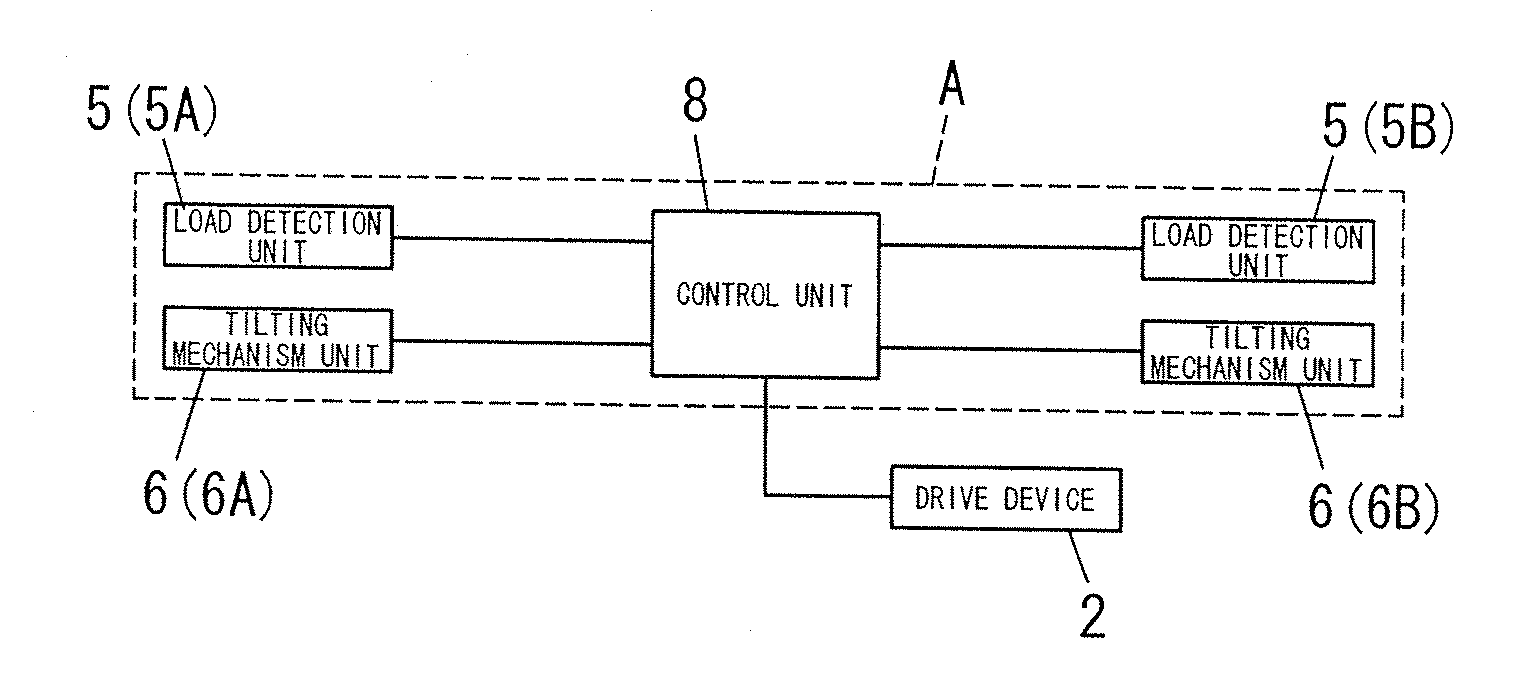
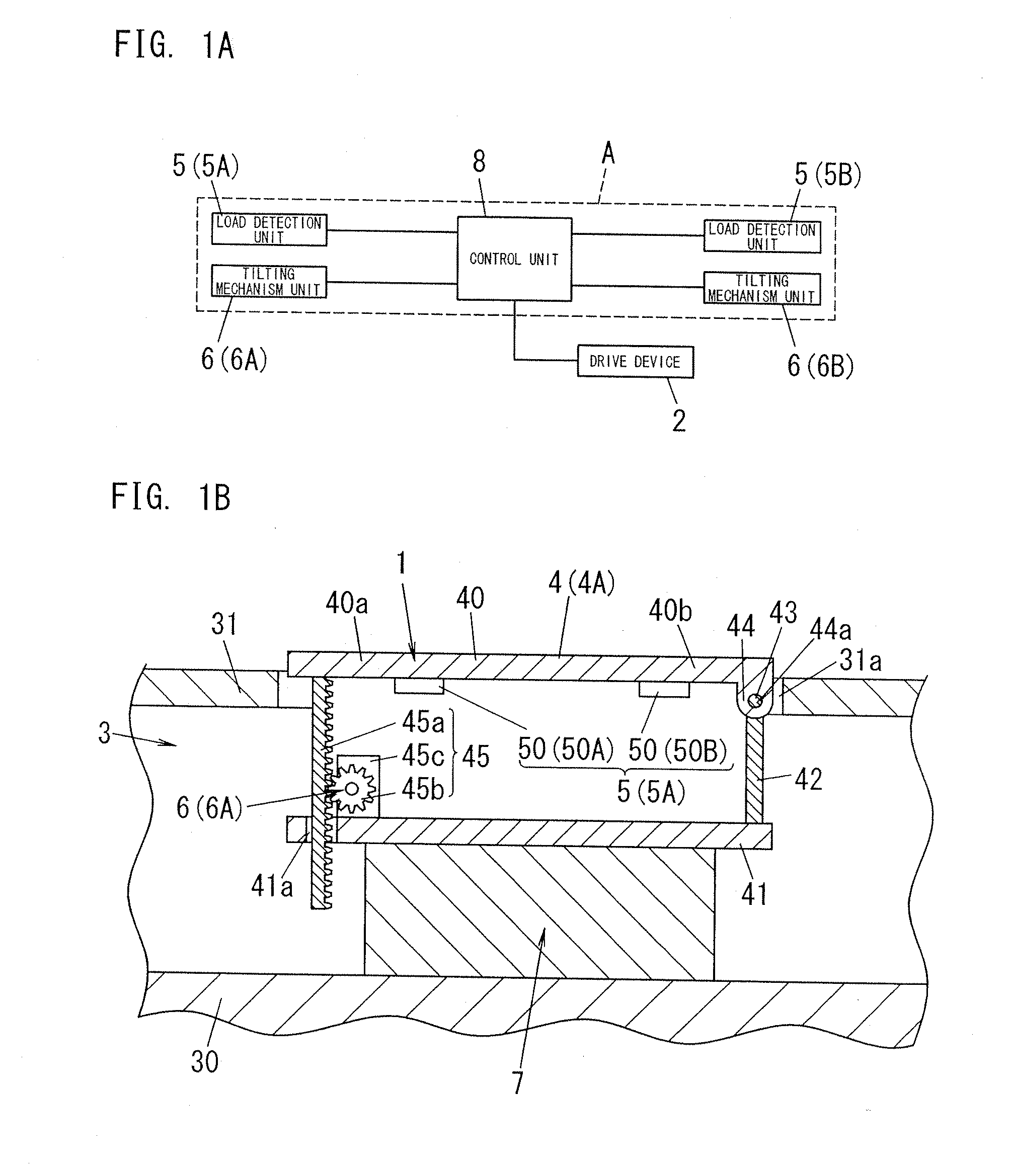
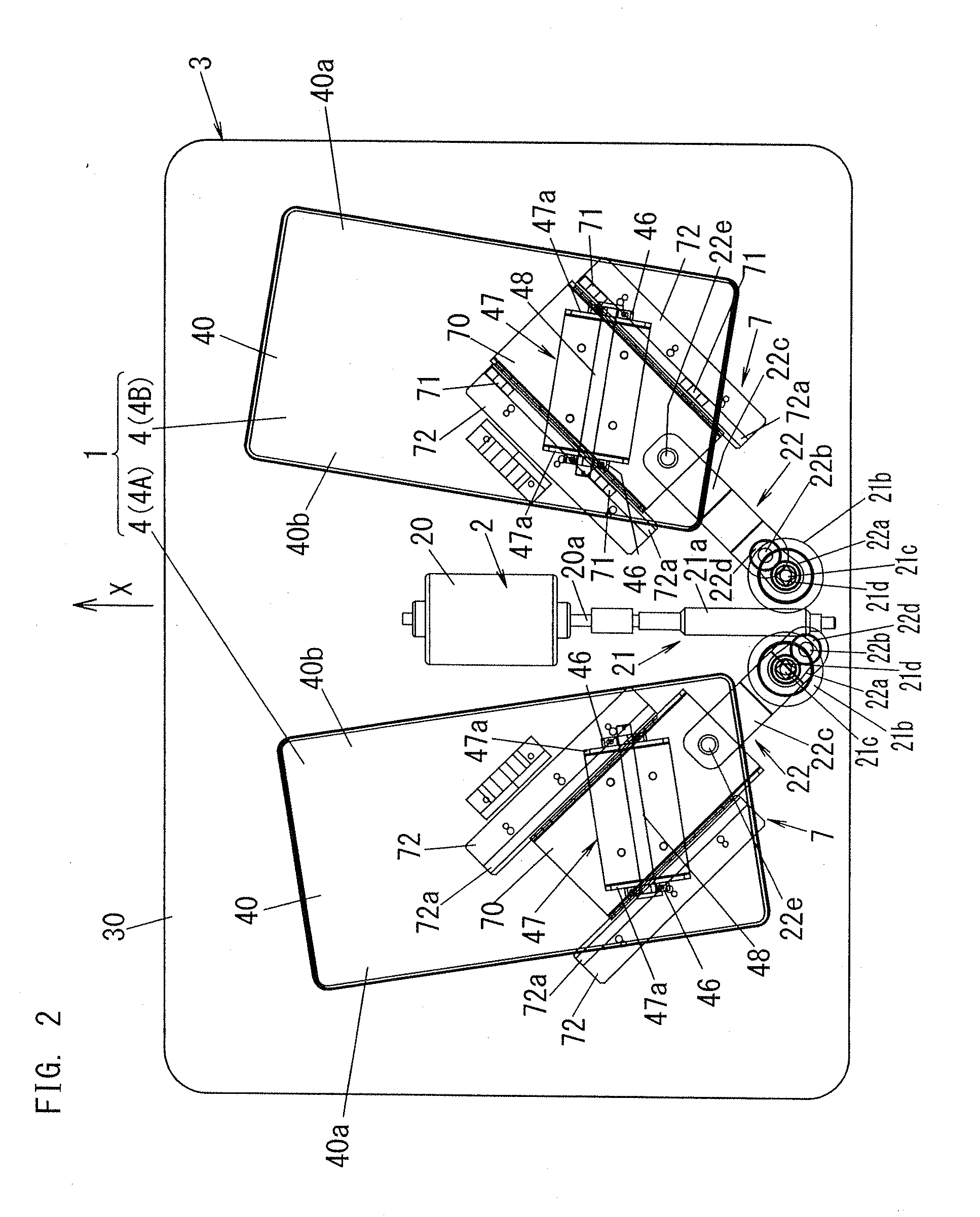
[0025]There is an exercise assisting device in accordance with the first embodiment adapted in use to be placed on a floor. As shown in FIGS. 1 and 2, the exercise assisting device includes a support unit 1 configured to bear a body of a user M (see FIG. 3), a drive device 2, and a housing 3. The support unit 1 includes a pair of foot supports 4 respectively configured to bear the left foot and right foot of the user M. The drive device 2 is configured to move the foot supports 4 to move the body of the user M with one's feet resting on the foot supports 4 respectively so as to vary a load applied to a lower limb of the user M. The support unit 1 and drive device 2 are housed in the housing 3.
[0026]The housing 3 includes a base plate 30 used as a carrier to be placed on a floor, and designed to have a rectangular parallelepiped shape. The pair of the foot supports 4 and drive device 2 are disposed on the base plate 30. The base plate 30 in the present embodiment is configured to hav...
second embodiment
[0076]The exercise assisting device of the present embodiment is different in the configuration of the tilting device A from the exercise assisting device of the first embodiment. Other components of the exercise assisting device of the present embodiment are the same as those of the first embodiment. Therefore the other components are designated by like reference numerals and dispensed with duplicate explanations.
[0077]In the tilting device A of the present embodiment, as shown in FIGS. 4A to 4C, the load detection unit 5 includes the load sensor 50 configured to detect the load applied to the inner portion 40b of the bearing member 40. In short, unlike the load detection unit 5 of the first embodiment, the load detection unit 5 of the present embodiment includes only one load sensor 50.
[0078]The control unit 8 of the present embodiment is configured to control the tilting mechanism unit 6 based on the load detected by the one load sensor 50. The control unit 8 is configured to mak...
PUM
 Login to View More
 Abstract
Description
Claims
Application Information
 Login to View More