
Method for the producing an electronic subassembly, as well as electronic subassembly
a technology of electronic subassembly and electronic subassembly, which is applied in the direction of printed circuit aspects, printed circuit non-printed electric components association, conductive pattern formation, etc., can solve the problems of difficult precise positioning of electronic components, difficult cutting of electronic components into circuit board substrates, and requiring complete removal of carrier foils. , to achieve the effect of high reliability, cost-effectiveness and cost-effectiveness
- Summary
- Abstract
- Description
- Claims
- Application Information
AI Technical Summary
Benefits of technology
Problems solved by technology
Method used
Image

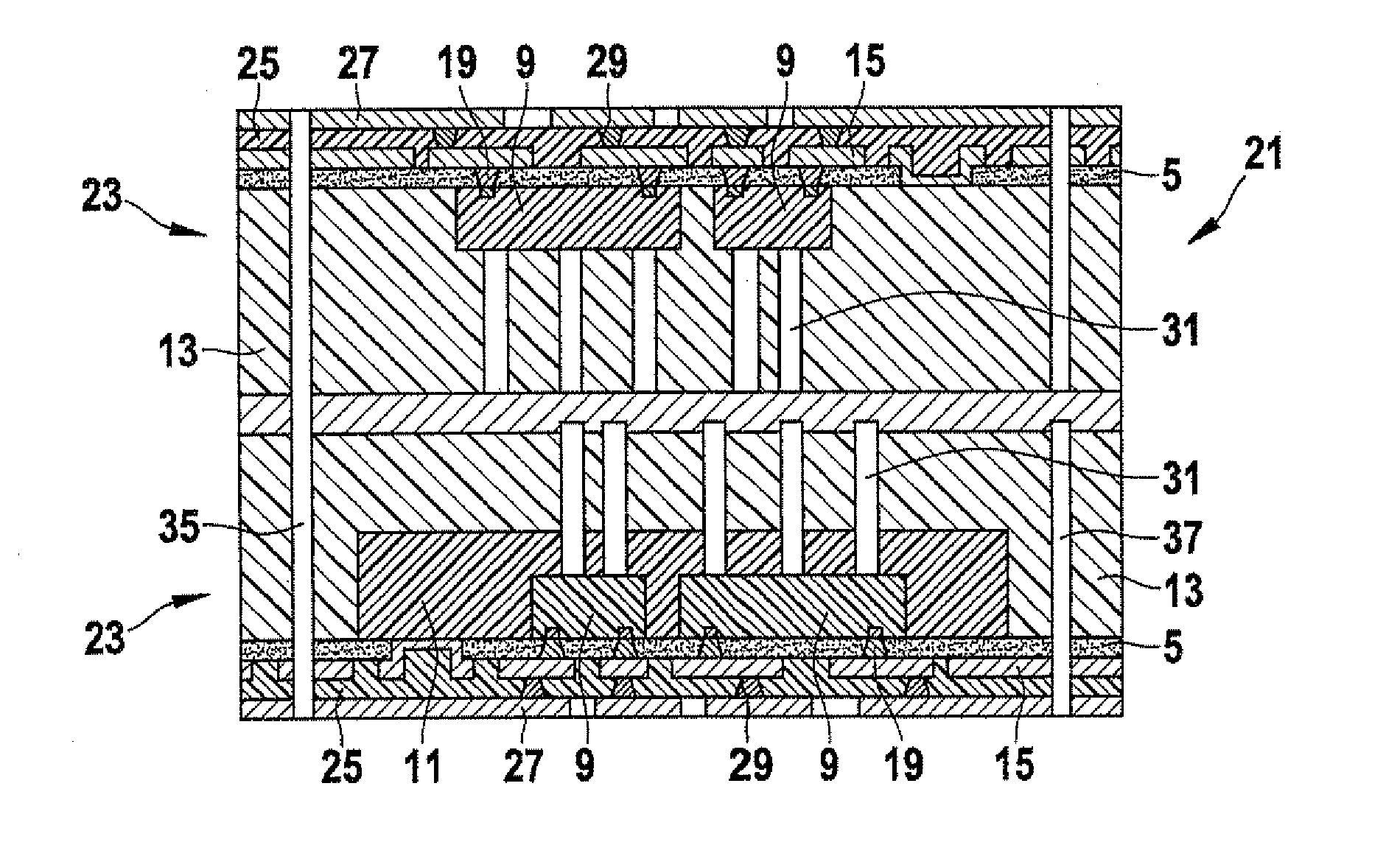
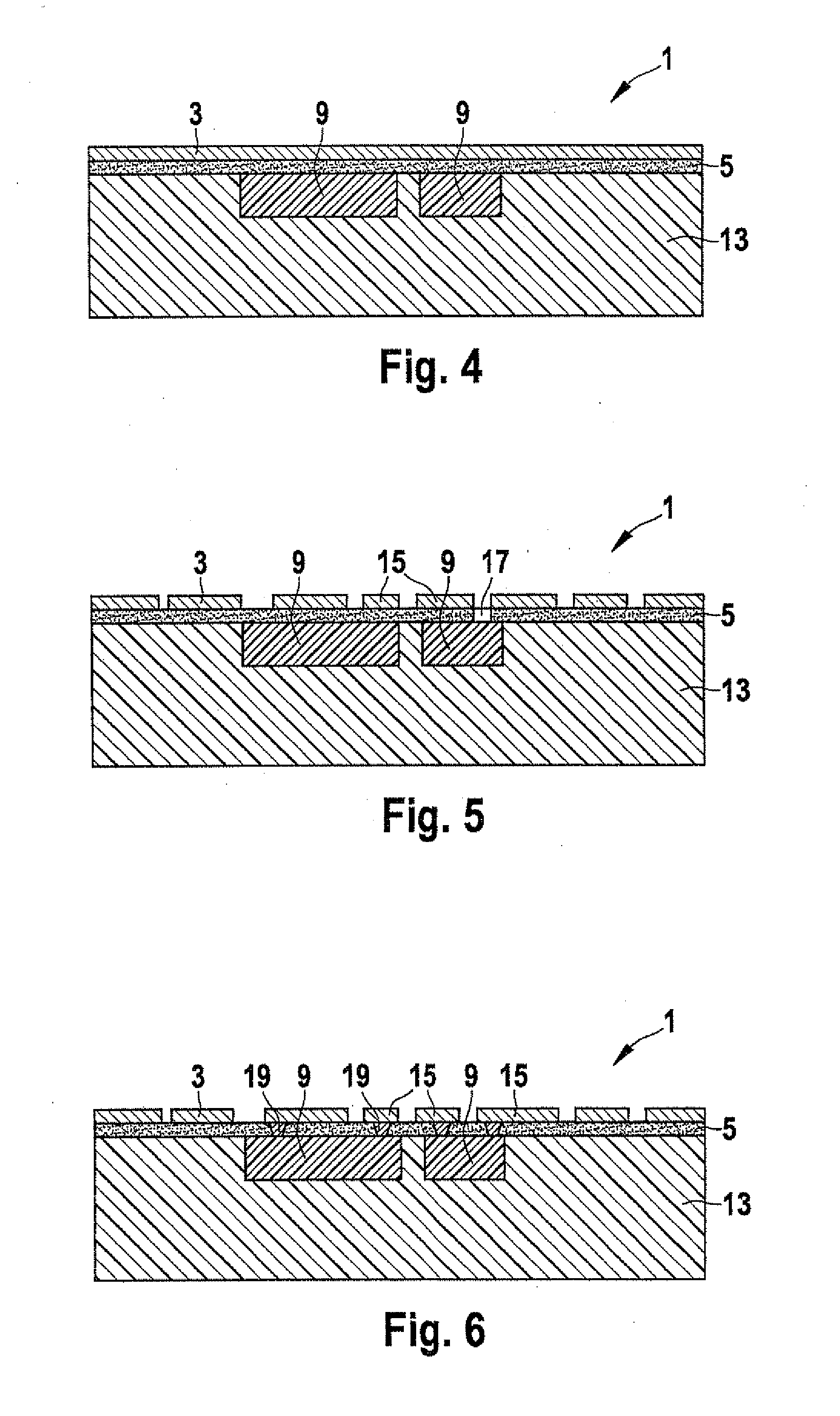
Examples
Embodiment Construction
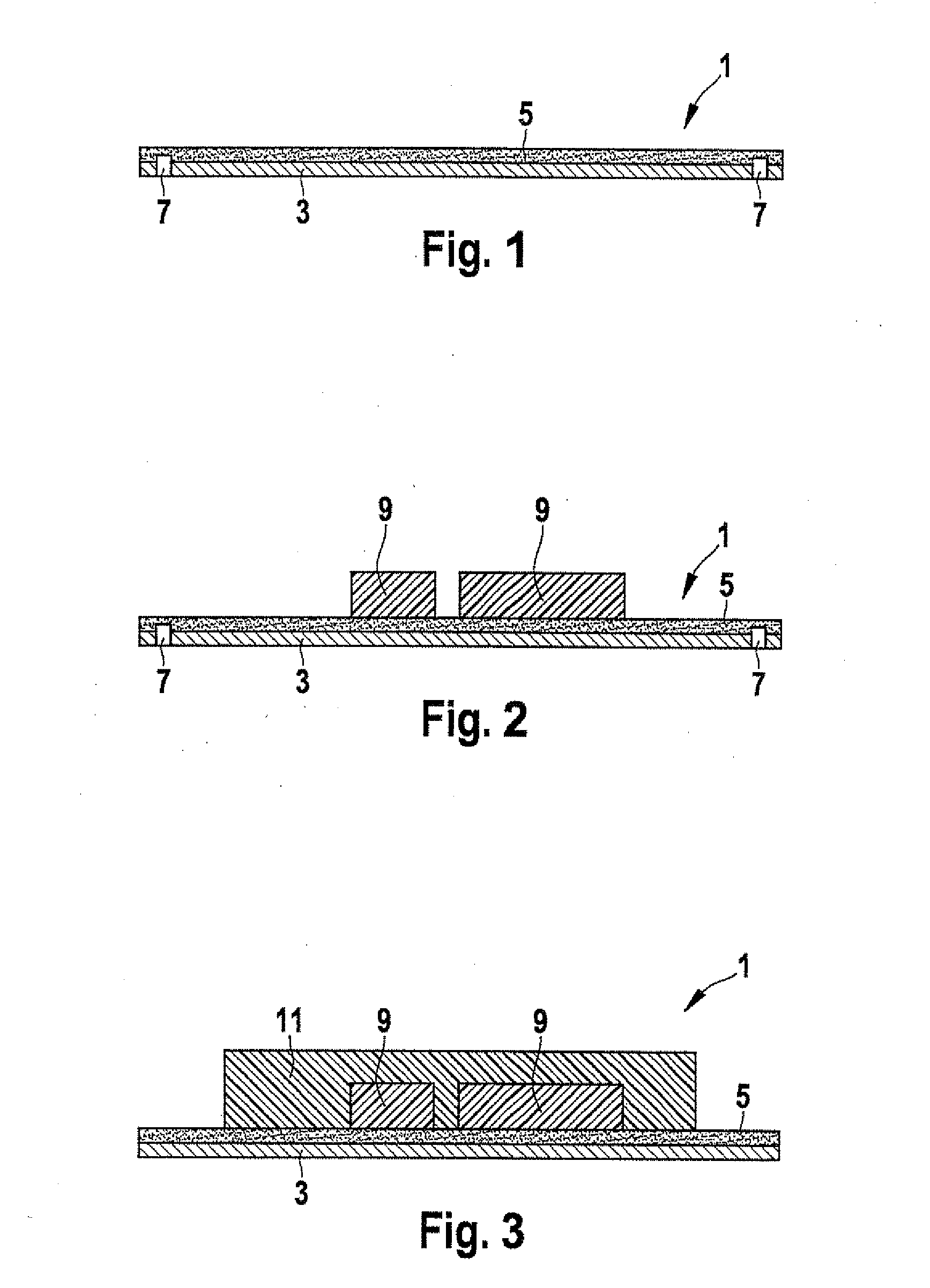
[0033]FIG. 1 shows a conductive carrier foil 1, which includes a conductive layer 3 and an insulating layer 5. Preferably, insulating layer 5 is an adhesive layer or a thermoplast on top of which electronic components are mountable. Alignment marks 7 are introduced on the side of conductive carrier foil 1 on which conductive layer 3 is located. For example, alignment marks 7 may be introduced into conductive carrier foil 1 by etching, stamping or drilling, e.g., laser drilling. Furthermore, it is also possible that the alignment marks are components connected to conductive carrier foil 1, which are exposed by drilling or detected by x-ray microscopy. Any other form of alignment marks known to one skilled in the art is possible as well.
[0034]Conductive layer 3 preferably is a metal layer. Especially preferred as metal is copper.
[0035]In a second step, electronic components 9 are mounted on insulating layer 5. This is illustrated in FIG. 2. In addition to electronic components 9, it i...
PUM
| Property | Measurement | Unit |
|---|---|---|
| thickness | aaaaa | aaaaa |
| conductive | aaaaa | aaaaa |
| mass | aaaaa | aaaaa |
Abstract
Description
Claims
Application Information
 Login to View More