Direct reuse of the
cardboard case is not feasible as it was permanently marked with data that would be no longer valid for other contents of product.
It is difficult to mark the packing crate in the same way cardboard cases are marked due to the design and material of the crate as well as its
reusability.
There are three obstacles to marking a packing crate: physical restrictions of existing marking technologies, cost, and variability of data to mark.
This inability to mark the packing crate with
relevant information about the current contents leaves product manufacturers at a strategic
disadvantage over the one-time-use cardboard case systems employed in other industries.
If one were to permanently mark the contents of the crate on the exterior sides of the crate, then the crate could not be used for all products and variable data marking would not be available.
If one were to temporarily mark the contents of the crate on the exterior sides of the crate, then the crate could not be reused as current techniques for removable markings are not consistent and feasible.
The RFID
chip is expensive and is met with strong resistance from some manufacturers based on cost considerations.
RFID technology also has limitations with respect to effective reading when placed around liquids.
As most of the crate contents in the milk industry, as an example, are liquid products, the effectiveness of RFID as an
identification technology can be diminished.
In some cases, a RFID tag can become dislodged from the crate due to the harsh handling of the packing crate during normal
wear and tear.
Unfortunately
laser marking of plastics is not a consistent method.
Millions of existing crates are in active circulation and effectiveness of
laser marking on these crates would be a large uncertainty for a manufacturer.
Packing crates often experience harsh handling and
scratching of the surface.
A
laser mark can be easily damaged by such a scratch thus rendering the accuracy of the laser mark unacceptable.
Therefore both laser marking and RFID methods are either too costly or too ineffective at producing robust and easily readable identifications.
Milk product manufacturers, as an example, have not adopted any of the prior art identification methods, therefore plastic packing crates are not uniquely identifiable.
This also implies that the milk product manufacturer is unable to track crated product through its manufacturing process.
In addition, the manufacturer cannot determine the contents of a packing crate once it is packed without an employee looking inside the crate and manually recording it.
Another inability of product manufacturers is the accurate recording of final destination for specific product outside their organization, also referred to as “track and trace”.
Without the ability to uniquely identify a crate of product, the manufacturer cannot correlate shipping data to specific product.
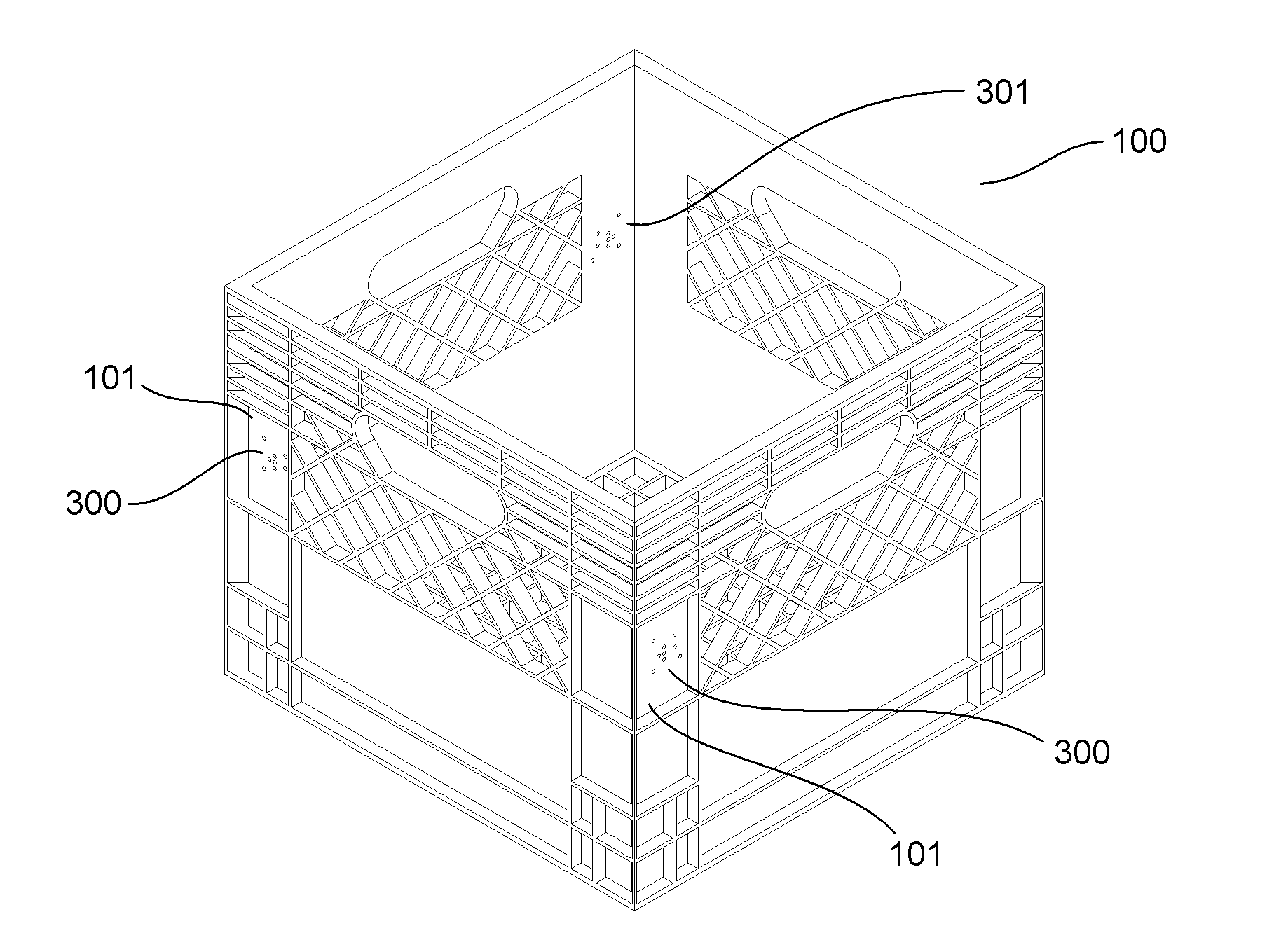
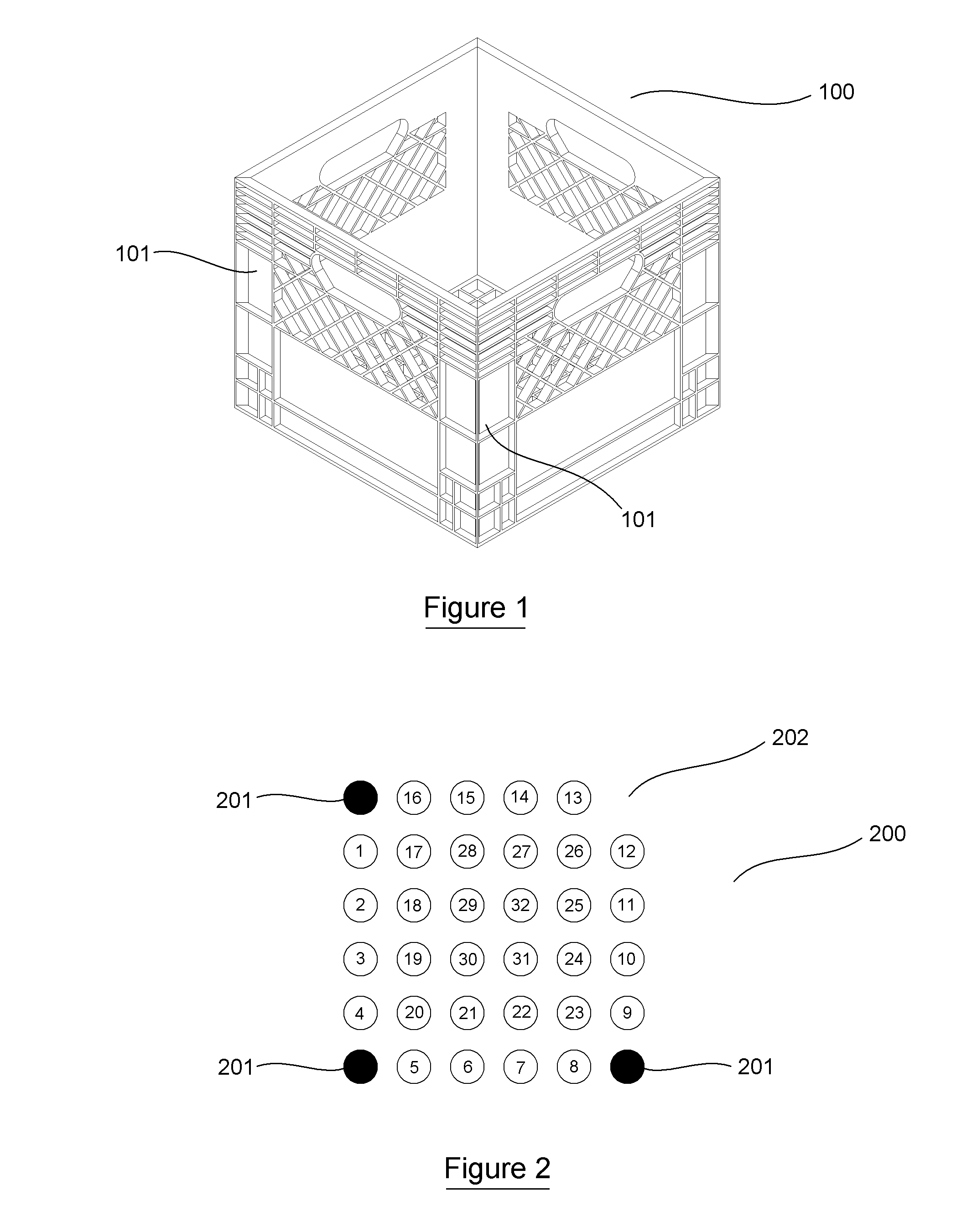
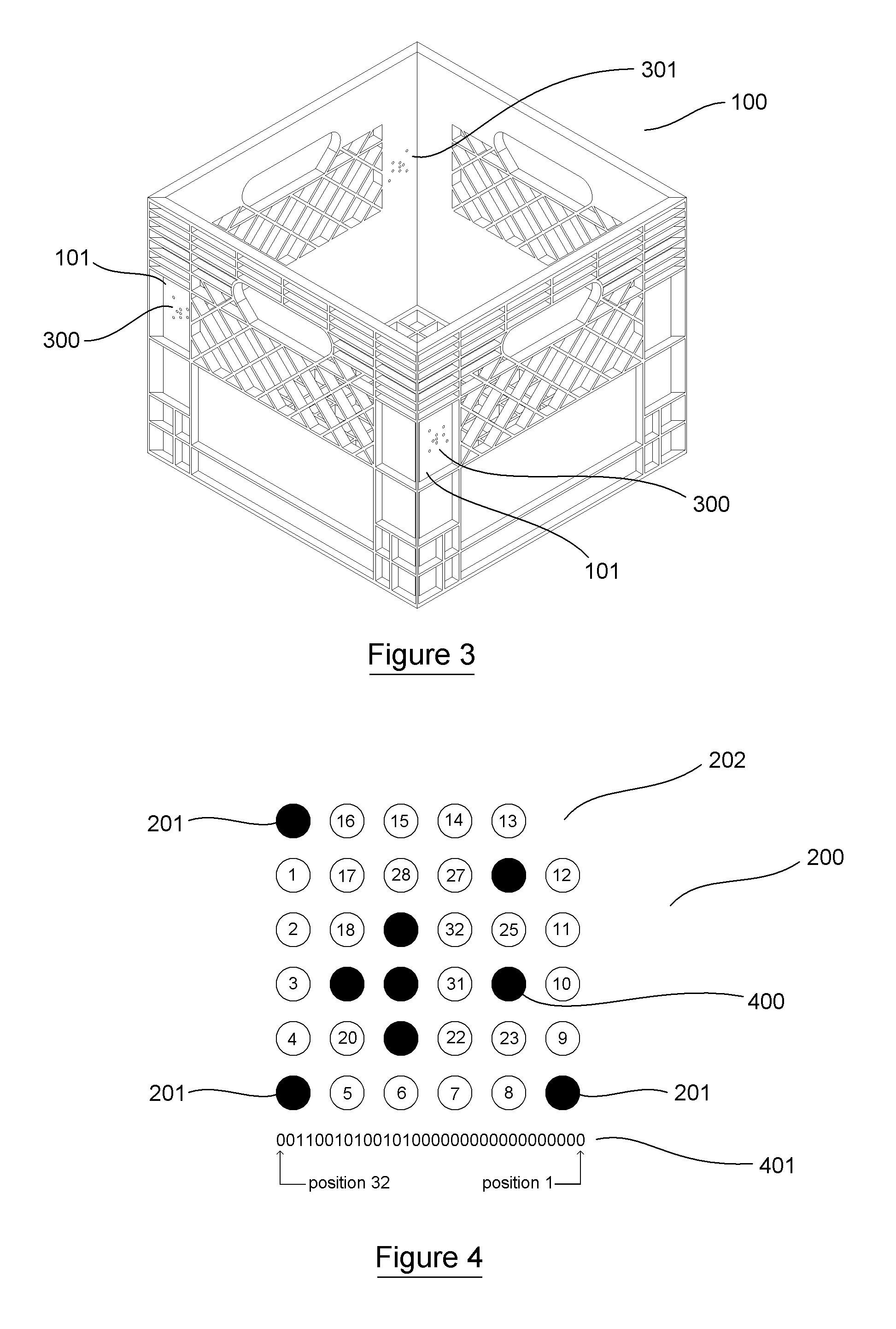
These holes cannot be reasonably removed from the crate thus overcoming the permanency limitations of ink, labels and RFID tags.
Surface
scratching would yield insignificant alteration to the drilled mark pattern since the holes penetrated all the way through the packing crate wall.



 Login to View More
  Login to View More