
Method and system for controlling fuel usage
a fuel consumption and fuel technology, applied in the direction of machines/engines, process and machine control, output power, etc., can solve the problems of variable water vaporization effect, approach of hellen may not be able to provide the torque required, etc., to reduce exhaust emissions and reduce the effect of rising fuel prices
- Summary
- Abstract
- Description
- Claims
- Application Information
AI Technical Summary
Benefits of technology
Problems solved by technology
Method used
Image

Examples
Embodiment Construction
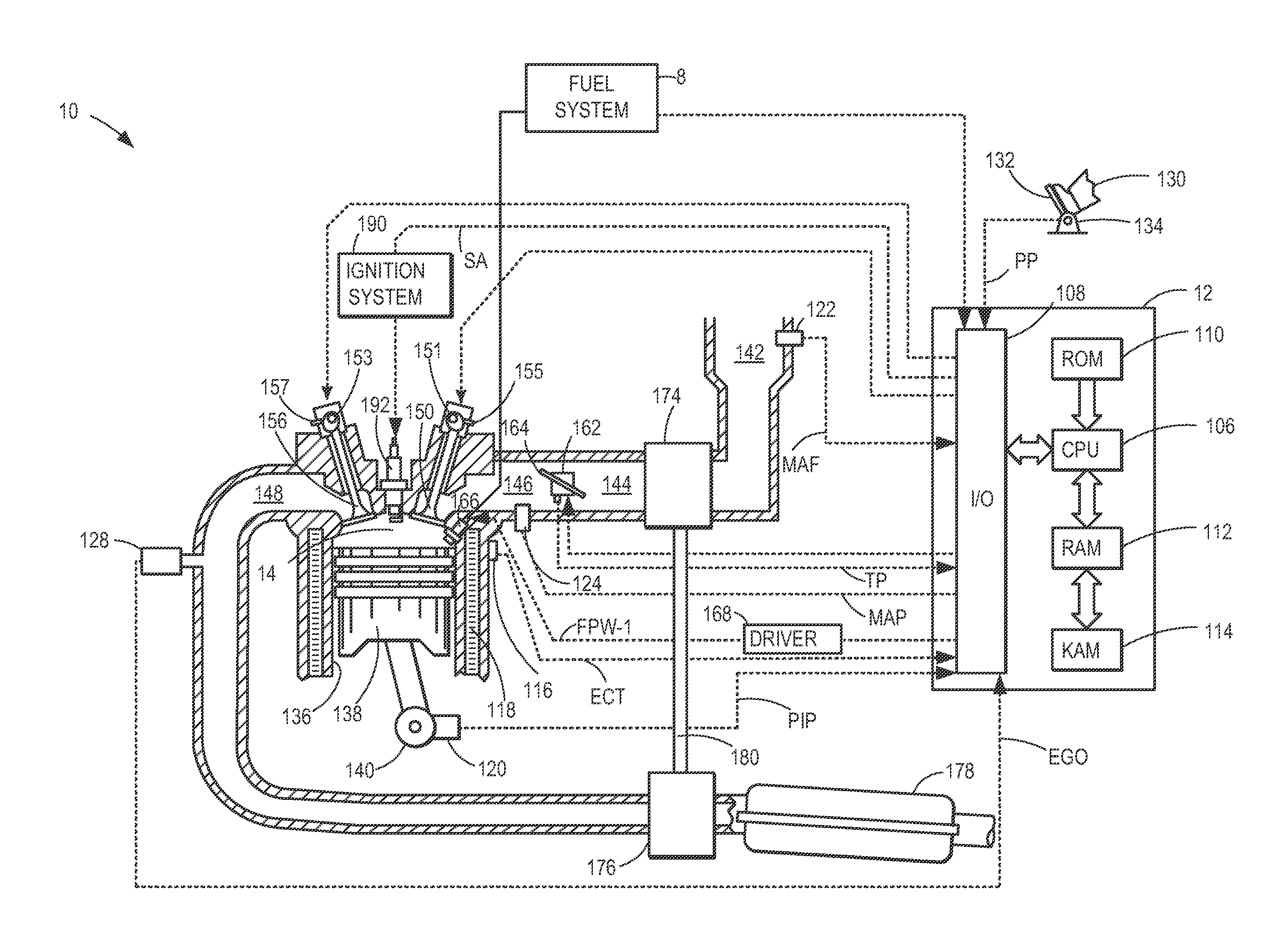
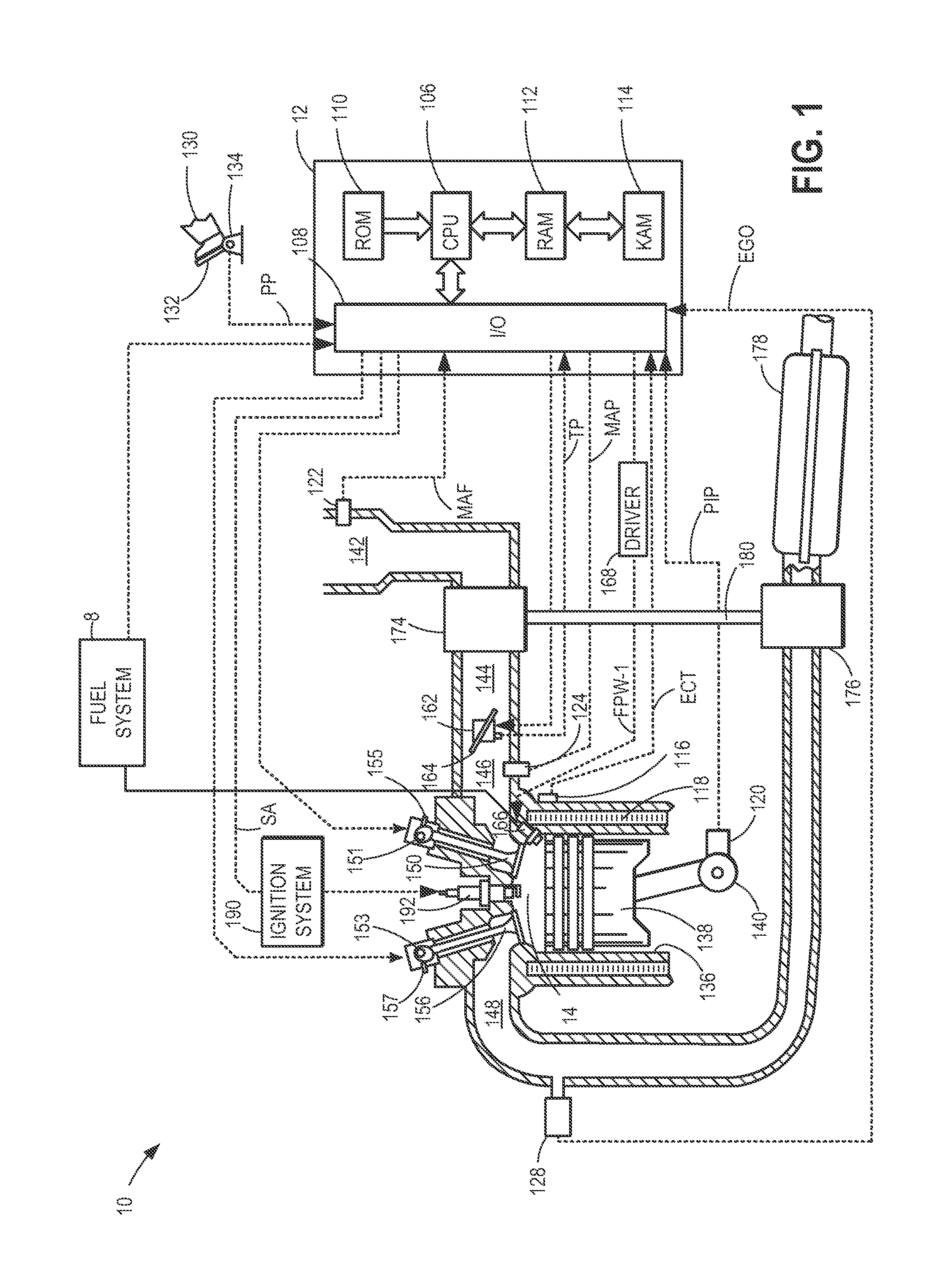
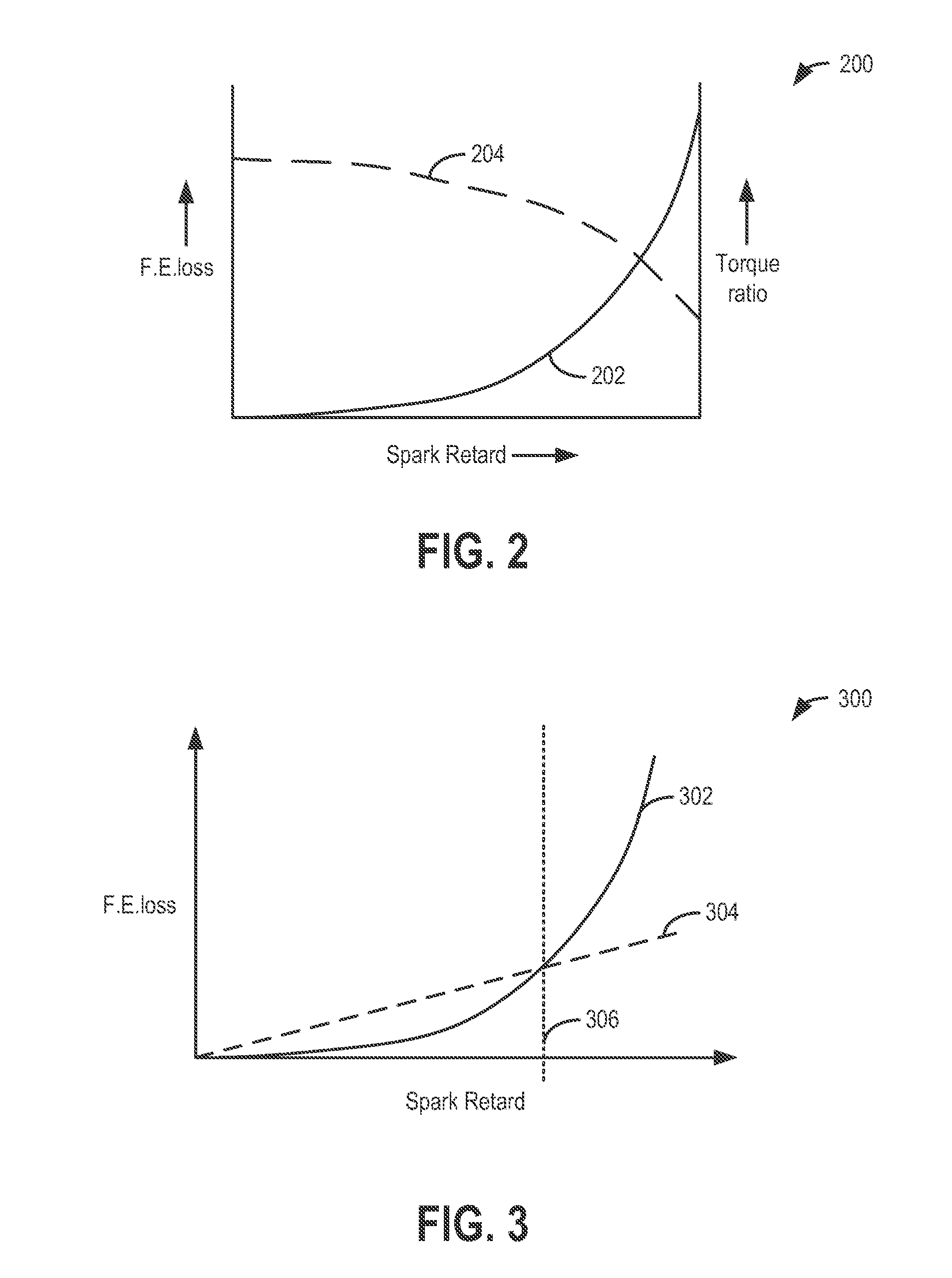
[0026]The following description relates to systems and methods for improving the efficiency of fuel usage in flex-fueled engines, such as the engine of FIG. 1. In response to engine knocking, an amount of spark retard and a knock control fluid injection may be used to address the knock. Specifically, spark may be retarded up to a predetermined amount of retard (such as a predetermined timing, or threshold point), up to which it may be more advantageous (e.g., more fuel economical) to use spark retard, and beyond which it may be more advantageous to inject a knock control fluid to address engine knock. As shown in FIGS. 2-5, based on a driver-selected cost function, a controller may adjust usage of spark retard and usage of direct injected and / or port injected fuels, or knock control fluids, to address knock. The usage may be further based on a combination of the inherent octane content, dilution effect, and charge cooling effect of the available knock control fluid(s), for example, ...
PUM
 Login to View More
 Abstract
Description
Claims
Application Information
 Login to View More