
Aircraft engine attachment pylon
a technology for aircraft engines and pylons, which is applied in the direction of aircraft power plants, power plant construction, power plant types, etc., can solve the problems of increasing cost and time, generating non-negligent aerodynamic disturbances, and limited access inside the pylons, so as to reduce the lateral dimension of the assembly, easy to access, and easy to access
- Summary
- Abstract
- Description
- Claims
- Application Information
AI Technical Summary
Benefits of technology
Problems solved by technology
Method used
Image

Examples
Embodiment Construction
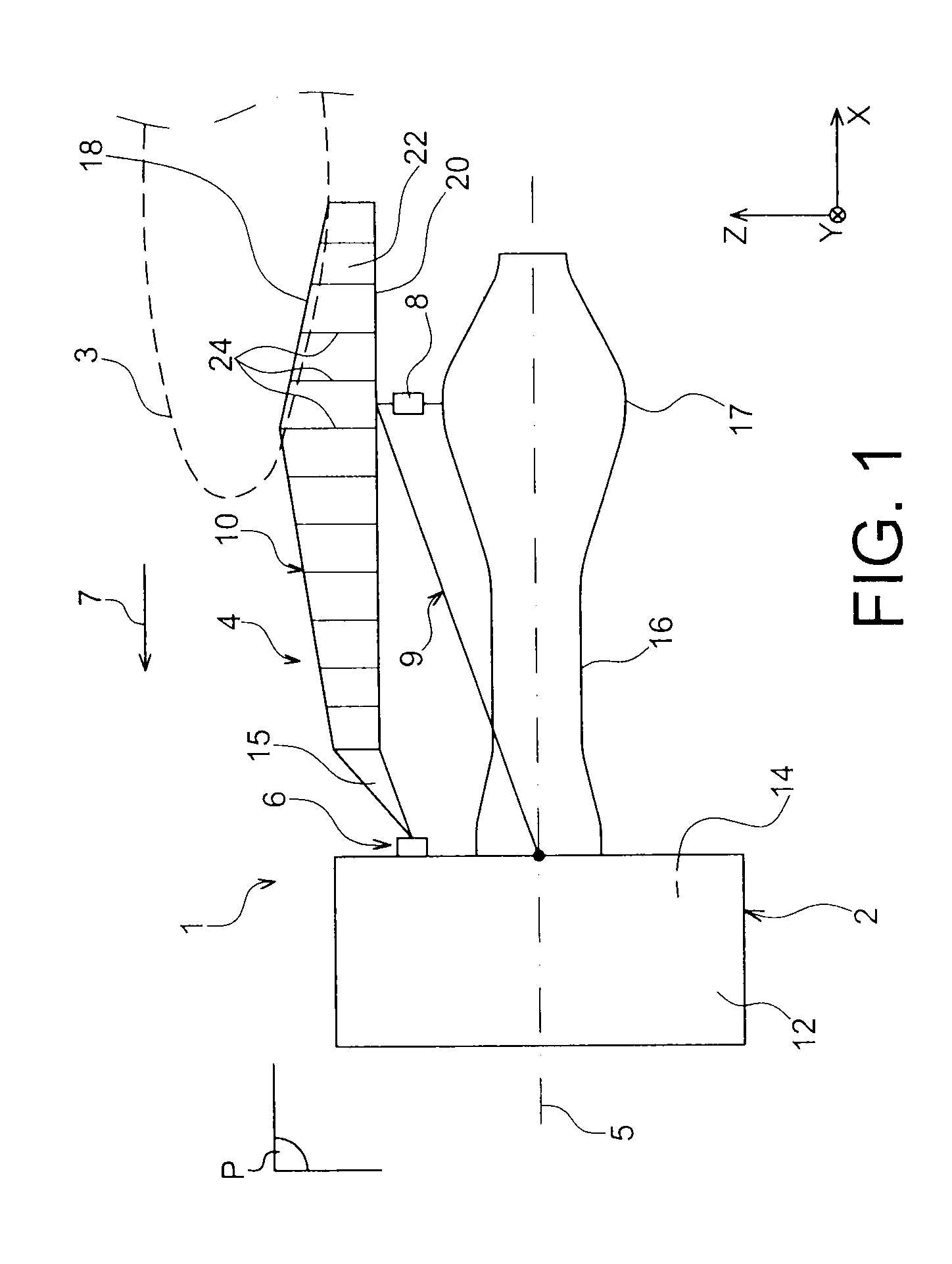
[0040]FIG. 1 shows an engine assembly 1 for an aircraft that will be fixed under a wing 3 of this aircraft (not shown), this assembly 1 comprising an attachment pylon 4 according to a preferred embodiment of this invention.
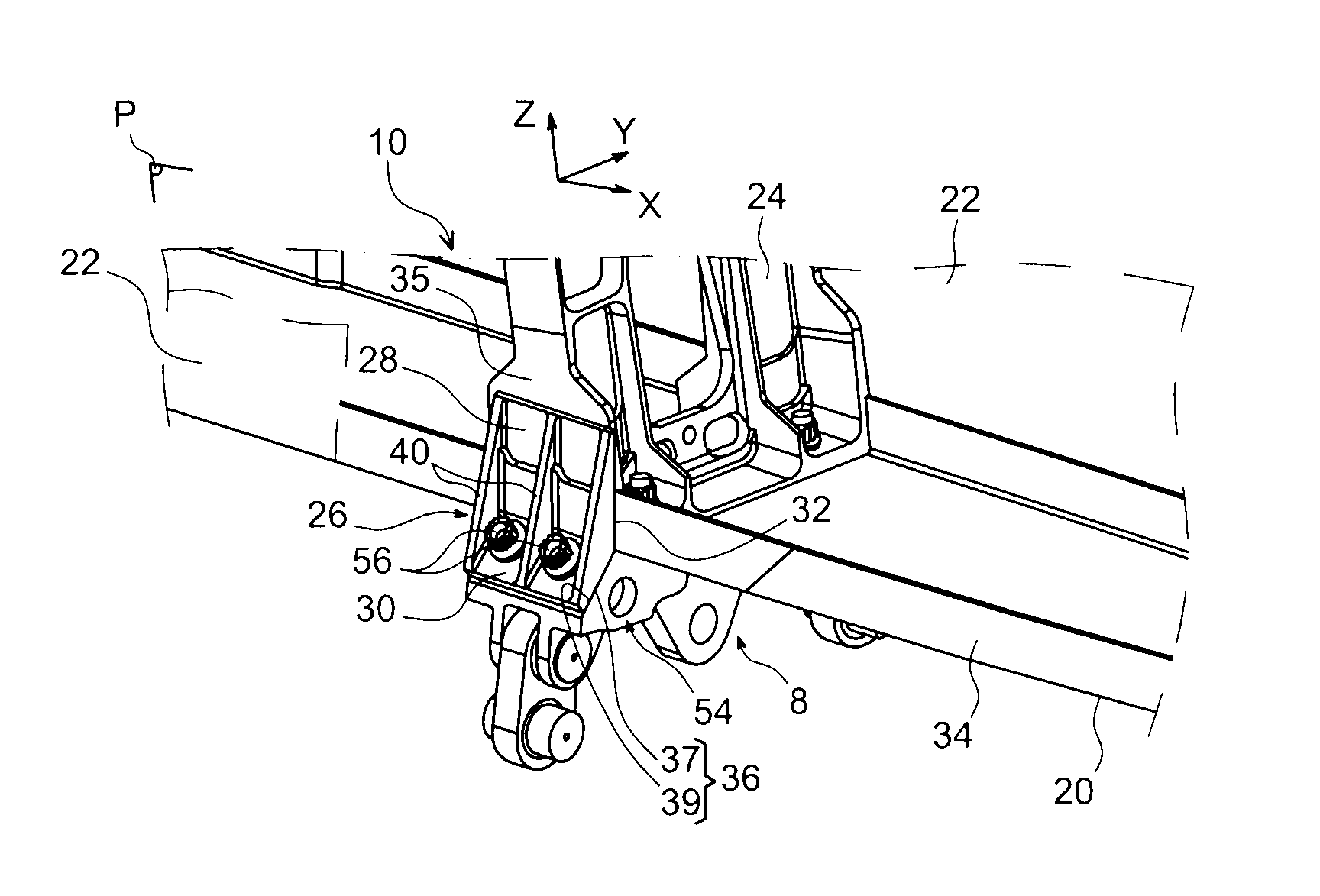
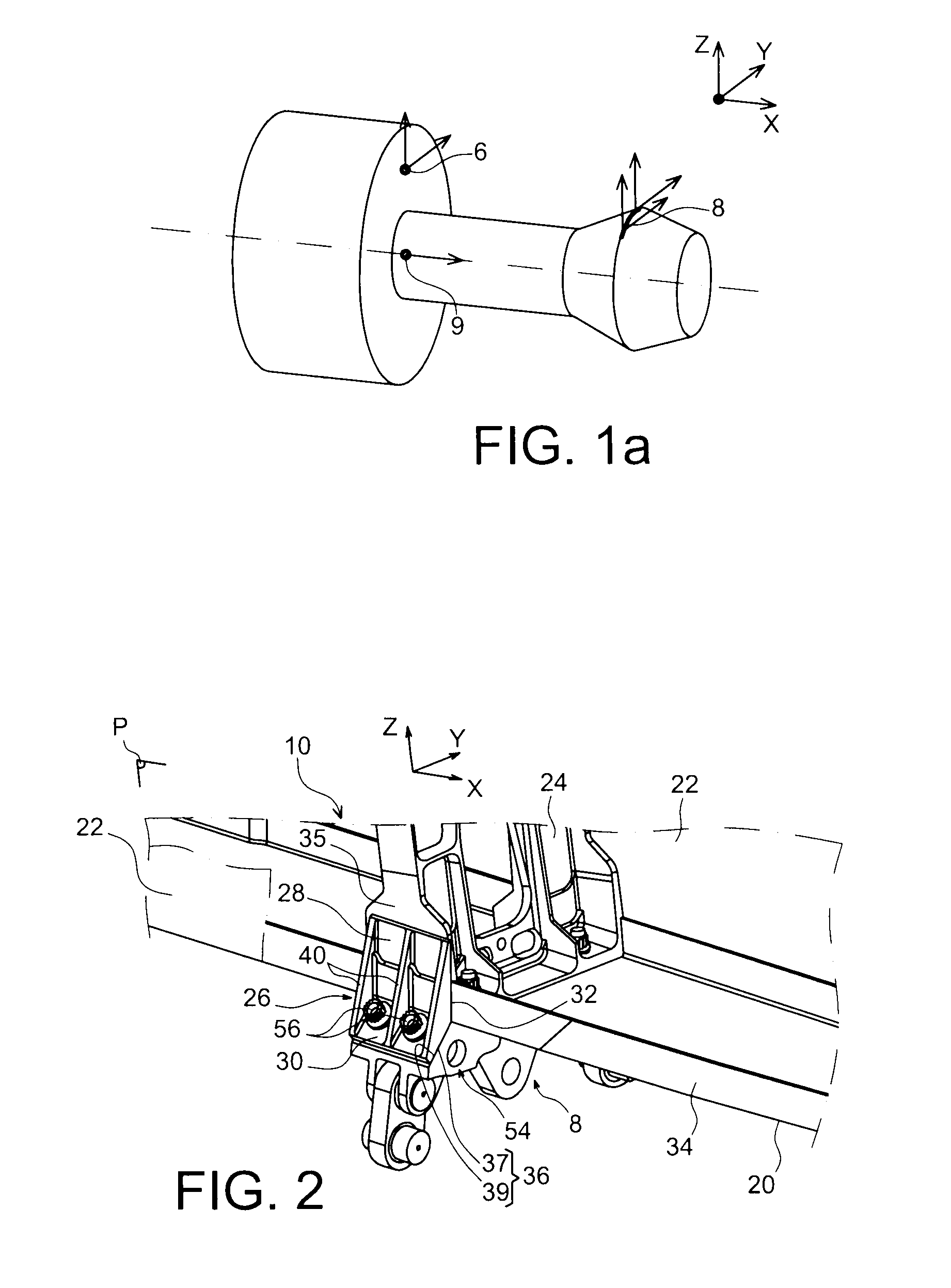
[0041]Globally, the engine assembly 1 is composed of an engine such as a turbojet 2 and the attachment pylon 4, this pylon in particular being provided with a plurality of engine attachments 6, 8, 9 and a rigid structure 10 called the primary structure supporting these attachments. For information, it should be noted that the assembly 1 is designed to be surrounded by a pod (not shown) and that the attachment pylon 4 is provided with another series of attachments (not shown) used to suspend this assembly 1 under the aircraft wing.
[0042]Throughout the following description, by convention, X refers to the longitudinal direction of the pylon 4 that is also considered to be the same as the longitudinal direction of the turbojet 2, this X direction being parallel to a ...
PUM
 Login to View More
 Abstract
Description
Claims
Application Information
 Login to View More