
Syringe Filter
a filtration device and syringe technology, applied in the direction of filtration separation, membranes, separation processes, etc., can solve the problems of high scrap rate, labor-intensive inspection process, inconsistent product appearance,
- Summary
- Abstract
- Description
- Claims
- Application Information
AI Technical Summary
Benefits of technology
Problems solved by technology
Method used
Image

Examples
Embodiment Construction
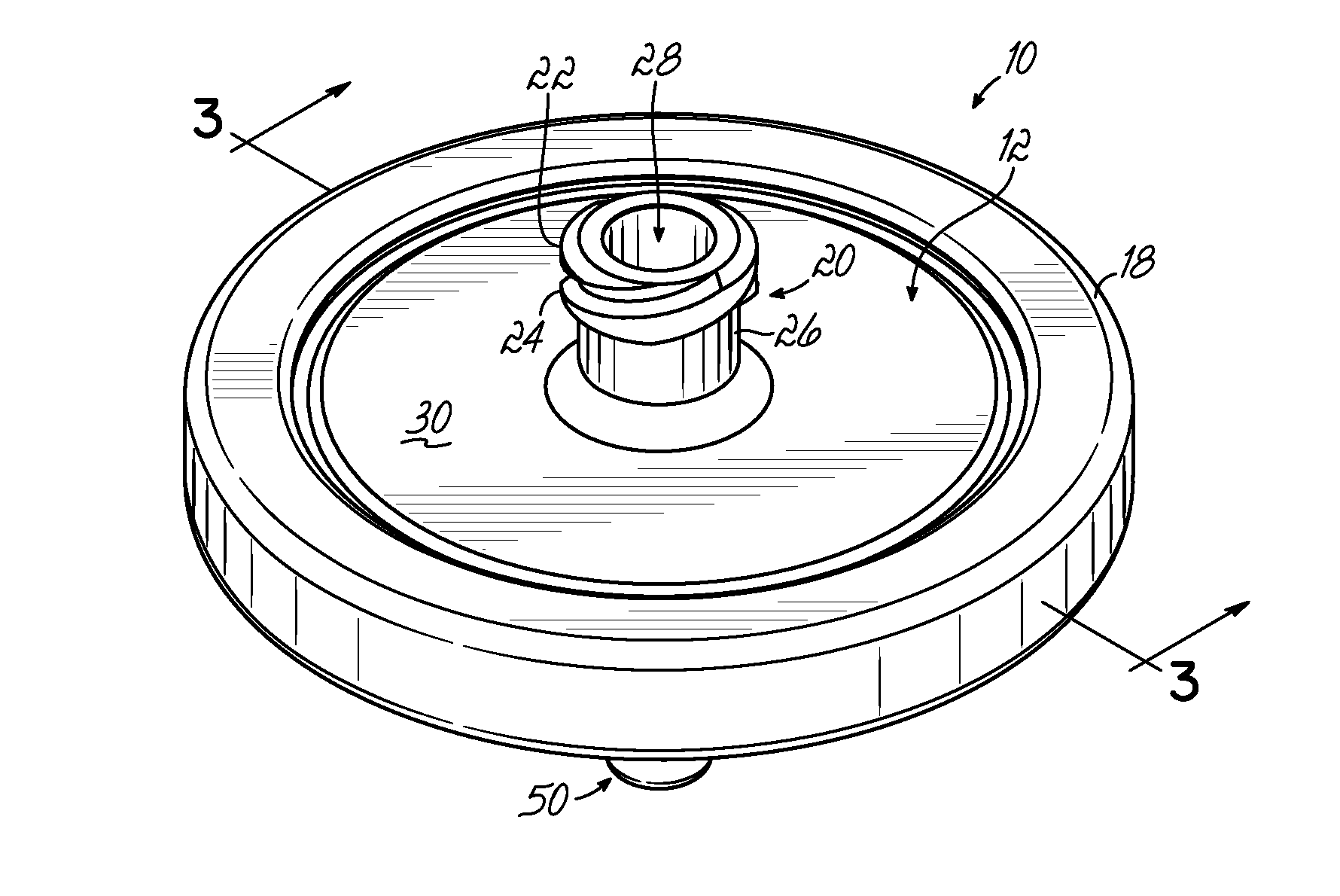
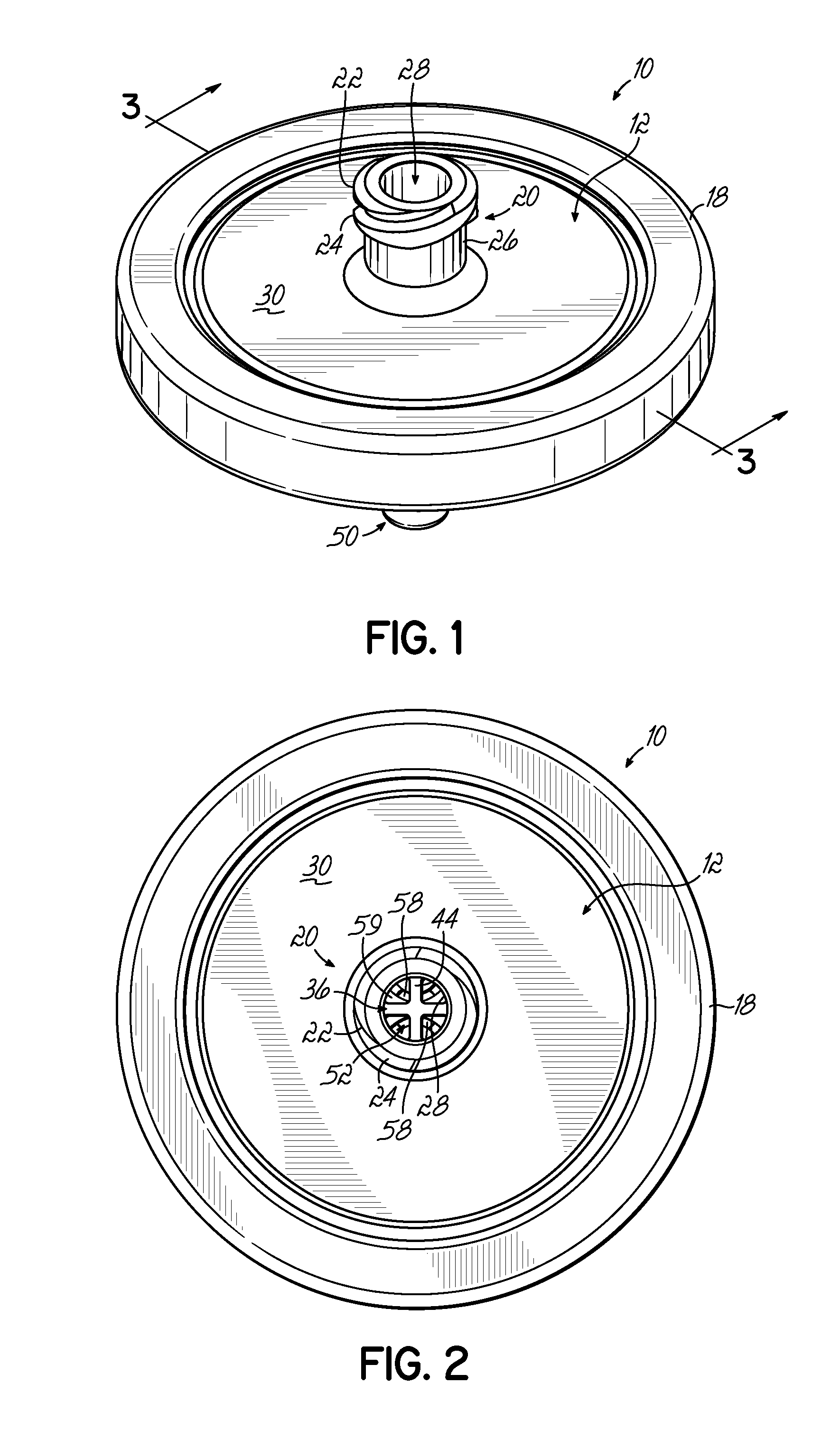
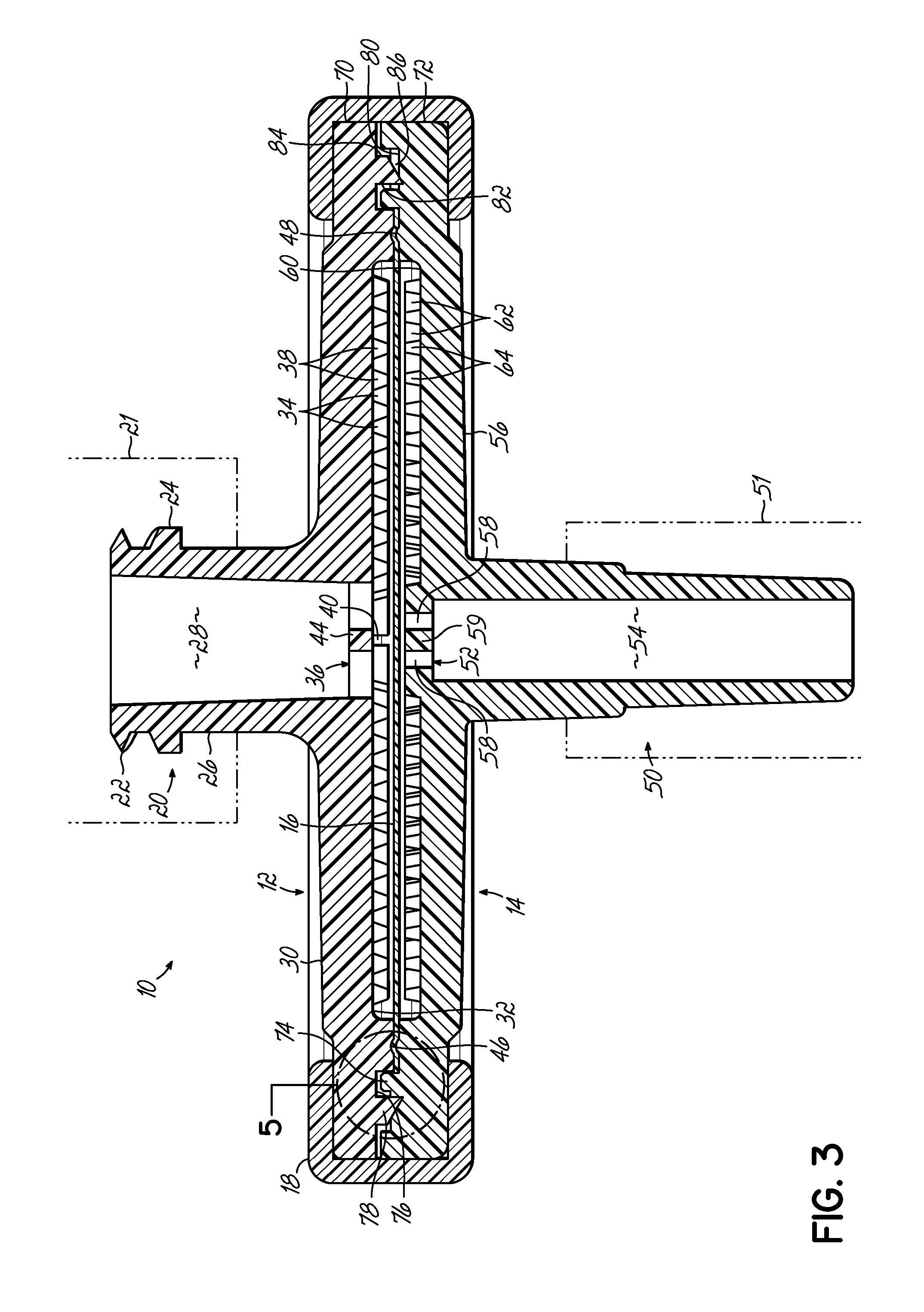
[0029]Turning now to the figures, and in particular to FIGS. 1-3, a syringe filter 10 in accordance with one embodiment of the present invention is shown. While not required, the particular illustrative embodiment is shown as a 30 mm syringe filter (i.e., suitable for use with a 30 mm luer lock).
[0030]The syringe filter 10 includes an inlet portion 12, an outlet portion 14, a membrane 16 located therebetween, and a sealing ring 18 surrounding at least an edge of the inlet portion 12 and the outlet portion 14. The membrane 16 may be selected, at least in part, by the particular application and fluid filtration needs. For example, the membrane 16 may range in construction materials (for example, polytetrafluoroethylene, polysulfone, nylon, polyvinylidene fluoride, cellulose, cellulose acetate, polypropylene, glass microfiber, and so forth) and porosity (with pores ranging from about 0.2 μm to about 5 μm).
[0031]The inlet and outlet portions 12, 14 may be constructed from a moldable, ch...
PUM
| Property | Measurement | Unit |
|---|---|---|
| diameter | aaaaa | aaaaa |
| diameter | aaaaa | aaaaa |
| perimeter | aaaaa | aaaaa |
Abstract
Description
Claims
Application Information
 Login to View More