

Analysis of microbes by maldi mass spectrometry
a mass spectrometry and microbe technology, applied in the field of mass spectrometry analysis of microbes, can solve the problem of too many applications and too long
- Summary
- Abstract
- Description
- Claims
- Application Information
AI Technical Summary
Benefits of technology
Problems solved by technology
Method used
Image

Examples
first embodiment
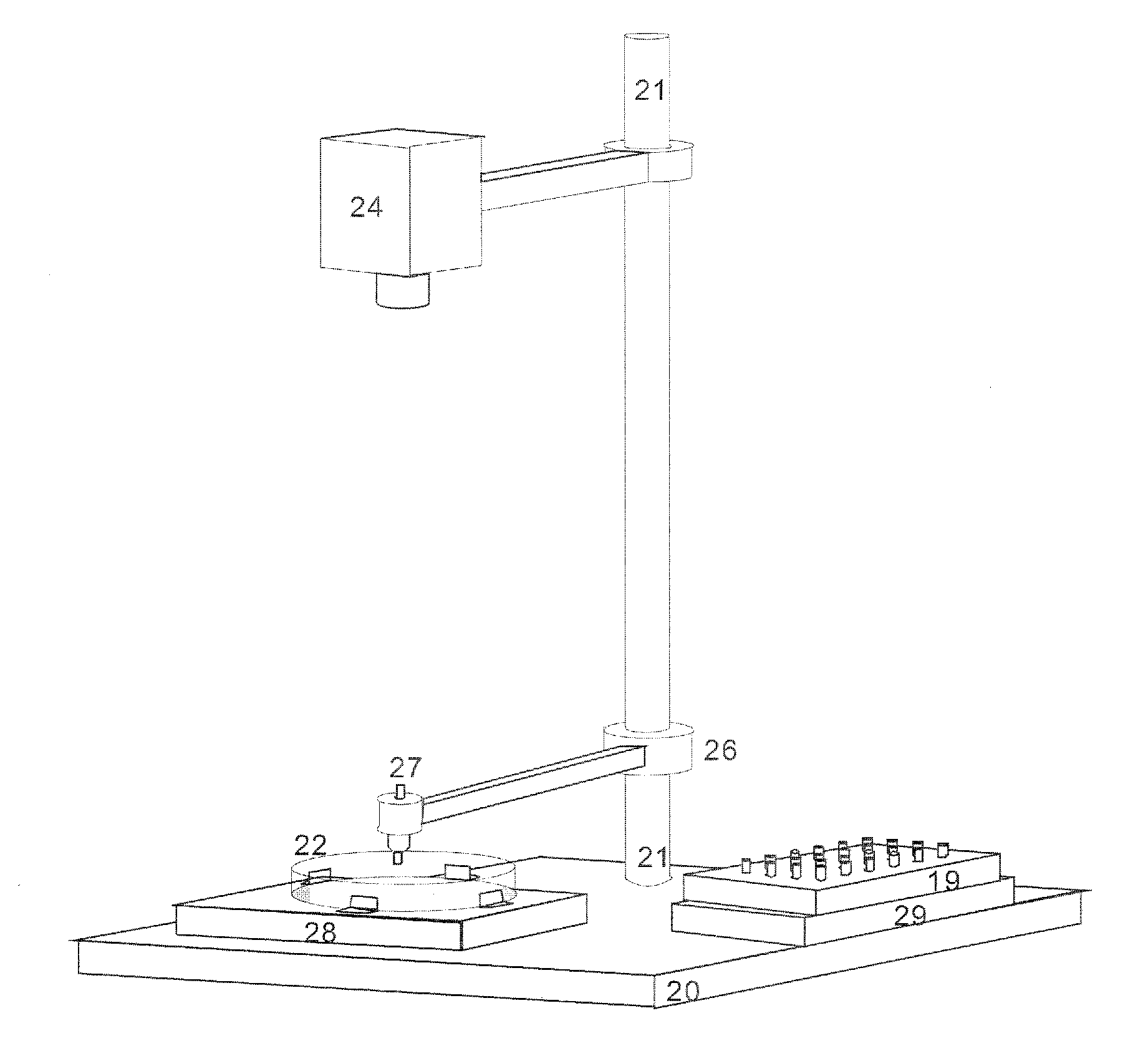
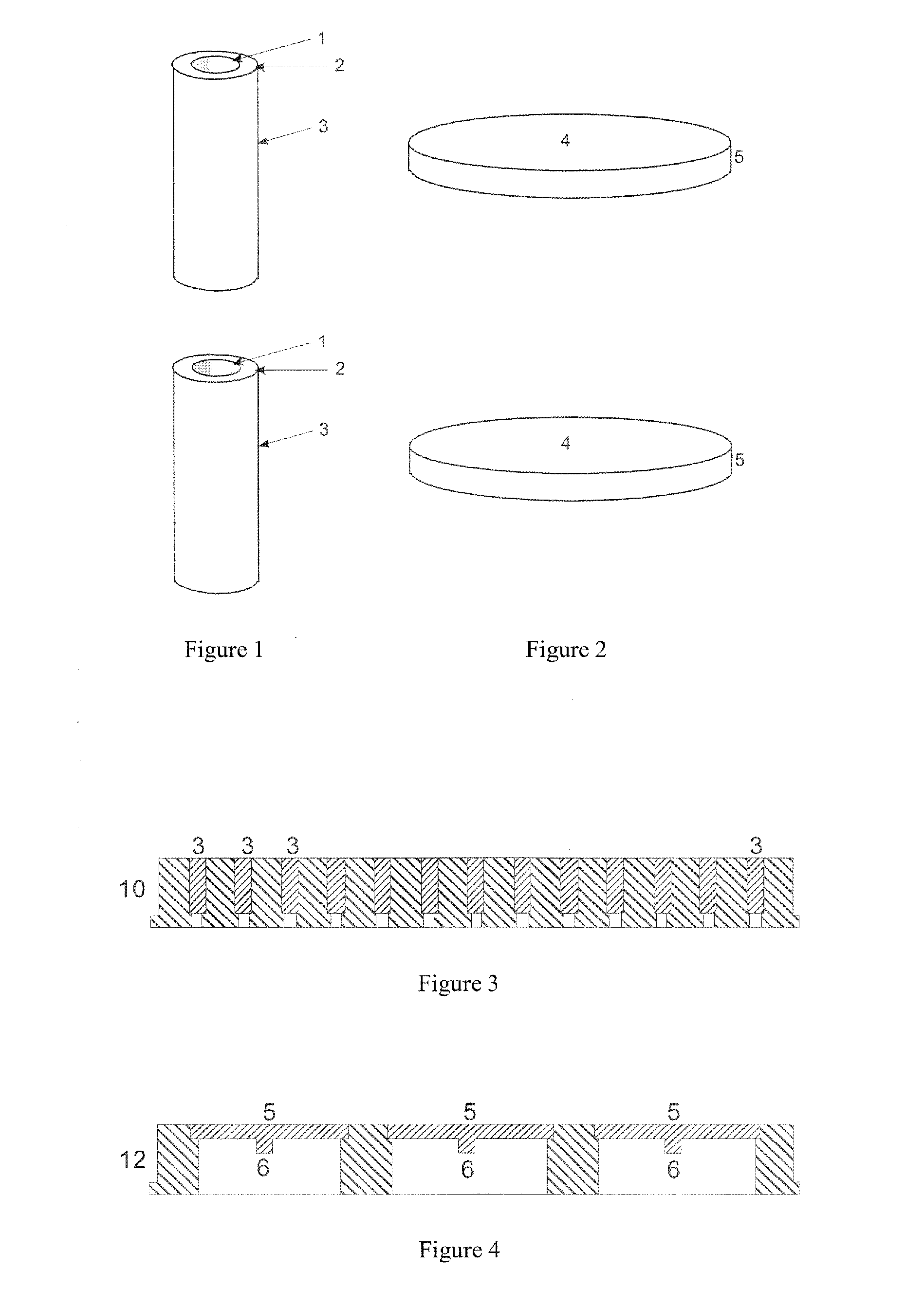
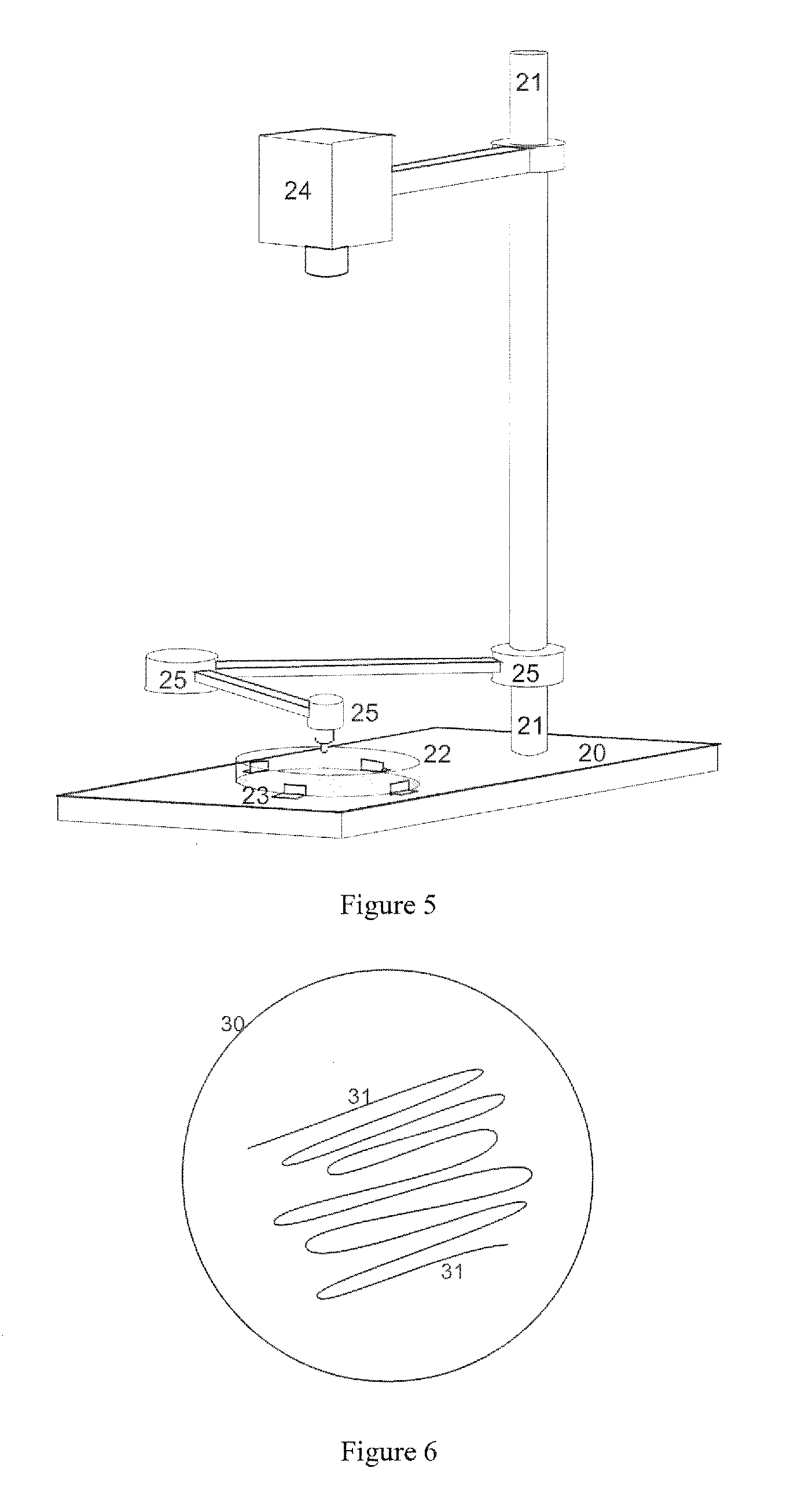
[0045]In a first embodiment, small sample support pins (3), as shown in FIG. 1, are each pressed with their end surface, which measures a maximum of around nine, preferably less than four square millimeters, centrally onto a selected microcolony in order to transfer microbes from the microcolony by contact onto the end surface of the sample support pin (3). A sample support pin (3) measuring two millimeters in diameter is shown in FIG. 1. The sample support pins (3) should consist of electrically conductive material, for example metal or conductive plastic. They can be pressed onto the microcolony manually, but it is better to use the robotic arm (25) of the device from FIG. 5, which is controlled by the positional data from the optical image of the surface of the nutrient medium. Even more advantageous is a device according to FIG. 7, which also allows the sample support pins to be removed from and put back into a storage container (19). The sample support pins (3) can then be inse...
second embodiment
[0051]the transfer method concerns the simultaneous contact transfer of many microcolonies onto the contact surface (4) of a sample support plate (5). A sample support plate (5) with a round design is shown by way of example in FIG. 2. In principle, however, the sample support plate (5) can be any shape, with a diameter of between one and eight centimeters, which can simultaneously pick up the microbes of many microcolonies by pressing it lightly onto the surface of the nutrient medium. The contact surface (4) of the sample support plate (5) should be aligned parallel to the surface of the nutrient medium. The sample support plate (5) can be pressed on manually, but also by a device according to FIG. 5 with a robotic arm (25), for example, where the robotic arm can also control the contact pressure. The surface (4) of this sample support plate (5) can be prepared in a similar way to the sample support pins in order to bind as many microbes as possible. It can be simply moistened, fo...
PUM
 Login to View More
 Abstract
Description
Claims
Application Information
 Login to View More