
Coating for an implant
a technology for implants and coatings, applied in the field of coatings for implants, can solve the problems of insufficient anchorage or attachment insufficient strength and thickness, and insufficient mechanical anchorage etc., and achieve the effect of sufficient strength and thickness and advantageous mechanical anchoring of soft connective tissu
- Summary
- Abstract
- Description
- Claims
- Application Information
AI Technical Summary
Benefits of technology
Problems solved by technology
Method used
Image

Examples
Embodiment Construction
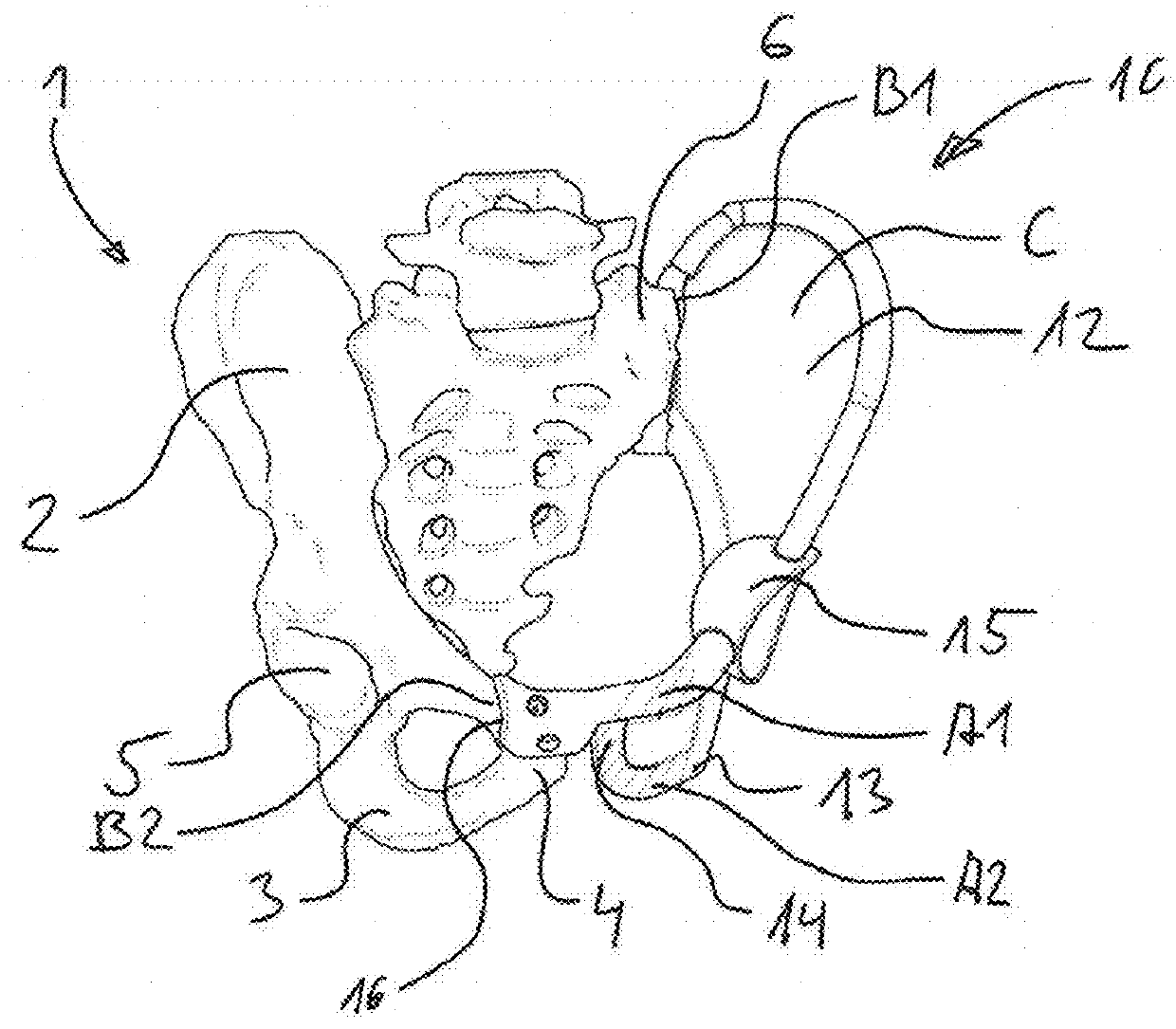
[0048]FIG. 1 is an illustration of the skeletal structure of the pelvis, wherein the left side of the pelvis has been replaced by an implant comprising a coating according to the present invention. The right side of the pelvis is still formed by native bone tissue. It comprises the ilium 2, the ischium 3, the pubic bone 4, and the acetabulum 5 of the pelvis 1. The ilium is connected via the sacroiliac joint to the sacrum 6, which in turn is adjacent to a lumbar vertebral body.
[0049]The implant 10 serves as replacement for the left side of the pelvis 1. Corresponding to the native structure of the pelvis, it comprises an ilium portion 12, an ischium portion 13, a pubic bone portion 14, and an acetabulum portion 15. It will be clear to the skilled person that the implant may replace less, more or different parts of the pelvis depending on the medical situation of a patient.
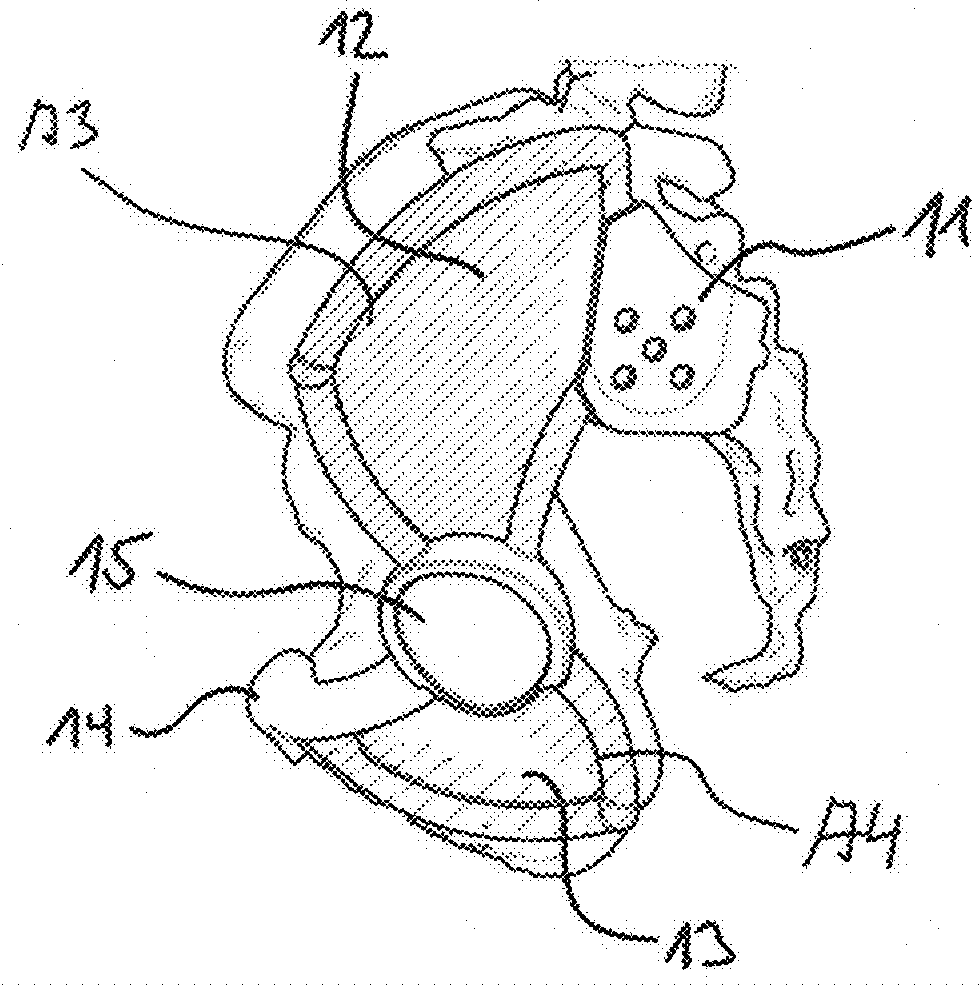
[0050]FIG. 2 shows the implant 10 of FIG. 1 from a lateral perspective. This perspective visualizes the posterior...
PUM
| Property | Measurement | Unit |
|---|---|---|
| thickness | aaaaa | aaaaa |
| thickness | aaaaa | aaaaa |
| pore size | aaaaa | aaaaa |
Abstract
Description
Claims
Application Information
 Login to View More