Check patentability & draft patents in minutes with Patsnap Eureka AI!

Ophthalmic lens identification using ultrasound

Inactive Publication Date: 2020-05-21
JOHNSON & JOHNSON VISION CARE INC
View PDF0 Cites 1 Cited by
  • Summary
  • Abstract
  • Description
  • Claims
  • Application Information

AI Technical Summary

Benefits of technology

The patent describes an ophthalmic lens system that can communicate using ultrasound. The system includes an ultrasound transducer, an energy harvester, an identification module, and a driver module. The identification module receives data from an external source and controls the output of the ultrasound transducer. The system can generate an identification tag using a lower power level than other methods, and the tag can be read and written to using a non-volatile memory. The technical effects of this system include improved identification and communication capabilities for ophthalmic lenses, as well as reduced power consumption and improved safety.

Problems solved by technology

Communication using light is difficult as the power consumption associated with generating photonic signals sufficiently powerful to overcome ambient interference may be prohibitive for the lens power source.
RF signal generation may be possible but challenging.
Generation of higher frequency signals typically require more power due to less efficient sources.

Method used

the structure of the environmentally friendly knitted fabric provided by the present invention; figure 2 Flow chart of the yarn wrapping machine for environmentally friendly knitted fabrics and storage devices; image 3 Is the parameter map of the yarn covering machine
View more

Image

Smart Image Click on the blue labels to locate them in the text.
Viewing Examples
Smart Image
  • Ophthalmic lens identification using ultrasound
  • Ophthalmic lens identification using ultrasound
  • Ophthalmic lens identification using ultrasound

Examples

Experimental program
Comparison scheme
Effect test

Embodiment Construction

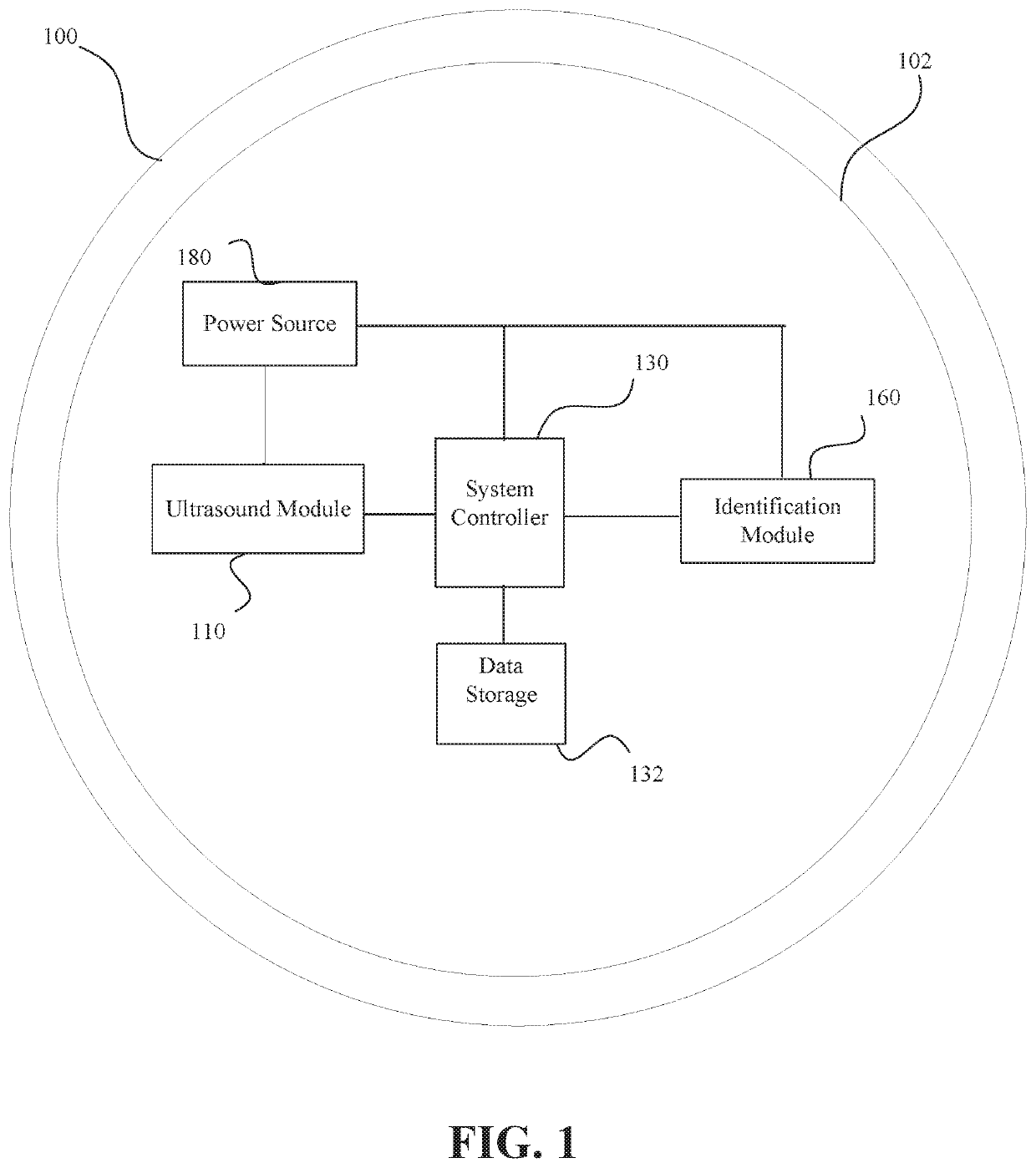
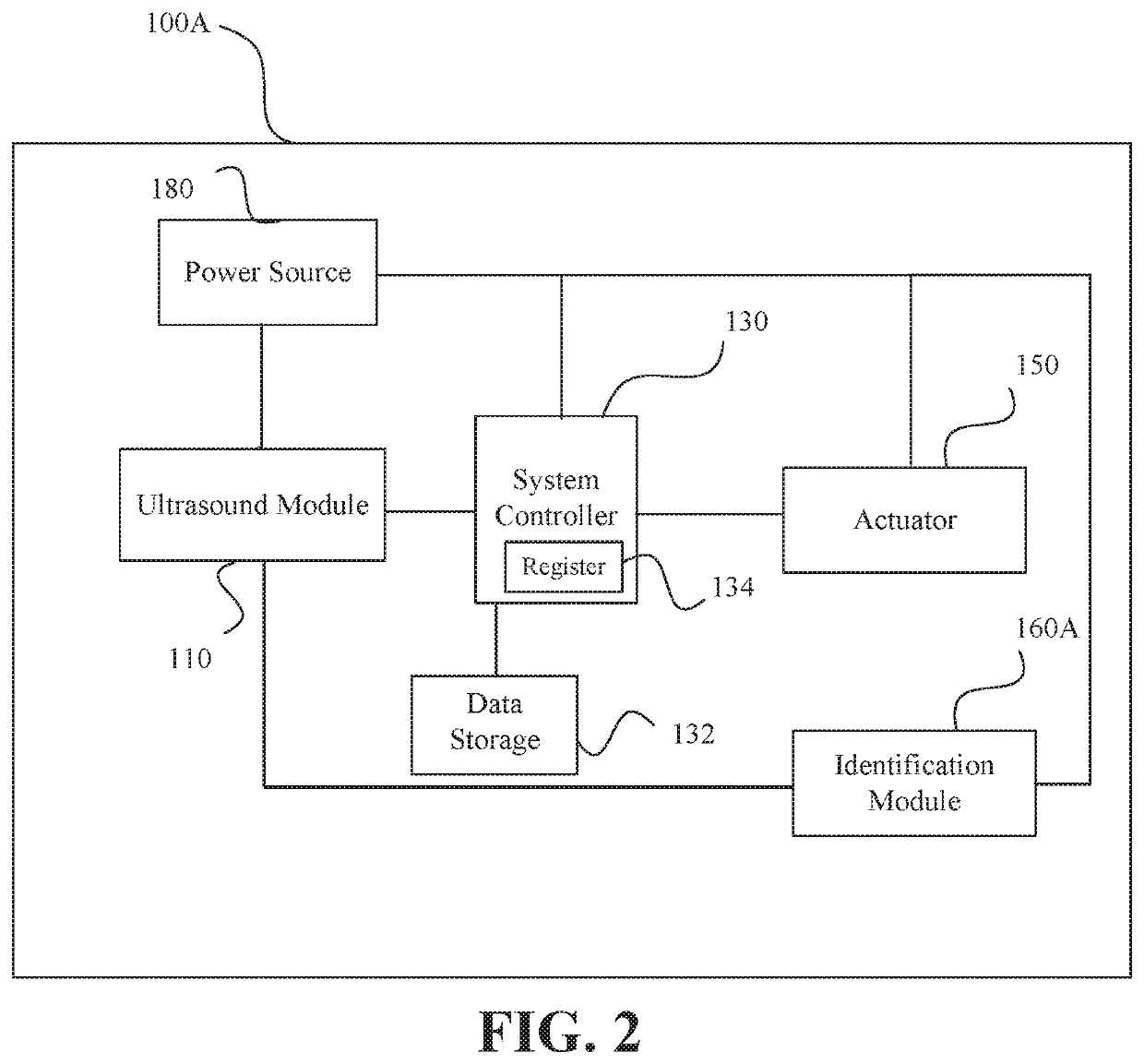
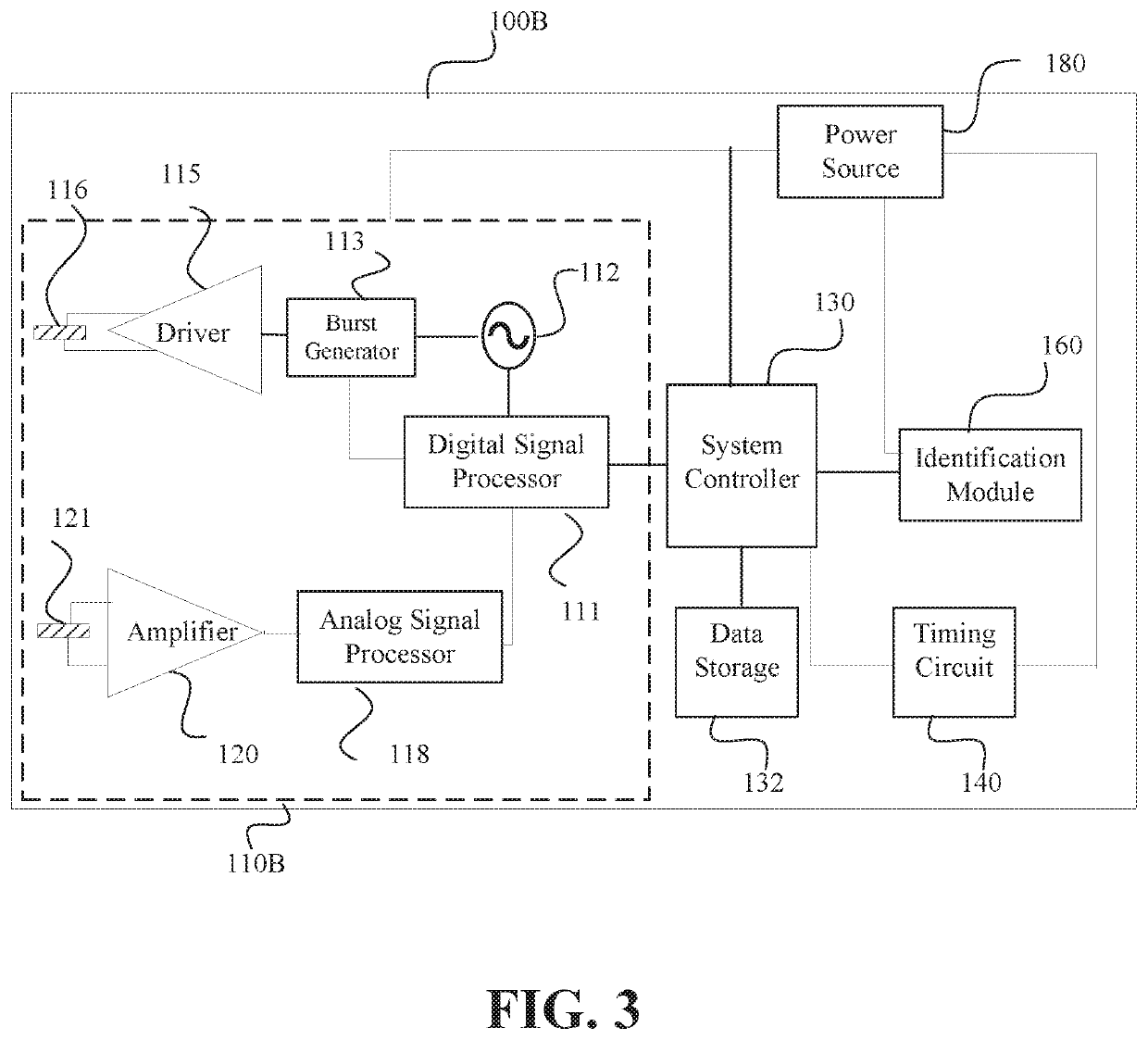
[0034]Conventional contact lenses are polymeric structures with specific shapes to correct various vision problems as briefly set forth above. To achieve enhanced functionality, various circuits and components may be integrated into these polymeric structures. For example, control circuits, microprocessors, communication devices, power supplies, sensors, ultrasound modules, and miniature antennas may be integrated into contact lenses via custom-built optoelectronic components to not only correct vision, but to enhance vision as well as provide additional functionality as is explained herein. Electronic and / or powered ophthalmic lenses may be designed to provide enhanced vision via zoom-in and zoom-out capabilities, or just simply modifying the refractive capabilities of the lenses. Electronic and / or powered ophthalmic lenses may be designed to enhance color and resolution. In addition, ultrasound modules built into the lenses may be utilized to provide / receive an identification tag ...

the structure of the environmentally friendly knitted fabric provided by the present invention; figure 2 Flow chart of the yarn wrapping machine for environmentally friendly knitted fabrics and storage devices; image 3 Is the parameter map of the yarn covering machine
Login to View More

PUM

No PUM Login to View More

Abstract

An ophthalmic lens having an electronic system is described herein for providing an identification in response to a signal or inquiry and / or receiving an identification tag. The ophthalmic lenses include at least one ultrasound module having at least one transducer such as a transmit transducer or a piezoelectric transducer. The ophthalmic lens further includes an identification module for generating an identification in response to a signal and powering the ultrasound module to propagate at least one sound pressure wave embodying the identification. In at least one embodiment, the identification data is encoded after manufacture of the device. The ophthalmic lens may be a contact lens or an intraocular lens.

Description

BACKGROUND OF THE INVENTION1. Field of the Invention[0001]The present invention relates to a powered or electronic ophthalmic lens, and more particularly, to a powered or electronic ophthalmic lens having an identification module to provide an identification in response to an inquiry and / or be assigned an identification number by an external device.2. Discussion of the Related Art[0002]As electronic devices continue to be miniaturized, it is becoming increasingly more likely to create wearable or embeddable microelectronic devices for a variety of uses. Such uses may include monitoring aspects of body chemistry, administering controlled dosages of medications or therapeutic agents via various mechanisms, including automatically, in response to measurements, or in response to external control signals, and augmenting the performance of organs or tissues. Examples of such devices include glucose infusion pumps, pacemakers, defibrillators, ventricular assist devices and neurostimulators...

Claims

the structure of the environmentally friendly knitted fabric provided by the present invention; figure 2 Flow chart of the yarn wrapping machine for environmentally friendly knitted fabrics and storage devices; image 3 Is the parameter map of the yarn covering machine
Login to View More

Application Information

Patent Timeline
no application Login to View More
IPC IPC(8): G02C7/02G02C7/08H01L27/24H04B11/00
CPCG02C7/04G02C7/024G02C7/083G02C7/022H01L27/24H04B11/00G02C11/10H10B63/00
Inventor LANGFORD, DONALD SCOTTTONER, ADAM
Owner JOHNSON & JOHNSON VISION CARE INC
Features
  • R&D
  • Intellectual Property
  • Life Sciences
  • Materials
  • Tech Scout
Why Patsnap Eureka
  • Unparalleled Data Quality
  • Higher Quality Content
  • 60% Fewer Hallucinations
Social media
Patsnap Eureka Blog
Learn More