

Multi-stream foveal display transport
a technology of foveal and display, applied in the field of multi-stream foveal display transport, can solve the problems of wasting the time of transmitting the full uniform resolution image as is common today, affecting the transmission speed of displayed images, and limiting the transmission bandwidth of displayed images
- Summary
- Abstract
- Description
- Claims
- Application Information
AI Technical Summary
Benefits of technology
Problems solved by technology
Method used
Image

Examples
Embodiment Construction
[0012]In the following description, numerous specific details are set forth to provide a thorough understanding of the methods and mechanisms presented herein. However, one having ordinary skill in the art should recognize that the various implementations may be practiced without these specific details. In some instances, well-known structures, components, signals, computer program instructions, and techniques have not been shown in detail to avoid obscuring the approaches described herein. It will be appreciated that for simplicity and clarity of illustration, elements shown in the figures have not necessarily been drawn to scale. For example, the dimensions of some of the elements may be exaggerated relative to other elements.
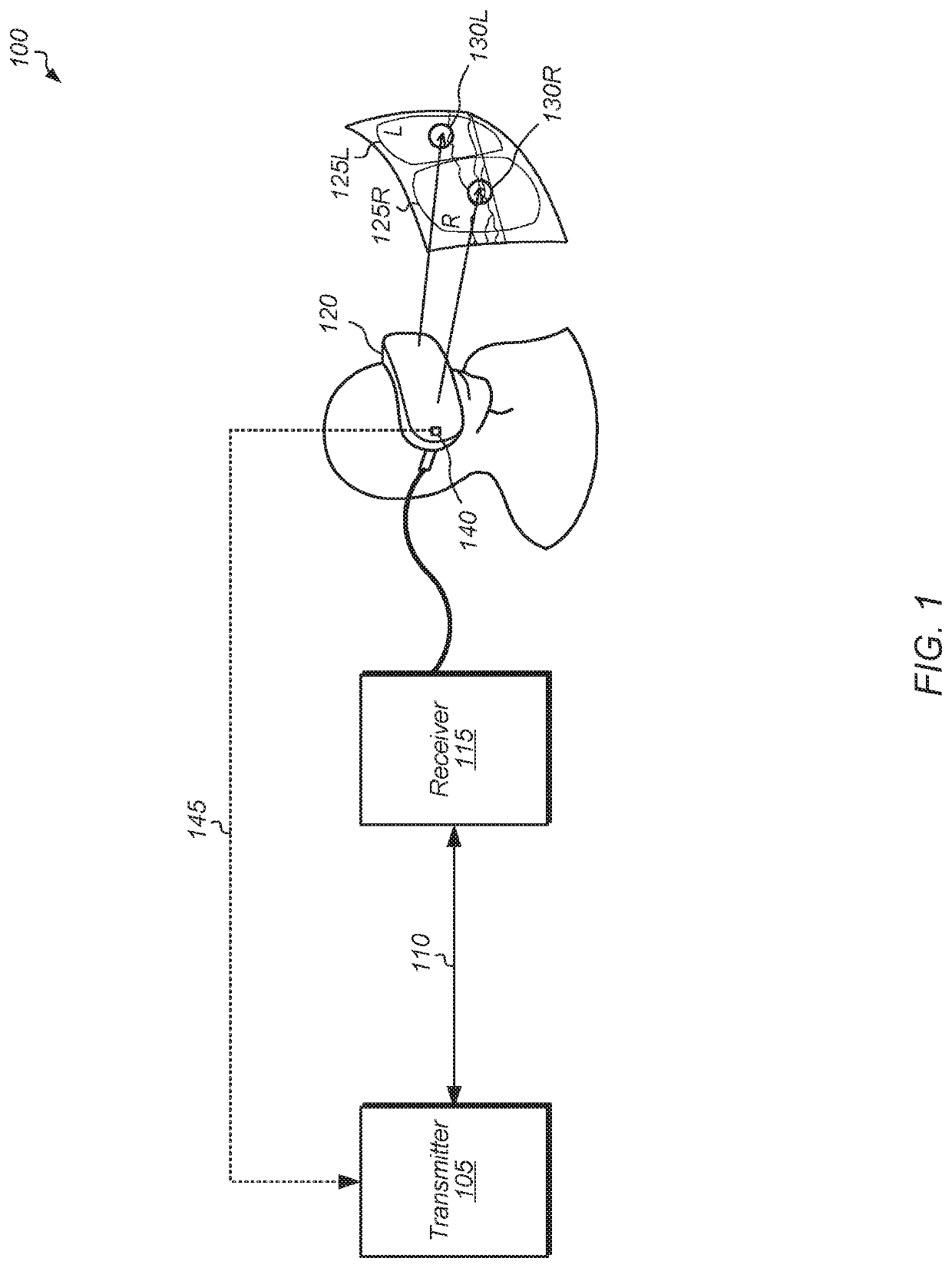
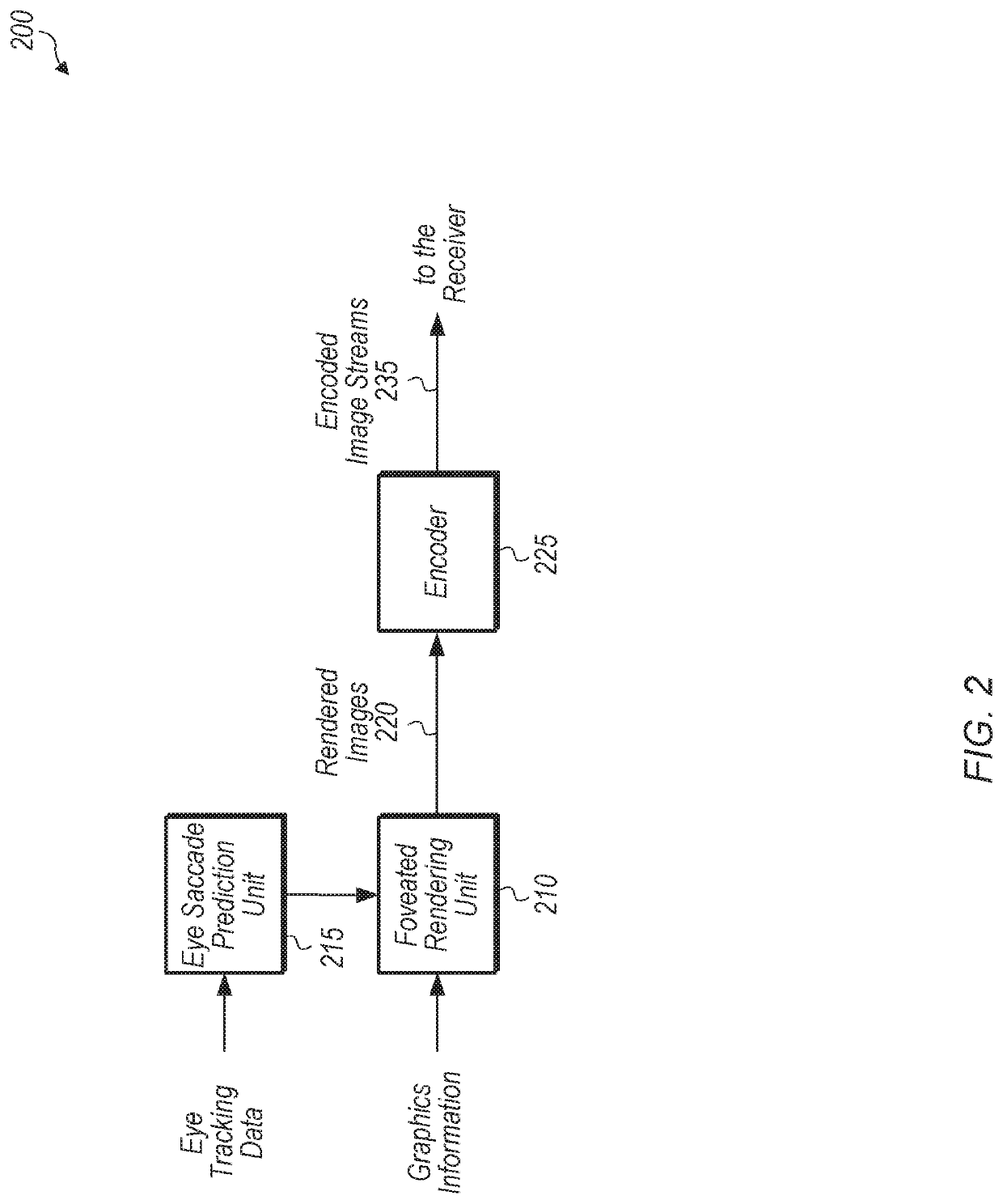
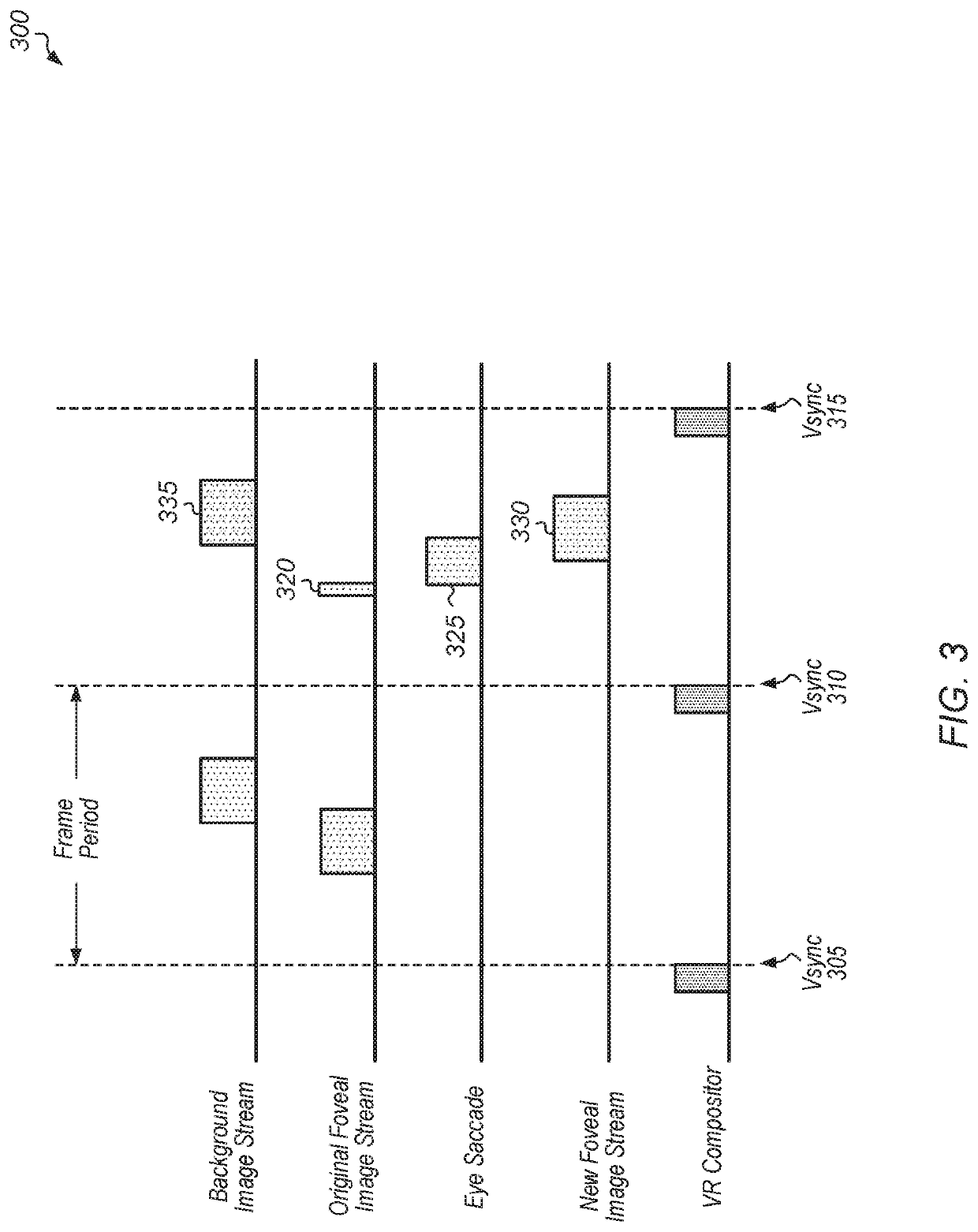
[0013]Various systems, apparatuses, methods, and computer-readable mediums for using a multi-stream foveal display transport layer are disclosed herein. In one implementation, a virtual reality (VR) system includes a transmitter sending a plurality of streams...
PUM
 Login to View More
 Abstract
Description
Claims
Application Information
 Login to View More