
Process for the solid state synthesis of enantiopure B-aminoalcohols from racemic epoxides
- Summary
- Abstract
- Description
- Claims
- Application Information
AI Technical Summary
Benefits of technology
Problems solved by technology
Method used
Image

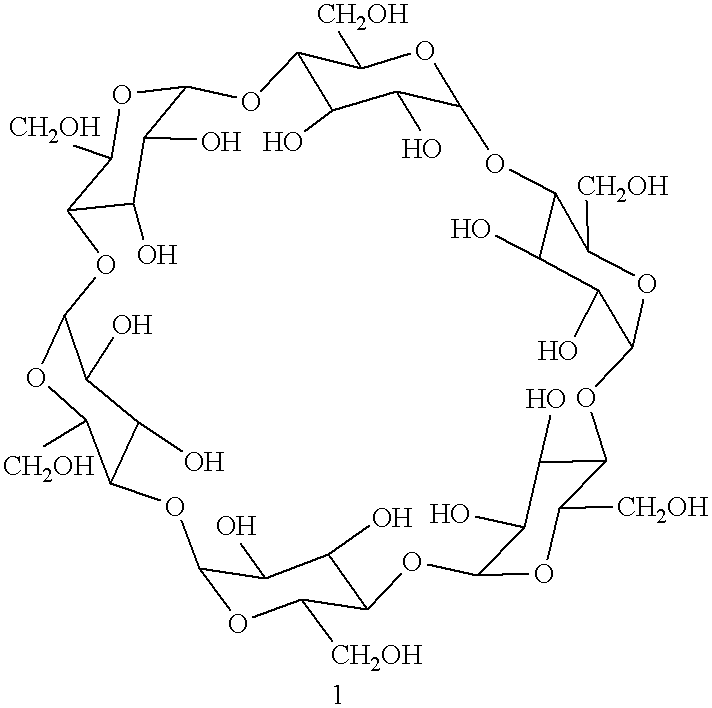
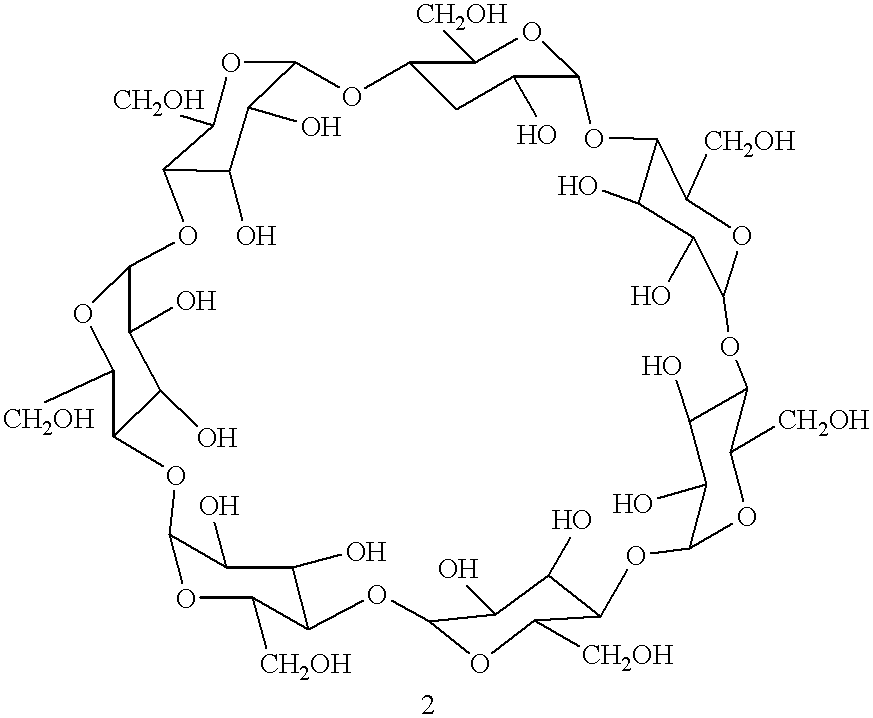
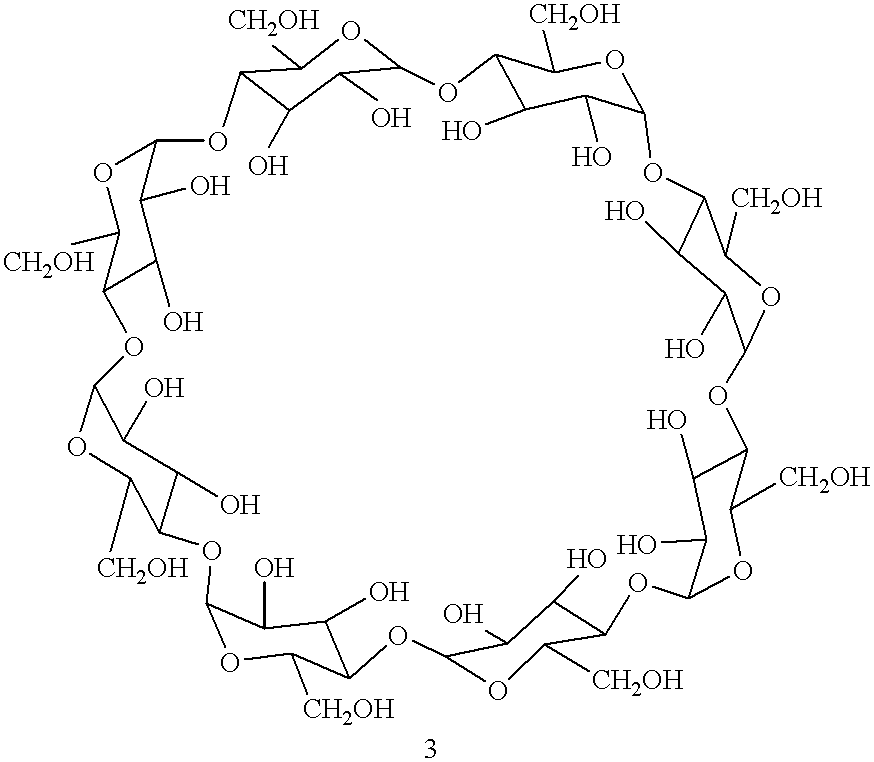
Examples
example 2
1-(Isopropylamino)-3-(4-chlorophenoxy)-2-propanol (4b):
The epoxide 3-(4-chlorophenoxy)-1,2-epoxypropane .beta.-cyclodextrin complex (13.20 g) was ground intimately with excess isopropylamine 2 (2.95 g=4.3 ml added at the rate of 0.86 ml every 30 minutes) in agate mortar until the starting epoxide disappeared on tlc after 3 hours. The product was extracted with ethylacetate, the solvent and the excess amine were removed in vacuo. The product may be purified by dissolving in 2N hydrochloric acid and regenerating with 10% sodium bicarbonate solution.
Yield (isolated): 1.83 gms. m.p.: 247-249.degree. C.
[.alpha.]D.sup.25 =+14.8 (c 1.0 MeOH) ee: 100% (chiral HPLC)
example 3
1-(Isopropylamino)-3-(4-methylphenoxy)-2-propanol (4c):
The .beta.-cyclodextrin -epoxide, 3-(4-methylphenoxy)-1,2-epoxypropane complex (12.99 g) was ground with isopropylamine 2 (0.59 g=0.86 ml) in agate mortar for 30 minutes and then excess isopropylamine was added at the rate of 0.86 ml every 30 minutes until the starting epoxide disappeared on tlc after 3 hours. The product was extracted with ethylacetate and the solvent evaporated. It may be purified by formation of hydrochloride in 2N hydrochloric acid and regeneration with 10% sodium bicarbonate solution.
Yield (isolated): 1.60 gms. m.p.: 77-78.degree. C.
[.alpha.]D.sup.25 =+13.2 (c 1.0 MeOH) ee: 89% (chiral HPLC)
example 4
1-(Isopropylamino)-3-[4[(2- methoxyethyl)phenoxy]-2-propanol (4d):
The epoxide 3-[4[(2- methoxyethyl)phenoxy] 1,2-epoxypropane .beta.-cyclodextrin complex (13.43 g) was ground in agate mortar with excess isopropylamine (2.95 g=4.3 ml added at the rate of 0.86 ml every 30 minutes until the starting epoxide completely reacted as seen by tlc (3 hours)]. The product was extracted with ethylacetate, the solvent and the excess amine were removed in vacuo. The product nay be purified by the formation of hydrochloride.
Yield (isolated): 1.87 gms. Viscous liquid
[.alpha.]D.sup.25 =+12.6 (c 1.0 MeOH) ee: 85% (chiral HPLC)
PUM
| Property | Measurement | Unit |
|---|---|---|
| Fraction | aaaaa | aaaaa |
| Fraction | aaaaa | aaaaa |
| Time | aaaaa | aaaaa |
Abstract
Description
Claims
Application Information
 Login to View More